Introduction: The New Standard of Compute
In 2026, the global economy has officially transitioned into a “compute-first” era. Artificial Intelligence is no longer just a feature; it is the core engine driving industries from autonomous logistics to personalized medicine. At the heart of this revolution lies the GPU cluster—a massive, interconnected web of processing power that has superseded the traditional CPU data center.
As we move deeper into this year, we are seeing a structural shift in how organizations approach infrastructure. It is no longer enough to simply have access to chips; the challenge has moved to deployment speed, interconnect efficiency, and most importantly, operational stability. Whether you are building an on-premise powerhouse or looking to rent a flexible cloud environment, understanding the nuances of GPU-accelerated computing is the difference between a successful model launch and a multi-million dollar bottleneck.
1. What is a GPU Cluster?
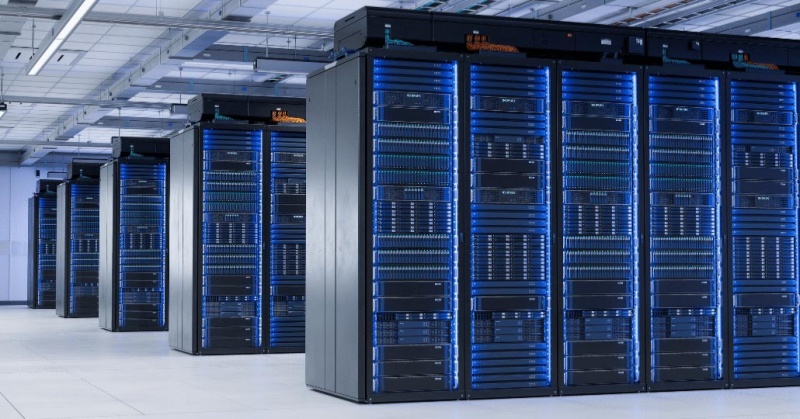
To understand the current market, we must first define the technology. A GPU cluster is a network of multiple computers (nodes), each equipped with one or more Graphics Processing Units (GPUs). Unlike a single GPU server, a cluster allows for GPU parallel computing at a massive scale.
By linking these units through high-speed interconnects like NVIDIA’s NVLink or InfiniBand, the cluster functions as a single, unified supercomputer. This allows developers to tackle “frontier-scale” problems—such as training a 1-trillion parameter model—that would be physically impossible on a single machine.
2. 2026 Market Pulse: AI GPU Cluster Deployment Rates
The state of GPU infrastructure in 2026 is defined by a “compute crunch.” Recent industry data shows that while demand for AI has skyrocketed, lead times for high-end enterprise GPUs (like the Blackwell and Hopper series) remain stretched between 36 and 52 weeks.
Hyperscale Dominance:
Major cloud providers (Google, AWS, Azure) are consuming nearly 70% of the global HBM (High Bandwidth Memory) supply to fuel their internal AI clusters.
The ASIC Pivot:
For the first time, custom AI accelerators (ASICs) are starting to outship general-purpose GPUs in specific inference tasks, though GPUs remain the undisputed king of training.
Deployment Trends:
Enterprises are moving away from “buying whatever is available” to a “cloud-smart” strategy—using private clusters for steady-state training and renting burstable cloud capacity for testing.
3. Building vs. Renting: The TCO Reality
When deciding between a gpu server cluster on-site or a rent gpu cluster model, the decision in 2026 comes down to Total Cost of Ownership (TCO) and utilization.
Building Your Own Cluster
Building an nvidia gpu cluster is a capital-intensive journey. An 8-way H200 node can cost upwards of $300,000 upfront. When you add the costs of specialized liquid cooling, 100kW rack densities, and specialized DevOps staff, the “break-even” point typically hits at the 18-month mark of 80% utilization.
- Pros: Data sovereignty, predictable long-term costs, custom hardware topology.
- Cons: Massive CapEx, obsolescence risk, 1-year lead times.
Renting a GPU Cluster
Cloud GPU marketplaces (like Runpod or Lambda) have become the go-to for startups. With per-second billing and “spot” instances as low as $1.50/hour, renting allows for rapid experimentation without the $1M entry fee.
- Pros: Instant deployment, zero maintenance, access to the latest Blackwell chips.
- Cons: High long-term OpEx, data egress fees, potential “capacity unavailable” errors during peak times.
4. Stability Before Scale: The WhaleFlux Advantage
As clusters grow, they become inherently fragile. In a 10,000-GPU environment, the statistical probability of a hardware failure occurring during a 3-month training run is nearly 100%. A single “silent bit error” or a thermal throttle can corrupt a checkpoint, wasting weeks of compute time.
This is where the philosophy of “stability before scale” becomes a competitive edge. WhaleFlux was developed as a specialized Self-Healing System for exactly these environments. While traditional tools simply tell you a node is “down,” WhaleFlux uses advanced failure prediction metrics to identify degrading GPUs before they crash.
By monitoring real-time health data—from NVLink error rates to VRAM thermal patterns—WhaleFlux can automatically migrate a workload or pause a training job before a catastrophic failure occurs. In the high-stakes world of gpu cluster for high performance computing, WhaleFlux acts as the “autopilot” that ensures your $10M investment actually stays online.
5. Designing for Deep Learning and HPC
A gpu cluster for deep learning has different requirements than one built for traditional scientific simulation (HPC).
- Deep Learning Clusters: Prioritize high-bandwidth memory (HBM3e) and 800Gbps networking. The goal is to minimize the time GPUs spend waiting for data (the “IO bottleneck”).
- HPC Clusters: Often require higher double-precision (FP64) performance and complex storage systems (like Lustre or Weka) to handle massive datasets in climate or genomic research.
Regardless of the use case, the 2026 gold standard for how to build a gpu cluster involves modular, liquid-cooled racks that can support the extreme power draws of next-generation silicon.
Conclusion: Reliability as the Bedrock of AI
The race to build the largest gpu cluster is no longer just a hardware sprint—it is an operational marathon. As we look toward the end of 2026, the organizations winning the AI race are not necessarily the ones with the most GPUs, but the ones with the most efficient and stable deployments.
By balancing the agility of renting with the power of on-premise clusters, and securing that infrastructure with self-healing tools like WhaleFlux, businesses can finally move past the “compute crunch” and focus on what truly matters: the innovation happening on top of the silicon.
FAQ: Frequently Asked Questions
1. What is the current lead time for an NVIDIA H100 or Blackwell cluster?
In early 2026, lead times for large-scale enterprise GPU orders remain between 9 and 12 months due to shortages in high-bandwidth memory and advanced packaging capacity.
2. Is it cheaper to rent or buy a GPU cluster for a 6-month project?
For any project under 12 months, renting is almost always more cost-effective when you factor in the hidden costs of power, cooling, and hardware depreciation.
3. How does WhaleFlux improve my GPU cluster’s ROI?
WhaleFlux reduces “idle time” caused by crashes. By predicting failures and automating repairs, it can increase effective cluster utilization by 15-20%, which translates to millions of dollars in saved compute costs for large clusters.
4. Can I build a GPU cluster using consumer cards like the RTX 4090?
While possible for small-scale dev work, consumer cards lack the NVLink bandwidth and enterprise drivers required for multi-node distributed training. For production AI, data-center grade GPUs (H200, B200) are the industry standard.
5. What networking is best for an AI GPU cluster?
NVIDIA’s InfiniBand (NDR 400G or XDR 800G) is currently the gold standard for low-latency, “lossless” networking, though high-end Ethernet (RoCE v2) is increasingly used for large-scale inference deployments.