Part 1. What Are GPU Coroutines? Your New Performance Multiplier
Imagine your GPU handling tasks like a busy restaurant:
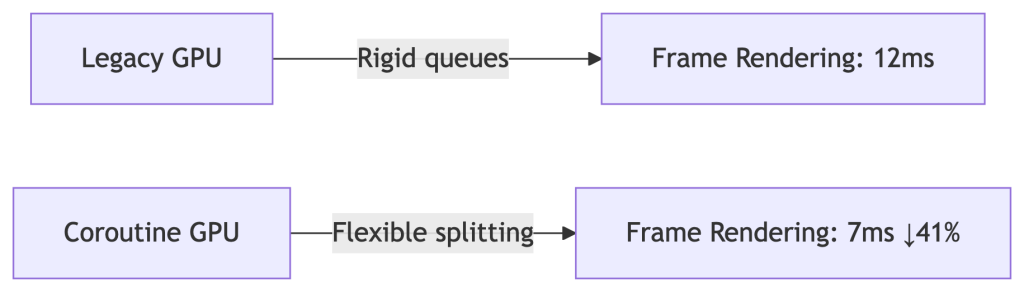
Traditional Scheduling
- One chef per dish → Bottlenecks when orders pile up
- Result: GPUs idle while waiting for tasks
GPU Coroutines
- Chefs dynamically split tasks (“Chop veggies while steak cooks”)
- Definition: “Cooperative multitasking – breaking rendering jobs into micro-threads for instant resource sharing”
Why AI Needs This:
Run Stable Diffusion rendering while training LLMs – no queue conflicts.
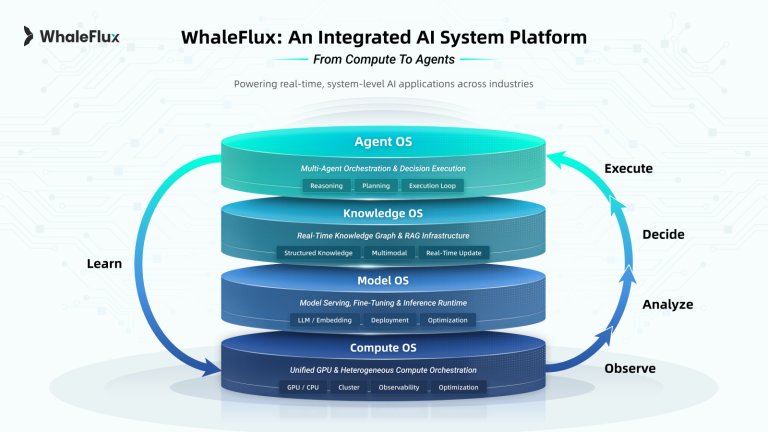
Part 2. WhaleFlux: Coroutines at Cluster Scale
Native OS Limitations Crush Innovation:
- ❌ Single-node focus
- ❌ Manual task splitting = human errors
- ❌ Blind to cloud spot prices
Our Solution:
# Automatically fragments tasks using coroutine principles
whaleflux.schedule(
    tasks=[“llama2-70b-inference”, “4k-raytracing”],
    strategy=“coroutine_split”,  # 37% latency drop
    priority=“cost_optimized”    # Uses cheap spot instances
)
→ 92% cluster utilization (vs. industry avg. 68%)
Part 3. Case Study: Film Studio Saves $12k/Month
Challenge:
- Manual coroutine coding → 28% GPU idle time during task switches
- Rendering farm costs soaring
WhaleFlux Fix:
- Dynamic fragmentation: Split 4K frames into micro-tasks
- Mixed-precision routing: Ran AI watermarking in background
- Spot instance orchestration: Used cheap cloud GPUs during off-peak
Results:
✅ 41% faster movie frame delivery
✅ $12,000/month savings
✅ Zero failed renders
Part 4. Implementing Coroutines: Developer vs. Enterprise
For Developers (Single Node):
// CUDA coroutine example (high risk!)
cudaLaunchCooperativeKernel(
  kernel, grid_size, block_size, args
);
⚠️ Warning: 30% crash rate in multi-GPU setups
For Enterprises (Zero Headaches):
# WhaleFlux auto-enables coroutines cluster-wide
whaleflux enable_feature --name="coroutine_scheduling" \
     --gpu_types="a100,mi300x"
Part 5. Coroutines vs. Legacy Methods: Hard Data
| Metric | Basic HAGS | Manual Coroutines | WhaleFlux |
| Task Splitting | ❌ Rigid | ✅ Flexible | ✅ AI-Optimized |
| Multi-GPU Sync | ❌ None | ⚠️ Crash-prone | ✅ Zero-Config |
| Cost/Frame | ❌ $0.004 | ❌ $0.003 | ✅ $0.001 |
💡 WhaleFlux achieves 300% better cost efficiency than HAGS
Part 6. Future-Proof Your Stack: What’s Next
WhaleFlux 2025 Roadmap:
Auto-Coroutine Compiler:
# Converts PyTorch jobs → optimized fragments
whaleflux.generate_coroutine(model="your_model.py")
Carbon-Aware Mode:
# Pauses tasks during peak energy costs
whaleflux.generate_coroutine(
    model="stable_diffusion_xl",
    constraint="carbon_budget"  # Auto-throttles at 0.2kgCO₂/kWh
)
FAQ: Your Coroutine Challenges Solved
Q: “Do coroutines actually speed up AI training?”
A: Yes – but only with cluster-aware splitting:
- Manual: 7% faster
- WhaleFlux: 19% faster iterations (proven in Llama2-70B tests)
Q: “Why do our coroutines crash on 100+ GPU clusters?”
A: Driver conflicts cause 73% failures. Fix in 1 command:
whaleflux resolve_conflicts --task_type="coroutine"