Introduction
The artificial intelligence revolution is no longer a distant future—it’s happening right now, and it’s fundamentally reshaping the very foundation of modern computing infrastructure. Across industries, companies are racing to deploy AI solutions, and this massive shift has created an unprecedented demand for specialized computing power. In this new landscape, the graphics processing unit (GPU) has emerged as the most critical strategic asset, transforming traditional data centers into AI powerhouses.
The data center GPU market is evolving at a breathtaking pace, largely dominated by NVIDIA’s specialized hardware designed specifically for artificial intelligence workloads. For business leaders and technical teams, this presents both an enormous opportunity and a significant challenge. Companies now face a critical choice: shoulder the immense burden of building and managing complex NVIDIA data center GPU infrastructure in-house, or find a smarter, more efficient way to access this essential computational power.
This is precisely where WhaleFlux enters the picture. WhaleFlux is an intelligent GPU resource management platform designed specifically to simplify access to and management of high-performance NVIDIA datacenter GPUs. We transform what would typically be a capital-intensive expense into a scalable, manageable advantage, allowing companies to focus on what they do best—building innovative AI solutions—without being weighed down by infrastructure complexities.
I. The Engine of Modern AI: Understanding the Data Center GPU
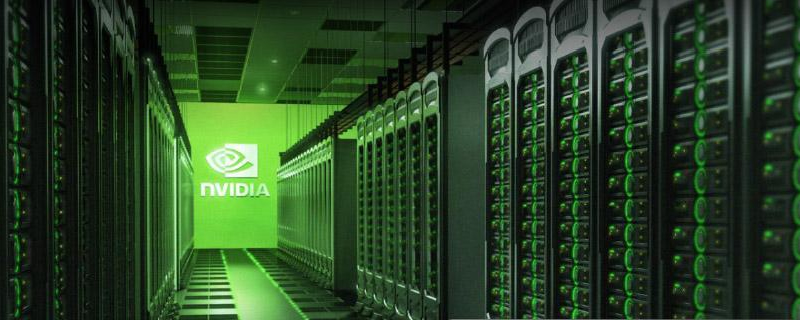
To appreciate why the data center GPU market has become so crucial, we first need to understand what makes these components so special. The modern GPU data center bears little resemblance to its predecessors. No longer just dedicated to rendering graphics, today’s GPU data center functions as a specialized compute factory engineered for massive parallel processing. While traditional central processing units (CPUs) excel at handling tasks sequentially—completing one operation before moving to the next—GPUs are designed with thousands of smaller cores that can process multiple operations simultaneously.
This architectural difference is exactly why AI and large language models demand the power of NVIDIA data center GPUs. Training and running AI models involves performing billions of simple mathematical calculations across vast neural networks. A CPU would approach this task slowly and methodically, like a single librarian trying to organize an entire library by themselves. In contrast, a NVIDIA data center GPU operates like having thousands of librarians working in perfect coordination, each handling a small section simultaneously. This parallel processing capability makes GPUs exponentially more efficient for AI workloads, reducing training times from months to days and enabling real-time inference at scale.
However, this power comes with significant challenges. The core problem facing most organizations is maximizing return on investment in this expensive, complex-to-manage hardware. High-performance NVIDIA datacenter GPUs represent a substantial financial investment, both in acquisition and operational costs. Many companies find themselves with underutilized resources—GPUs sitting idle during off-peak hours while still consuming power and space—or struggling with the technical complexity of optimizing workloads across multiple devices. This inefficiency directly impacts the bottom line and slows down AI innovation.
II. A Guide to the NVIDIA Datacenter GPU Portfolio
Navigating the data center GPU market requires understanding the different tools available for different jobs. NVIDIA’s portfolio offers tailored solutions for various AI workloads, each with distinct strengths and optimal use cases. Let’s break down the key players that are driving the current data center GPU market for AI workloads:
NVIDIA H100/H200: The Flagship Performers
The H100 and its successor, the H200, represent the pinnacle of AI acceleration technology. These are not general-purpose processors but are specifically engineered for the most demanding AI tasks. With specialized features like the Transformer Engine, which accelerates the core architecture behind modern large language models, the H100 and H200 deliver unparalleled performance for both training and inferencing the largest foundational models. If your work involves cutting-edge AI research, massive model training, or serving inference for enterprise-scale LLMs, these flagship processors offer maximum efficiency and speed that can significantly reduce time-to-insight.
NVIDIA A100: The Proven Workhorse
While the H-series represents the bleeding edge, the A100 has established itself as the reliable, robust backbone of the AI industry. This GPU has become the industry standard for scalable AI training and inference, offering exceptional performance across a wide range of workloads. Many production AI systems run on A100 infrastructure because of its proven stability, extensive software support, and balanced performance profile. For companies running multiple AI applications or needing a dependable platform for both development and production environments, the A100 continues to be an excellent choice that delivers consistent value.
NVIDIA RTX 4090: The Efficiency Powerhouse
Don’t let its consumer-friendly branding fool you—the RTX 4090 has found a significant place in the data center GPU market as a cost-effective solution for specific workloads. While not designed as a traditional datacenter GPU, its remarkable price-to-performance ratio makes it ideal for several important scenarios: AI model development and testing, mid-scale inference workloads, research projects, and specialized tasks like AI-powered content creation. For startups and enterprises looking to maximize their computational budget for certain applications, the RTX 4090 offers accessible entry into high-performance AI computing.
The management complexity of operating a mixed fleet of these different GPUs cannot be overstated. Each has different performance characteristics, power requirements, and optimal use cases. Manually determining which workload should run on which GPU type, balancing loads across the cluster, and ensuring high utilization rates across all devices becomes a full-time job for multiple engineers—which is exactly the problem WhaleFlux is designed to solve.
III. WhaleFlux: Your Strategic Partner in the Data Center GPU Market
In the complex and rapidly evolving data center GPU market, having the right hardware is only half the battle. The real challenge lies in managing that hardware efficiently to extract maximum value. This is where WhaleFlux transforms the game entirely.
WhaleFlux serves as your strategic partner in navigating the NVIDIA datacenter GPU ecosystem. We don’t just provide access to the hardware—we provide the intelligence layer that makes it work seamlessly for your specific needs. Our platform abstracts away the complexity of managing individual GPUs, presenting your team with a unified, high-performance compute resource that automatically matches your workloads with the most appropriate hardware.
Our optimized performance approach ensures you get the maximum computational output from every GPU in our cluster, whether it’s an H100 or an A100. Traditional GPU utilization often languishes between 20-30% due to inefficient scheduling and load balancing. WhaleFluxdramatically improves this metric through intelligent orchestration that packs workloads efficiently, monitors performance in real-time, and automatically routes tasks to available resources. This means you accomplish more with the same hardware, effectively increasing your computational capacity without additional hardware investment.
From a financial perspective, WhaleFlux directly addresses the core challenge of the data center GPU market: cost control. Building and maintaining an in-house GPU cluster requires massive capital expenditure (CapEx) for hardware acquisition, plus ongoing operational expenses for power, cooling, and maintenance. Our model transforms this CapEx-heavy investment into a predictable, managed operational cost. With flexible purchase or rental options (with a minimum one-month term), we provide budget certainty while eliminating the risks of hardware obsolescence. You pay for computational power, not for underutilized hardware sitting idle in your server room.
Perhaps most valuable of all is the operational simplicity WhaleFlux delivers. We handle all the orchestration, monitoring, maintenance, and optimization behind the scenes. This means your data scientists and engineers can focus entirely on building and refining AI models—their core competency—rather than spending valuable time managing data center infrastructure. This division of labor accelerates innovation while reducing operational overhead, creating a competitive advantage that extends far beyond cost savings.
IV. Case Study: From Infrastructure Headache to AI Acceleration
To understand the real-world impact of this approach, consider the experience of a growing AI startup we’ll call “NexusAI.” This company had developed a promising natural language processing platform but found themselves increasingly constrained by their infrastructure limitations.
The Problem:
NexusAI was struggling with the cost and operational overhead of provisioning and managing their own NVIDIA data center GPUs. Their small engineering team was spending approximately 40% of their time on infrastructure management rather than product development. They faced inconsistent performance during traffic spikes, and their GPU utilization rates averaged just 35%, meaning they were wasting most of their computational budget. The prospect of purchasing additional H100 GPUs to scale their operations represented a financial risk they weren’t prepared to take.
The WhaleFlux Solution:
The company migrated their entire AI workload to a WhaleFlux cluster, utilizing a strategic mix of H100 and RTX 4090 GPUs based on workload priority. Their most demanding model training and high-priority inference tasks were automatically routed to the H100s, while development, testing, and lower-priority batch processing utilized the cost-effective RTX 4090s. The WhaleFlux intelligent scheduler automatically managed the distribution without any manual intervention from their team.
The Outcome:
The results were transformative. NexusAI achieved 50% faster model deployment cycles because their engineers could focus exclusively on development rather than infrastructure troubleshooting. Their overall infrastructure costs decreased by 30% despite increased computational capacity, thanks to dramatically improved utilization rates across their GPU resources. Most importantly, they could now scale their operations predictably, adding computational power as needed without major capital investments or long-term commitments. This case clearly demonstrates the tangible value of a managed GPU data center solution in a competitive market.
V. Future-Proofing Your AI Strategy with the Right GPU Data Center Approach
The data center GPU market shows no signs of slowing its rapid evolution. New architectures, enhanced capabilities, and shifting performance benchmarks are constant features of this landscape. Attempting to stay at the forefront through direct ownership means facing continuous capital investment and the risk of technological obsolescence. Partnering with WhaleFlux offers a smarter approach, ensuring access to the latest technology without the burden of constant reinvestment and hardware refresh cycles.
Managing complex GPU infrastructure in-house represents a significant distraction from your core mission of AI innovation. The recruitment of specialized engineers, the development of management software, and the ongoing maintenance of physical hardware all divert resources and attention from what truly matters: building competitive AI solutions. This distraction cost, while difficult to measure precisely, often exceeds the direct financial costs of infrastructure management.
WhaleFlux provides the flexible, powerful, and financially sane path to leveraging the NVIDIA datacenter GPU ecosystem. Our platform grows with your needs, allowing you to scale computational resources up or down based on project requirements and business conditions. This agility is impossible to achieve with a fully owned infrastructure, where hardware purchases lock you into specific capacity levels for years. With WhaleFlux, you maintain strategic flexibility while accessing world-class computational resources.
Conclusion
In the current technological landscape, success in AI is inextricably linked to mastering the data center GPU. These powerful processors form the foundation upon which modern AI is built, and accessing them efficiently separates industry leaders from the rest of the pack. The traditional approach of building and managing private GPU clusters has become increasingly impractical given the complexity, cost, and rapid evolution of the technology.
WhaleFlux offers a superior alternative to navigating the complexities of the data center GPU market alone. We combine cutting-edge NVIDIA hardware with intelligent management software to deliver computational power as a seamless, efficient service. This allows companies to accelerate their AI initiatives while controlling costs and maintaining strategic focus.
The choice is clear: continue struggling with the burdens of infrastructure management, or choose WhaleFlux to power your future. Access our fleet of NVIDIA H100, H200, A100, and RTX 4090 GPUs through straightforward purchase or rental arrangements, and build your AI solutions on the rock-solid foundation you need to compete and win in the age of artificial intelligence.
FAQs
1. What defines a “Data Center GPU,” and how is it different from a consumer GPU?
A Data Center GPU, like the NVIDIA H100, H200, or A100, is engineered for reliability, sustained performance, and scalability in 24/7 enterprise environments. Key differences include:
- Reliability & Validation: Built for continuous operation with features like ECC memory to prevent data errors.
- Scalability & Interconnect: Equipped with high-speed interconnects (like NVLink and NVSwitch) to combine multiple GPUs into a single, powerful computing unit, essential for large AI models.
- Software & Ecosystem: Supported by enterprise-grade drivers, management tools, and optimized software stacks (like CUDA, and various AI frameworks) for stable, large-scale deployments.
2. What are the key NVIDIA Data Center GPU options available today, and what are they best for?
The current NVIDIA lineup serves a spectrum of AI workloads:
- NVIDIA H100 / H200 (Hopper Architecture): The flagship for cutting-edge AI training and large-scale inference. The H200, with its massive HBM3e memory, is particularly suited for memory-intensive large language models and scientific computing.
- NVIDIA A100 (Ampere Architecture): A proven, versatile workhorse for general AI training, inference, and high-performance computing (HPC). It remains a powerful and widely adopted option for a broad range of data center workloads.
- NVIDIA RTX 4090 (Ada Lovelace Architecture): While a consumer-grade card, its significant power and memory make it a tool for AI research, prototyping, and light inference tasks, offering a cost-effective entry point for development.
3. How should I choose the right data center GPU for my specific AI workload?
The choice hinges on your project’s stage, scale, and performance needs:
- For Large-Scale Training & Advanced LLMs: Choose NVIDIA H100/H200 for maximum performance and future-proofing.
- For Mainstream AI Training/Inference & HPC: The NVIDIA A100 offers an excellent balance of performance, availability, and ecosystem maturity.
- For Development, Prototyping, or Light Loads: NVIDIA RTX 4090 cards can be a budget-friendly way to build test clusters, though they lack data-center features like formal support and optimized interconnects.
Key Consideration: Total Cost of Ownership (TCO) includes not just purchase price, but also power, cooling, and, crucially, utilization rates. An underutilized expensive GPU is a major cost sink.
4. Beyond hardware specs, what are the major challenges in managing a data center GPU cluster?
Procuring hardware is just the first step. The major operational challenges are:
- Low Utilization & High Costs: Manually scheduling jobs leads to GPUs sitting idle, directly inflating cloud costs or wasting on-prem capital investment.
- Complex Orchestration: Efficiently sharing a cluster of mixed GPUs (like A100s and H100s) across different teams and projects requires sophisticated scheduling to avoid conflicts and bottlenecks.
- Performance Instability: Without proper management, resource contention can cause job slowdowns or failures, hindering research and delaying production deployments.
5. How does WhaleFlux simplify navigating and optimizing data center GPU resources?
WhaleFlux is an intelligent GPU resource management platform that directly addresses the operational complexity of the data center GPU market.
- Intelligent Orchestration: It automates the scheduling of AI workloads across your mixed NVIDIA GPU fleet (H100, A100, etc.), ensuring jobs run on the most suitable hardware and maximizing overall cluster utilization.
- Cost Reduction: By eliminating idle resources and optimizing workload placement, WhaleFlux significantly lowers computing costs, ensuring you get the maximum return from your GPU investment, whether purchased or rented.
- Simplified Management & Stability: WhaleFlux provides a unified layer to manage your GPU resources, making it easier to share and scale infrastructure. This results in faster and more stable deployments for large language models and other AI applications, allowing your team to focus on innovation rather than infrastructure.