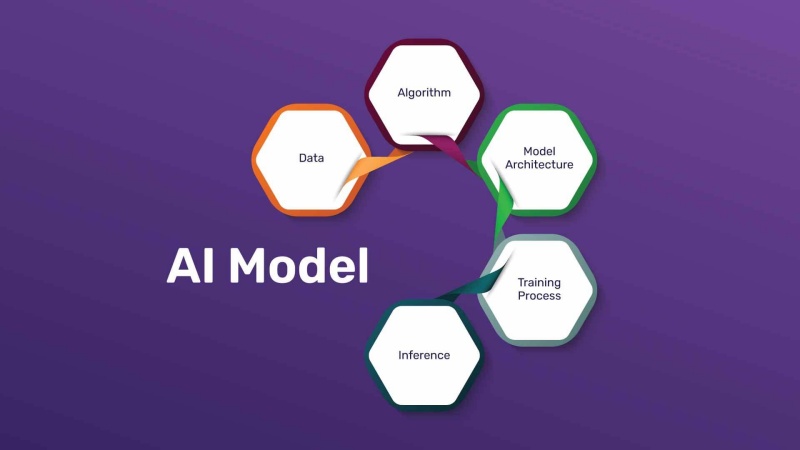
In the world of artificial intelligence, selecting a model architecture is the foundational decision that shapes everything that follows—from the accuracy of your predictions to the efficiency of your deployment. It’s the crucial choice between building a nimble speedboat for coastal navigation or a massive cargo ship for transoceanic hauling; both are vessels, but their designs dictate their purpose, capability, and cost.
Today, the landscape is dominated by powerful and versatile architectures like Convolutional Neural Networks (CNNs) and Transformers. The choice between them, or other specialized designs, isn’t about which is universally “better,” but about which is the optimal tool for your specific task, data, and constraints. This guide will provide you with a clear, strategic framework for making that critical decision, focusing on the core domains of Computer Vision (CV) and Natural Language Processing (NLP).
The Contenders: Core Architectures and Their Superpowers
To choose wisely, you must first understand the innate strengths and design philosophies of the main architectures.
Convolutional Neural Networks (CNNs): The Masters of Spatial Hierarchy
The CNN is the undisputed champion of traditional computer vision. Its design is biologically inspired and brilliantly efficient for data with a grid-like topology, such as images (2D grid of pixels) or time-series (1D grid of sequential readings).
Core Mechanism:
The “convolution” operation uses small, learnable filters that slide across the input. This allows the network to hierarchically detect patterns: early layers learn edges and textures, middle layers combine these into shapes (like eyes or wheels), and deeper layers assemble these into complex objects (like faces or cars).
Key Strengths:
- Parameter Efficiency & Spatial Invariance: Weight sharing across the image drastically reduces parameters and allows the network to recognize a pattern regardless of its position (translational invariance).
- Hierarchical Feature Learning: Perfectly suited for the compositional nature of visual worlds.
Classic Tasks:
Image classification, object detection, semantic segmentation, and medical image analysis.
Other Notable Architectures
Recurrent Neural Networks (RNNs/LSTMs/GRUs):
The pre-Transformer workhorses for sequential data. They process data step-by-step, maintaining a “memory” of previous steps. While often surpassed by Transformers in performance, they can still be more efficient for certain real-time, streaming tasks.
Graph Neural Networks (GNNs):
The specialist for graph-structured data, where entities (nodes) and their relationships (edges) are key. Ideal for social network analysis, molecular chemistry, and recommendation systems.
Hybrid Architectures:
Often, the best solution combines strengths. For example, a CNN backbone can extract visual features from a video frame, which are then fed into a Transformer to understand the temporal story across frames.
The Strategic Decision Framework: Key Dimensions to Consider
Choosing an architecture is a multi-variable optimization problem. Here are the critical dimensions to evaluate:
| Your Task & Data | Prime Architecture Candidates | Reasoning |
| Image Classification, Object Detection | CNN (ResNet, EfficientNet), Vision Transformer (ViT) | CNNs offer proven, efficient excellence. ViTs can achieve state-of-the-art results but often require more data and compute. |
| Machine Translation, Text Generation | Transformer (encoder-decoder, decoder-only) | The self-attention mechanism is fundamentally superior for capturing linguistic context and syntax. |
| Time-Series Forecasting | LSTM/GRU, Transformer, 1D-CNN | LSTMs are a classic choice. Transformers (like Temporal Fusion Transformer) are rising stars for capturing complex, long-range patterns in series. |
| Multi-Modal Tasks (Image Captioning, VQA) | Hybrid (CNN + Transformer) | Typically, a CNN encodes the image into features, and a Transformer decoder generates or reasons about language. |
| Graph-Based Prediction | Graph Neural Network (GNN) | The only architecture natively designed to operate on non-Euclidean graph structures. |
2. Data Characteristics
- Size and Quality: Transformers are famously data-hungry. They shine with massive datasets. For smaller, specialized datasets (e.g., a few thousand medical images), a CNN or a pre-trained CNN with fine-tuning is often a more robust and sample-efficient starting point.
- Structure: Is your data a regular grid (image), a linear sequence (text, audio), or an irregular graph (social network)? Match the architecture to the data’s innate geometry.
3. Computational Constraints & Deployment Target
Training Cost:
Transformers are computationally intensive to train from scratch. CNNs can be more lightweight. Ask: Do you have the GPU budget and time to train a large Transformer?
Inference Latency & Hardware:
For real-time applications on edge devices (phones, drones), model size and speed are critical. A carefully designed lightweight CNN (MobileNet) or a distilled small Transformer might be necessary. Always profile model latency on your target hardware.
4. The Need for Interpretability
In high-stakes domains like healthcare or finance, understanding why a model made a decision is crucial.
- CNNs offer some interpretability via techniques like Grad-CAM, which can highlight the image regions most influential to a decision.
- Transformers are more complex to interpret, though methods for visualizing attention weights exist. If explainability is a primary requirement, the architectural choice and the available tooling for it must be considered together.
The Experimentation Bottleneck and the Platform Solution
Following this framework leads to a critical, practical reality: the only way to be sure of the optimal choice is through systematic experimentation. You will likely need to train and evaluate multiple architectures (e.g., ResNet50 vs. ViT-Small) with different hyperparameters on your validation set.
This process creates a significant operational challenge:
- Infrastructure Sprawl: Managing different codebases, environments, and GPU resources for each experiment.
- Tracking Chaos: Comparing results across architectures, hyperparameters, and data versions becomes a nightmare in spreadsheets or ad-hoc notes.
- Reproducibility Loss: Recreating the exact conditions of the best-performing model is often difficult.
This is where an integrated AI platform like WhaleFlux transforms the architecture selection from a chaotic art into a managed, data-driven science. WhaleFlux directly addresses the experimentation bottleneck:
Unified Experiment Tracking:
Log every training run—whether it’s a CNN, Transformer, or custom hybrid—alongside its hyperparameters, code version, dataset, and performance metrics. Compare results across architectures in a single dashboard.
Managed Infrastructure:
Spin up the right GPU resources for a heavy Transformer training job or a lightweight CNN fine-tuning session without DevOps overhead. WhaleFlux orchestrates the compute to match the architectural need.
Centralized Model Registry:
Once you’ve selected your winning architecture, register it as a production candidate. WhaleFlux versions the model, its architecture definition, and weights, ensuring full reproducibility and a clear audit trail from experiment to deployment.
With WhaleFlux, teams can fearlessly explore the architectural design space, knowing that every experiment is captured, comparable, and can be seamlessly promoted to serve users.
Conclusion: Principles Over Prescriptions
There is no universal architecture leaderboard. The “right” choice is always contextual. Start by deeply analyzing your task, data, and constraints. Use the framework above to narrow your options. Embrace the fact that empirical testing is mandatory, and leverage modern platforms to make that experimentation rigorous and efficient.
Remember, the field is dynamic. Today’s best practice (e.g., CNN for vision) may evolve (towards hybrid or pure Transformer models). Therefore, building a flexible, experiment-driven workflow—supported by a platform like WhaleFlux—is more valuable than any single architectural prescription. It allows you to not just choose the right tool for today, but to continuously discover and adopt the right tools for tomorrow.
FAQs: Choosing Model Architectures
Q1: For image tasks, should I always use a Vision Transformer over a CNN now?
Not necessarily. While Vision Transformers (ViTs) can achieve state-of-the-art results on large-scale benchmarks (e.g., ImageNet-21k), CNNs often remain more practical and perform better on smaller to medium-sized datasets due to their innate inductive biases for images (translation equivariance, local connectivity). For many real-world projects with limited data and compute, a modern, pre-trained CNN (like EfficientNet) fine-tuned on your dataset is an excellent, robust choice.
Q2: How do I decide between using a pre-trained model versus designing my own architecture?
Almost always start with a pre-trained model. Use a model pre-trained on a large, general dataset (e.g., ImageNet for vision, BERT for NLP). This is called transfer learning. Fine-tuning this model on your specific task is far more data-efficient and higher-performing than training a custom architecture from scratch. Design a custom architecture only if you have a truly novel problem structure (e.g., a new data modality) that existing architectures cannot accommodate, and you have the research resources to support it.
Q3: Can Transformers handle very long sequences (like books or long videos)?
This is a key challenge. The computational cost of self-attention grows quadratically with sequence length. To address this, efficient attention variants (like Longformer, Linformer, or sparse attention) have been developed. These architectures approximate global attention while maintaining linear scalability, making them suitable for very long documents. For extremely long contexts, a hybrid approach (e.g., using a CNN/RNN to create compressed summaries first) might still be considered.
Q4: What architecture is best for real-time video analysis on a mobile device?
This emphasizes efficiency. You would likely choose a lightweight CNN backbone (e.g., MobileNetV3, ShuffleNet) for per-frame feature extraction. To model temporal dynamics across frames without heavy computation, you might use a simple recurrent layer (GRU) or a temporal convolution (1D-CNN) on top of the CNN features. Pure Transformers are typically too heavy for this scenario unless heavily optimized and distilled.
Q5: How important is the “right” architecture compared to having high-quality data?
High-quality, relevant, and well-processed data is almost always more important than the architectural nuance. A superior architecture trained on poor, noisy, or biased data will fail. A simple, well-understood architecture (like a CNN) trained on a large, clean, and meticulously labeled dataset will almost always outperform a cutting-edge architecture on messy data. Prioritize your data pipeline first, then use architecture selection to efficiently extract patterns from that quality foundation.