The Great Fork in the Road
Imagine you’re a tech lead at a mid-sized company. Your CEO has greenlit a major AI initiative, convinced it’s the key to staying competitive. The directive is clear: “Build something intelligent and impactful.” But as you sit down to plan, you’re immediately faced with a foundational and perplexing choice. Should you:
- Adopt a state-of-the-art, massive multimodal model (MMM) that can chat, see, and reason, hoping its breathtaking generality sparks unexpected innovation?
- Develop a streamlined, lightweight model laser-focused on one specific task, promising speed, low cost, and easy deployment on your existing servers?
- Invest in creating or deeply fine-tuning a model exclusively for your industry’s jargon, regulations, and workflows, aiming to solve your most expensive problems that generic AI glosses over?
This isn’t just a technical selection; it’s a strategic bet on the future of your business. The AI landscape is no longer a one-way street toward bigger and bigger models. It has forked into three distinct, powerful pathways: the pursuit of Lightweight Efficiency, the ambition of Multimodal Mastery, and the depth of Industry-Customized Specialization. Each promises leadership, but in very different races. Which trend holds the key to real-world dominance?
Contender 1: The Agile Champion – Lightweight & Efficient Models
The “bigger is better” mantra in AI is facing a pragmatic challenger: the lightweight model. This trend isn’t about beating GPT-4 at a general knowledge test. It’s about winning where it matters most—in production.
The “Why” Behind the Shift: The drive for efficiency comes from the harsh economics of deployment. Running a 100-billion-parameter model in real-time requires immense computational power, typically from clusters of expensive GPUs like the NVIDIA H100, leading to high latency and unsustainable costs for high-volume applications. Lightweight models, often with parameters in the single-digit billions or even millions, flip this script.
The Engine of Efficiency: This is achieved through a sophisticated toolbox:
- Architectural Innovation: New model architectures like Microsoft’s Phi-2 or Google’s Gemmaare designed from the ground up to do more with less, using smarter attention mechanisms and denser parameter utilization.
- Model Compression: Techniques like quantization (reducing numerical precision from 32-bit to 8-bit or 4-bit), pruning (removing non-essential neurons), and knowledge distillation (training a small model to mimic a large one) can shrink model size by 4x or more with minimal accuracy loss.
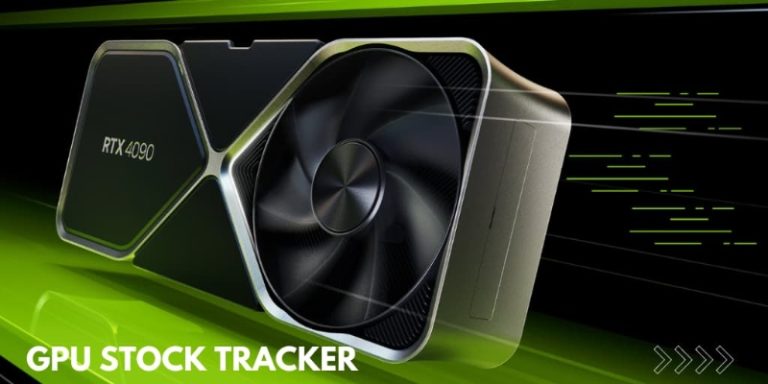
- Hardware Synergy: These compact models are perfect partners for cost-effective inference on less powerful, widely available hardware, such as a single NVIDIA RTX 4090 for on-premises deployment or even on mobile and edge devices.
Leadership Claim: Lightweight models lead the race to ubiquity and practicality. They are the trend that brings AI from the cloud to the daily workflows—powering real-time translation on phones, instant product recommendations on websites, and fast, private data analysis on company servers without exorbitant cloud bills.
Contender 2: The Universal Genius – Multimodal Models
If lightweight models are specialists, multimodal models are the polymaths. They aim to break down the walls between data types, creating a single AI that can seamlessly understand and generate text, images, audio, and video.
Beyond Simple Combination:
Early “multimodal” systems were often pipelines—an image classifier feeding text to a language model. Modern MMMs like GPT-4V or Google’s Gemini are fundamentally unified. They are trained on massive, interleaved datasets of text, images, and code, allowing them to develop a deeply interconnected understanding. An image isn’t just labeled; its elements, style, and implied meaning are woven into the model’s reasoning fabric.
The Power of a Unified World View:
This creates astonishing, human-like capabilities. You can ask it to write a marketing slogan based on a product sketch, analyze a scientific chart and summarize the findings, or find an emotional moment in a video based on a voice description. The potential for creative assistants, revolutionary search interfaces, and complex problem-solving is immense.
The Cost of Genius:
However, this capability comes at a staggering cost. Training these unified models requires unprecedented computational scale—think tens of thousands of NVIDIA H100 or H200 GPUs running for months. Furthermore, their very generality can be a weakness for businesses. A model that knows a little about everything might not know enough about your specific industry’s nuances, leading to plausible but incorrect or generic outputs for specialized tasks.
Leadership Claim:
Multimodal models lead the race for raw capability and user experience innovation. They are contenders for the ultimate human-machine interface, potentially becoming the primary way we interact with all digital systems.
Contender 3: The Deep Expert – Industry-Customized Models
This trend asks a simple, powerful question: What good is a genius if it doesn’t understand your business? Industry-customized models are the domain experts, trained or meticulously fine-tuned on proprietary data—legal contracts, medical journals, engineering schematics, financial reports.
From General Knowledge to Operational Intelligence: These models move beyond answering general questions to performing high-stakes, domain-specific tasks. Think of a model that reads thousands of clinical trial reports to suggest potential drug interactions, or one that analyzes decades of supply chain and geopolitical data to predict procurement risks for a manufacturer.
The Path to Specialization: Customization happens in several ways:
- Continued Pre-training: Further training a base model (like Llama 2) on a vast corpus of domain-specific text.
- Supervised Fine-Tuning (SFT): Training the model on labeled examples of specific tasks (e.g., “label this radiograph”).
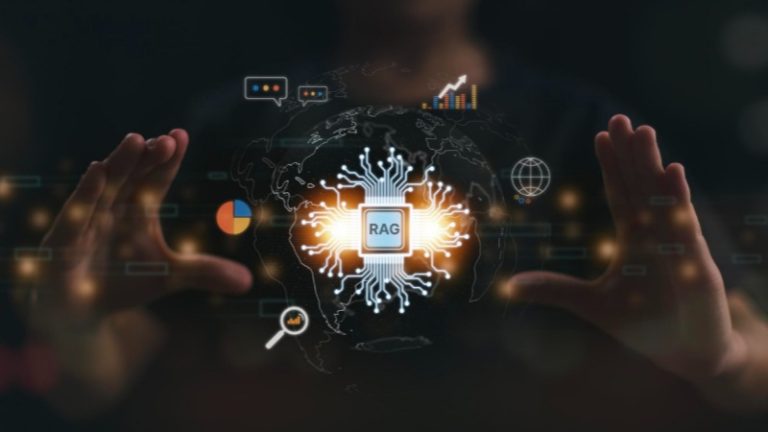
- Retrieval-Augmented Generation (RAG): Connecting a model to a live, vectorized database of company knowledge, ensuring its answers are grounded in internal docs and latest data.
The infrastructure for such specialization is critical. Developing and iterating on these custom models requires flexible, high-performance computing that doesn’t break the bank. This is where platforms architected for efficiency show their value. For instance, WhaleFlux provides an integrated AI service platform that supports this entire customization journey. Beyond offering optimized access to the full spectrum of NVIDIA GPUs (from H100 for heavy training to RTX 4090s for cost-effective development), its unified environment for GPU management, model serving, and AI observability allows enterprise teams to focus on fine-tuning their proprietary data and workflows. By maximizing cluster utilization and providing stable deployment, it turns the high-compute task of building a domain expert into a manageable and predictable operational process.
Leadership Claim: Industry-customized models lead the race for tangible ROI and competitive advantage. They don’t just automate tasks; they encapsulate and scale a company’s unique intellectual property, directly impacting the bottom line by solving problems no off-the-shelf model can.
The Verdict: A Trifecta, Not a Winner-Takes-All
So, who will lead? The answer is not one, but all three—in different arenas.
The future belongs to strategic layering. The winning enterprise architecture will likely integrate elements from each trend:
- A lightweight, efficient model deployed at the edge to handle high-frequency, low-latency tasks (e.g., customer service chat filtering).
- A powerful multimodal model in the cloud as a creative and research co-pilot for employees, analyzing presentations and brainstorming.
- A deeply customized, domain-specific model serving as the core operational brain, powering critical applications like risk assessment, diagnostic support, or legal discovery.
Lightweight models will lead in pervasiveness and accessibility. Multimodal models will lead in consumer-facing and creative applications. Industry-customized models will lead in transforming core business operations and building unassailable moats.
The true leaders won’t be the models themselves, but the organizations that most skillfully navigate this trifecta. They will be the ones who ask not “Which trend should we follow?” but “How can we orchestrate these powerful forces to solve our most meaningful problems?” The race is on, and the most intelligent strategy may be to build a team that can run in all three directions at once.
FAQs: AI Model Trends
1. Is the trend toward lightweight models just because companies can’t afford larger ones?
Not at all. While cost is a major driver (making AI viable for more use cases), the shift is fundamentally about right-sizing. Lightweight models offer superior speed, lower latency, the ability to run on-device for privacy, and dramatically reduced energy consumption. It’s about applying the appropriate amount of intelligence for the task, not settling for less.
2. Can a multimodal model replace the need for specialized, industry-customized models?
Unlikely in the near term. While multimodal models are incredibly versatile, they are generalists. An industry-customized model trained on proprietary data develops a depth of understanding and reliability on niche tasks that a generalist cannot match. Think of it as the difference between a brilliant medical student (multimodal) and a seasoned specialist with 20 years of experience (customized). For high-stakes business applications, depth and precision are non-negotiable.
3. What’s the biggest infrastructure challenge in pursuing industry-customized AI?
The challenge is two-fold: computational cost and operational complexity. Fine-tuning and continuously improving custom models require significant, repeated GPU compute cycles (on hardware like NVIDIA A100 or H100 clusters). Managing this infrastructure, ensuring high utilization to control costs, and maintaining stable deployment pipelines is a massive undertaking. This is precisely why integrated platforms that handle this complexity are becoming essential for enterprise AI teams.
4. How does a platform like WhaleFlux support a company exploring multiple AI trends?
WhaleFlux acts as a flexible, unified foundation for AI development and deployment. For lightweight models, its efficient GPU management allows for cost-effective inference scaling. For developing customized models, it provides the high-performance NVIDIA GPU resources (like H100s for training) and the observability tools needed for iterative fine-tuning. Its integrated environment for models and agents helps teams manage this entire portfolio from experimentation to production, optimizing resource use across different types of AI workloads and preventing infrastructure from becoming a bottleneck to innovation.
5. As a business leader, how should I prioritize investment among these three trends?
Start with the problem, not the technology. Map your key business challenges to the trend’s strength:
- Invest in Lightweight AI for customer-facing apps needing speed/scale (e.g., recommendation engines).
- Invest in Multimodal AI for enhancing creativity, internal research, or building next-gen user interfaces.
- Invest in Industry-Customized AI for automating core, proprietary processes (e.g., contract analysis, predictive maintenance, diagnostic support). Most companies will find the highest initial ROI in a focused, customized model project that tackles a known, expensive problem.