1. Introduction: The Engine of Modern AI
We are living through an era defined by artificial intelligence. From chatbots that understand context to systems that can generate images from a sentence, the capabilities growing out of AI labs are nothing short of revolutionary. But behind every breakthrough, there is a less glamorous, yet critical, foundation: immense computational power. As AI models grow exponentially in size—with some now boasting trillions of parameters—the demand for processing has moved far beyond what a single computer, or even a single powerful graphics card, can provide.
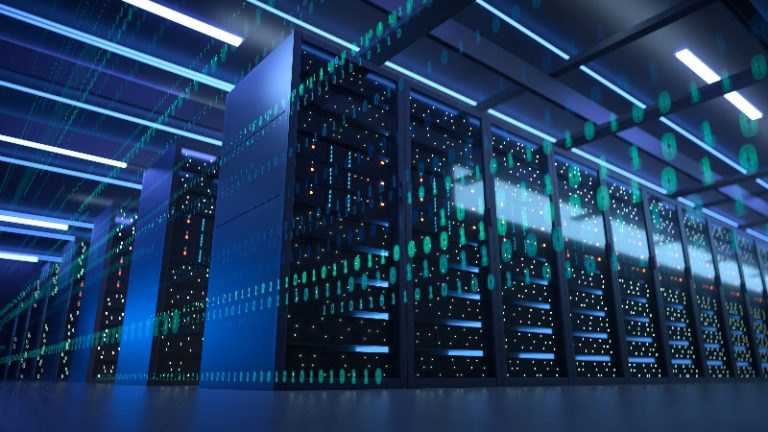
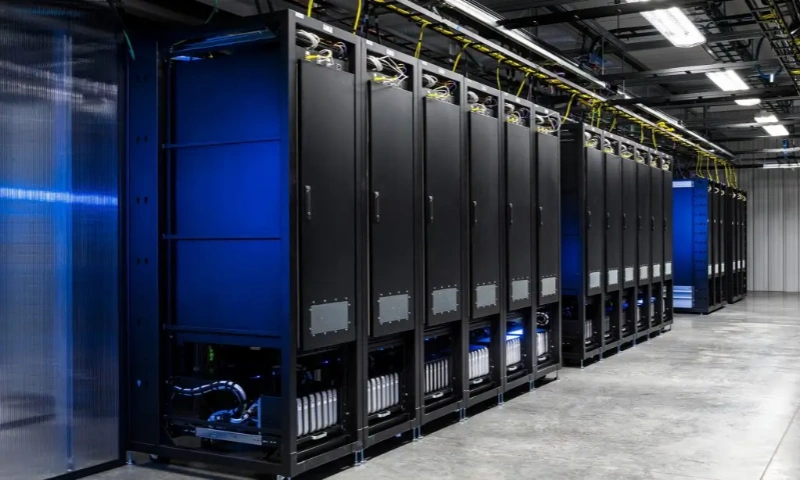
This is where GPU clusters come in. Think of a cluster not as one mighty engine, but as a synchronized fleet of engines working in perfect harmony. A GPU cluster is a network of multiple graphics processing units (GPUs) linked together to act as a single, colossal supercomputer. This is the foundational infrastructure that makes training today’s large language models (LLMs) and most complex AI models possible.
However, acquiring the hardware is only the first step. The real challenge begins once the cluster is powered on. Managing this interconnected web of high-performance components is notoriously complex, expensive, and can become a major bottleneck, slowing down innovation instead of accelerating it. This post will explore why GPU clusters are absolutely essential for advanced AI, uncover the hidden costs and complexities of running them, and demonstrate how WhaleFlux provides the intelligent orchestration needed to achieve peak performance, maximize stability, and control your cloud computing spend.
2. Why GPU Clusters Are Non-Negotiable for Advanced AI
To understand why clusters are mandatory, consider the task of training a state-of-the-art large language model. The dataset is enormous, the mathematical operations number in the quadrillions, and the model itself is too large to fit into the memory of any single GPU. A single NVIDIA H100, one of the world’s most powerful AI accelerators, is impressive, but alone, it could take months or even years to complete such a training run.
A GPU cluster solves this through the principle of parallel processing. By breaking the massive workload into smaller chunks and distributing them across dozens or hundreds of GPUs, the job that would take one GPU a year can be completed by a cluster in a week. This is scalability in action.
The benefits extend beyond raw training speed:
- Tackling Larger Problems: Clusters enable work that is simply impossible otherwise, allowing researchers and engineers to explore more sophisticated model architectures and larger datasets.
- Efficient Inference: Deploying a trained model for user requests (inference) also benefits from clustering. Multiple GPUs can handle thousands of simultaneous queries with low latency, providing the responsive experience users expect.
- Resource Flexibility: Different tasks within a project can be routed to different types of GPUs based on their needs.
But to truly leverage a cluster built with top-tier NVIDIA hardware—from the computational brute force of the H100 and H200 to the versatile performance of the A100 and the exceptional value of the RTX 4090—you need more than just cables and networking switches. You need intelligent management. This is the pivotal role WhaleFlux is designed to fill, ensuring that every GPU in your cluster is working to its potential as part of a cohesive whole.
3. The Hidden Costs and Complexities of Managing GPU Clusters
The power of a cluster comes with significant operational challenges. Many organizations find that after making the substantial investment in hardware, they encounter four major hidden costs that drain budgets and productivity.
Challenge 1: Resource Idling & Underutilization
This is the silent budget killer. In a poorly managed cluster, GPUs often sit idle. Why? Because manually scheduling jobs is imprecise. A data scientist might reserve eight GPUs for a five-day training job but only fully utilize them for two days, leaving expensive hardware doing nothing for the remainder. Without automated, smart scheduling, utilization rates can plummet to 30-40%, meaning you’re paying for 100% of the hardware but only using a fraction of it.
Challenge 2: Operational Overhead
Managing a cluster is a full-time job—actually, several full-time jobs. Your engineering team becomes consumed with tasks like:
- Manual Provisioning: Assigning specific jobs to specific GPU servers.
- Load Balancing: Trying to evenly distribute work to prevent some nodes from overheating while others are cold.
- Health Monitoring: Constantly checking for failed GPUs, network issues, or software crashes.
This “ops tax” pulls your most valuable talent away from core AI development and into infrastructure maintenance.
Challenge 3: Soaring Cloud Costs
If you’re using a cloud provider, inefficiency translates directly to shocking bills. Most cloud platforms charge by the second for GPU instances, whether they are computing or idle. The underutilization and poor scheduling mentioned above mean you are literally burning money on unused compute time. Furthermore, without clear insight, teams may spin up more powerful (and expensive) GPU instances than a task actually requires, simply because it’s easier than fine-tuning.
Challenge 4: Performance Bottlenecks
A chain is only as strong as its weakest link. In a cluster, a slowdown in data storage, a network latency spike, or a single overloaded GPU can become a bottleneck that stalls the entire system. Diagnosing these issues in a complex environment is time-consuming and requires specialized expertise.
These challenges create a formidable barrier to ROI. This is precisely the problem WhaleFluxwas built from the ground up to solve. We turn these four pain points into opportunities for optimization and savings.
4. WhaleFlux: The Intelligent Orchestrator for Your NVIDIA GPU Cluster
WhaleFlux is not just another cloud provider; it is a specialized intelligent GPU resource management platform designed specifically for the needs of AI-driven enterprises. Think of it as the expert conductor for your orchestra of NVIDIA GPUs, ensuring every instrument plays its part at the right time, in perfect harmony.
Core Function 1: Smart Scheduling & Dynamic Allocation
WhaleFlux’s brain is its intelligent scheduler. You simply submit your AI workloads—be it a massive LLM training job, a batch inference task, or a model fine-tuning experiment. The platform automatically analyzes the compute and memory requirements and dynamically assigns it to the most suitable, available GPU resources within your cluster.
- Example: A demanding training job requiring Tensor Core performance is routed to your bank of NVIDIA H100 or A100 GPUs. Meanwhile, a separate, memory-intensive inference workload is automatically directed to available nodes with high VRAM capacity. This ensures optimal performance for every task without manual intervention.
Core Function 2: Holistic Load Balancing & Health Monitoring
The platform continuously monitors the entire cluster. It balances workloads in real-time to ensure no single GPU is overwhelmed while others are underused, maximizing overall utilization. Furthermore, its proactive health monitoring can detect signs of GPU instability or failure, allowing it to reschedule jobs away from problem nodes before they crash, ensuring the high stability required for long-running training sessions.
Core Function 3: Unified Management Portal
WhaleFlux provides a single, intuitive dashboard—a “single pane of glass”—to view and control your entire heterogeneous GPU cluster. Whether your cluster is a mix of NVIDIA H200s, A100s, RTX 4090s, or other NVIDIA models, you manage them all from one place. Track utilization, monitor job status, analyze costs, and access every GPU resource without logging into multiple systems or using obscure command-line tools.
The Value Proposition: From Features to Tangible Benefits
These core functions translate directly into the outcomes that matter most to your business:
- Faster Deployment: Eliminate wait times for resource provisioning. Your team spends less time on DevOps and more time on AI, slashing the time from experiment to production.
- Maximized Stability: Automated health checks and intelligent job placement prevent failures and ensure your most critical training jobs complete successfully.
- Significant Cost Reduction: By driving GPU utilization rates up to 70-80% or higher, WhaleFlux ensures you get the maximum compute from every dollar spent, directly attacking the problem of idle resources and cloud waste.
5. Building an Optimized Cluster Strategy with WhaleFlux
WhaleFlux empowers you to not just manage a cluster, but to design and operate a strategically optimized AI compute environment.
Right-Sizing Your Cluster
One of the biggest strategic advantages is WhaleFlux’s ability to help you choose the right mix of GPUs. Not every task needs an H100. Through workload analysis and insight, we help you build a cost-effective cluster that matches your actual needs. Use NVIDIA H100s for your most intensive training, leverage A100s for versatile training and inference, and deploy RTX 4090s for cost-sensitive development or specific inference tasks. WhaleFlux manages this heterogeneity seamlessly, ensuring the right workload always lands on the right GPU.
Flexible Acquisition Models
We provide the building blocks for your optimized cluster. Through WhaleFlux, you can purchase or rent the exact NVIDIA GPUs you need to execute your strategy. Our rental model is designed for project stability and predictable budgeting, with a minimum term of one month. This removes the unpredictable cost volatility of hourly billing and provides the dedicated, consistent resources your AI projects require to reach completion, whether they run for six weeks or six months.
From Fragmentation to Cohesion
The journey with WhaleFlux is a transformation from fragmented, difficult-to-manage infrastructure to a smooth, cohesive, and intelligent AI compute cluster. It’s the difference between spending your energy keeping the lights on and using that energy to innovate and lead.
6. Conclusion: Cluster Smarter, Innovate Faster
GPU clusters are the undeniable engine of modern AI, providing the scale necessary to tackle the field’s biggest challenges. However, their inherent complexity—manifesting as idle resources, operational overhead, soaring costs, and performance bottlenecks—can transform this engine from an advantage into a drag on innovation.
The key differentiator is no longer just who has the most GPUs, but who can use them most intelligently. Intelligent orchestration is the force multiplier that unlocks the true potential and ROI of your hardware investment.
This is the core mission of WhaleFlux. We transform GPU cluster management from a complex cost center into a streamlined competitive advantage. By providing smart automation, deep visibility, and flexible access to the best NVIDIA hardware, we allow your team to focus on what they do best: building the future with AI.