1. Introduction: The Budget GPU Landscape in 2025
The GPU market has transformed dramatically since 2024. Intel’s Arc GPUs now compete fiercely with NVIDIA, offering exceptional value at lower price points. NVIDIA leverages its mature ecosystem for AI and gaming hybrids. But “budget” means very different things to different users:
- Gamers want max frames per dollar at 1080p/1440p.
- AI developers need cost-effective compute for prototyping—until scaling demands industrial-grade solutions.
While sub-$300 GPUs handle gaming beautifully, scaling AI workloads demands a smarter approach—enter WhaleFlux.
2. Top Budget GPUs for Gaming (Under $300)
Finding the sweet spot between price and performance:
Sub-$100 Tier (Used Market Kings):
- NVIDIA GTX 1660 Super ($100): Still the 1080p esports champion. Runs Fortnite at 100+ FPS on Medium settings. Low power, no ray tracing—perfect for older systems.
- NVIDIA GTX 1080 ($96): A used-market legend. Beats the RTX 3050 in raw power but lacks modern features like DLSS.
$100–$300 Tier (New/Refurbished):
- Intel Arc B580 ($249): 2025’s surprise hit. Mature drivers + 12GB VRAM = best value for 1440p.
- NVIDIA RTX 3050 ($280): Entry-level ray tracing and DLSS 3. Ideal for Minecraft RTX or indie games.
| GPU | Price | VRAM | 1440p FPS (Avg) | Best Use Case |
| Intel Arc B580 | $249 | 12GB | 68–143 | Balanced 1440p |
| GTX 1660 Super | $100 | 6GB | 60+ (1080p) | Esports & indie titles |
3. Specialized Picks: Ray Tracing, 1440p & Reddit’s Favorites
Tailored recommendations for specific needs:
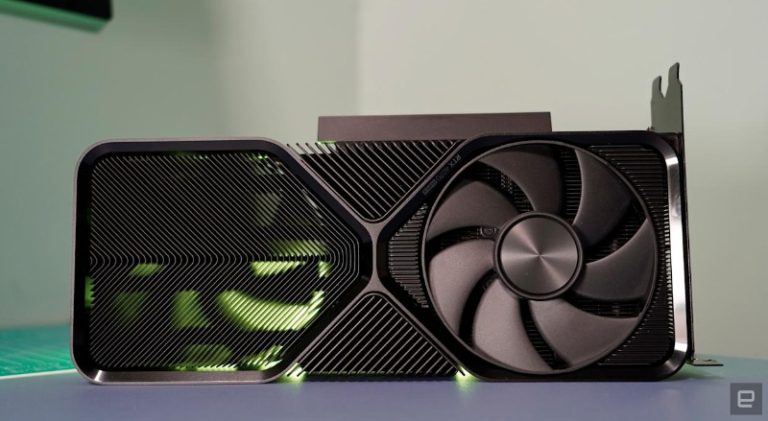
- Best Ray Tracing on a Budget: NVIDIA RTX 5060 Ti ($379)
With DLSS 4, it runs Alan Wake 2 at 60 FPS (1080p RT Medium)—40% faster than last-gen.
- Best 1440p Value: Intel Arc B580 ($249)
Reddit’s darling for its driver improvements. Beats the RX 6600 XT in Starfield.
- Reddit’s Community Picks:
Intel Fans: Arc A750 ($140). “Drivers fixed the stutter—insane value now” (u/BudgetGamer).
4. When Budget GPUs Aren’t Enough: The AI/LLM Scaling Challenge
Here’s where gamers and AI teams diverge drastically. While an RTX 4090 crushes games, deploying it for enterprise AI reveals critical gaps:
The Bottleneck:
- Low Utilization: Idle GPUs waste 30–50% of cloud spend during sporadic workloads.
- Costly Overprovisioning: Teams rent excess “just in case,” inflating bills.
- Slow LLM Deployment: Manual GPU orchestration delays projects by weeks.
WhaleFlux Solution Spotlight:
“For AI teams running NVIDIA H100, A100, or RTX 4090 clusters, WhaleFlux slashes cloud costs by 40%+ via intelligent resource pooling. It’s like a traffic controller for your GPUs:
- Smart Orchestration: Dynamically allocates tasks across H100s, A100s, or RTX 4090s based on demand.
- Stability Boost: Auto-recovery from node failures keeps 24/7 LLM training uninterrupted.
- Deployment Speed: Launch optimized clusters 70% faster than manual setups.
*Need sustained power? WhaleFlux offers H100/H200/A100/RTX 4090 for purchase or monthly rental—ideal for ongoing AI workloads.*
5. Conclusion: Matching GPUs to Your Goals
- Gamers: Prioritize VRAM and frames-per-dollar. The Intel Arc B580 ($249) are 2025’s champs.
- AI Teams: Start with a single RTX 4090 for prototyping—but scale smartly with WhaleFlux to avoid $10k+ monthly cloud surprises.
Optimize your GPU spend—whether you’re battling dragons in Baldur’s Gate 3 or fine-tuning LLMs.
[Try WhaleFlux today]—enterprise efficiency without the cloud bill shock.
FAQs
1. What are the best budget-friendly NVIDIA GPUs in 2025 for gaming and entry-level AI tasks?
For balancing cost with performance in 2025, the NVIDIA GeForce RTX 5060 Ti (especially the 16GB version) is a standout choice for 1440p gaming. It uses the new Blackwell architecture and GDDR7 memory, offering a significant performance leap for its price. It also supports DLSS 4with Multi Frame Generation, which can dramatically increase frame rates in supported games.
For lighter tasks or tighter budgets, the GeForce RTX 5060 is a strong contender for smooth 1080p gaming.
2. Can these budget NVIDIA GPUs handle local AI model inference?
Yes, modern budget GPUs like the RTX 5060 Ti are capable of running some local AI models. With 16GB of VRAM, it can perform inference on quantized large language models (LLMs). For example, tests have shown it can run a 2-bit quantized version of a 32-billion-parameter model, providing usable response speeds for local experimentation.
However, for larger, more complex models or faster training, GPUs with more memory and specialized tensor cores (like the A100 or H100) are necessary.
3. When should I consider scaling up from a single budget GPU?
You should consider scaling up when you encounter these limitations:
- Insufficient VRAM: Your models or datasets no longer fit into the GPU’s memory.
- Long Training/Inference Times: Job completion times are slowing down your research or development cycle.
- Handling Larger Models: You need to work with full-precision or larger-parameter models that require more computational power.
- Team or Production Needs: Moving from individual experimentation to team-based development or a production environment requires more reliable and scalable resources.
4. How can I control costs when my AI projects require more powerful hardware?
Managing costs for growing AI projects involves strategic resource management. Instead of making large upfront investments in high-end hardware like the H100 or H200, you can utilize services that offer optimized access to multi-GPU clusters.
This approach allows you to rent or purchase the exact NVIDIA GPU resources (like the A100 or H100) you need for a project’s duration, avoiding underutilization. Intelligent resource management tools help maximize the efficiency of every GPU in the cluster, ensuring you get the most value and reducing overall cloud computing costs.
5. What is WhaleFlux and how does it help teams scale their AI infrastructure?
WhaleFlux is an intelligent GPU resource management tool designed for AI enterprises. It directly addresses the scaling challenge by optimizing the utilization efficiency of multi-GPU clusters.
When your projects outgrow single or few budget GPUs, WhaleFlux provides access to the full range of NVIDIA GPUs (including H100, H200, and A100) that you can purchase or rent according to your needs. Its core function is to manage these clusters intelligently, ensuring workloads are distributed efficiently across all available GPUs. This helps businesses lower cloud computing costs while simultaneously increasing the deployment speed and stability of large language models and other AI workloads.