I. Introduction: The Engine Behind Modern AI Breakthroughs
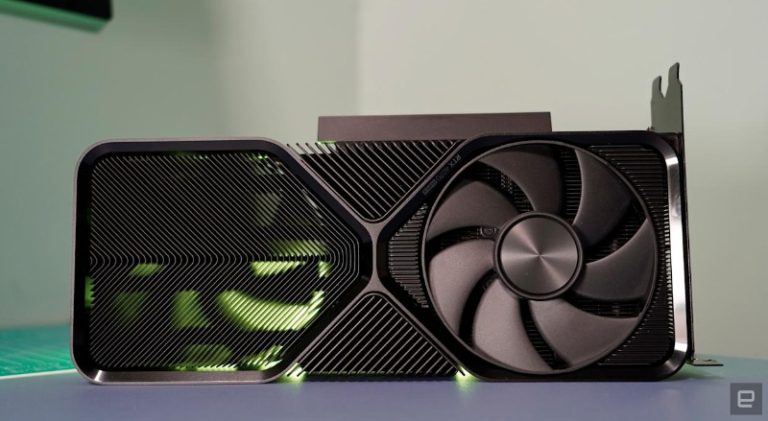
In the race to develop cutting-edge artificial intelligence, we’ve reached a fascinating crossroads. The most powerful single GPU you can buy today—whether it’s an NVIDIA RTX 4090 for a developer’s workstation or a data-center-grade NVIDIA A100—is an engineering marvel. It can perform trillions of calculations per second, enabling incredible feats of computation. Yet, paradoxically, it’s no longer enough. When faced with the task of training a state-of-the-art large language model (LLM) with hundreds of billions of parameters, a single GPU, no matter how powerful, hits a fundamental wall. The training process would stretch from weeks into months or even years, making innovation practically impossible.
This computational bottleneck is why the world’s leading AI labs and enterprises have moved beyond single machines to a more powerful infrastructure: the GPU cluster. Think of it as the difference between a single, powerful engine and an entire spacecraft. One is impressive, but the other is built to reach new frontiers. A GPU cluster is the foundational supercomputing architecture that powers the modern AI revolution, from the LLMs that write and converse with us to the complex simulations that accelerate scientific discovery.
But building and managing these clusters is a monumental challenge that requires expertise in hardware, networking, and software—a distraction that most AI companies can ill afford. This is precisely the problem WhaleFlux is designed to solve. WhaleFlux is an intelligent GPU resource management platform that removes the immense complexity of building and operating GPU clusters. We provide AI enterprises with immediate, optimized access to supercomputing power, allowing them to focus on what they do best: building transformative AI models.
II. What is a GPU Cluster? Demystifying the Technology
A. A Simple Definition
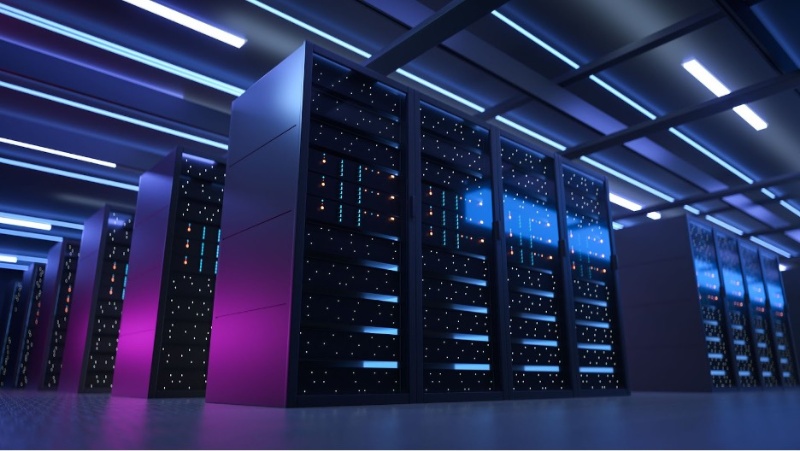
So, what is a GPU cluster? At its core, a GPU cluster is a network of multiple computers (called “nodes” or “servers”), each equipped with multiple GPUs, all working together in perfect harmony to function as a single, unified supercomputer. It’s a team of specialized machines combining their strength to tackle a problem too large for any single member. If a single GPU is a powerful individual athlete, a GPU cluster is the entire coordinated Olympic team, engineered to win.
B. Core Components Explained
To understand how this teamwork works, let’s break down the essential anatomy of a GPU server cluster:
Multiple GPU Servers:
These are the building blocks, or “nodes.” Each server is a high-performance computer containing multiple high-end NVIDIA GPUs. In a professional cluster, you’ll find servers loaded with cards like the NVIDIA H100 or A100 for maximum throughput. A single node might have 4 or 8 of these GPUs, and a cluster will link many such nodes together.
High-Speed Interconnects:
This is the cluster’s nervous system. For the GPUs within a single server, NVIDIA’s NVLink technology provides a super-fast bridge, allowing them to share data at incredible speeds. To connect multiple servers, high-bandwidth networking like InfiniBand is used. This ensures that when GPUs on different servers need to exchange data—which happens constantly during distributed training—they aren’t slowed down by a communication bottleneck. It makes the entire network of machines feel like one cohesive unit.
Cluster Management Software:
This is the brain of the operation. This specialized software is what orchestrates the entire system. It’s responsible for distributing pieces of a large AI training job across all the available GPUs, scheduling workloads, monitoring health, and managing the shared storage. Without this intelligent “conductor,” the orchestra of GPUs would descend into chaos.
C. The Power of Parallelism, Amplified
The entire purpose of a cluster is to take the concept of GPU parallelism and explode it to a much larger scale. A single GPU can parallelize a task across its thousands of cores. A GPU cluster parallelizes the task across thousands of cores and across dozens of GPUs. This allows you to take a single, massive problem—like training a GPT-class model—and split it up, with different chunks of the model and data being processed simultaneously across the entire cluster. What would take a year on one GPU can be accomplished in days on a sufficiently large and well-managed cluster.
III. Why Your AI Ambitions Depend on GPU Clusters
A. Scaling Model Training
The most direct application for GPU clusters is in training ever-larger AI models. The relationship between model size, data, and performance is clear: more parameters and more data generally lead to more capable models. However, the computational cost grows exponentially. Training a modern LLM on a single GPU is simply not feasible within a reasonable business timeframe. GPU clusters make this possible by distributing the model and data across hundreds of GPUs, turning an impossible task into one that can be completed in a matter of weeks. They are, quite simply, non-negotiable for anyone serious about working at the forefront of AI.
B. Handling Massive Datasets
It’s not just the models that are growing—the datasets are, too. AI is increasingly driven by multimodal data: terabytes of text, images, audio, and video. A single server, no matter how well-equipped, has limited memory and processing bandwidth. A GPU cluster can ingest these enormous datasets, partition them across its nodes, and process all parts in parallel. This capability is crucial for building robust, generalizable models that understand the complexity of the real world.
C. Accelerating Time-to-Insight
In the competitive field of AI, speed is a strategic advantage. The faster your team can iterate—testing new model architectures, running experiments, and validating hypotheses—the quicker you can innovate and bring products to market. GPU clusters dramatically accelerate this entire research and development cycle. What used to be a quarterly training run can become a weekly experiment. This accelerated “time-to-insight” is a powerful competitive moat, and it is directly enabled by accessible supercomputing power.
IV. The Hidden Challenges of Managing GPU Clusters
A. Immense Operational Complexity
The promise of GPU clusters comes with a significant catch: they are incredibly complex to manage. Building one from scratch involves a daunting checklist: sourcing and provisioning expensive and often scarce hardware (like H100s), ensuring power and cooling infrastructure, building the high-speed network fabric, and maintaining a consistent software stack with compatible drivers, CUDA versions, and libraries across every single node. One misconfiguration can bring the entire system to a halt.
B. The Resource Orchestration Bottleneck
Once the cluster is built, the next challenge is using it efficiently. This is the problem of resource orchestration. How do you ensure that when multiple data scientists submit jobs, the cluster’s resources are allocated fairly and efficiently? Without intelligent management, you can end up with “GPU hoarding,” where some GPUs are overloaded while others sit completely idle. Maximizing the utilization of a multi-million-dollar GPU server cluster is a full-time job for a team of expert engineers.
C. Soaring Costs of Inefficiency
This complexity and poor orchestration have a direct and painful impact on the bottom line. A poorly managed cluster is a massive financial drain. Underutilized GPUs are burning money without producing value. The engineering time spent on maintenance and troubleshooting is another hidden cost. Ultimately, this inefficiency leads to skyrocketing cloud bills, delayed project timelines, and a stifling of innovation as teams wait for resources to become available.
V. WhaleFlux: Your Simplified Path to Powerful GPU Clusters
A. Instant Access, Zero Hardware Headaches
WhaleFlux is designed to be the turnkey solution to these challenges. We provide instant access to pre-configured, high-performance GPU clusters built with the latest NVIDIA technology, including the H100, H200, and A100 GPUs. We handle all the complexity of hardware procurement, assembly, and networking. With WhaleFlux, you don’t build a cluster; you simply access one that is ready to run your most demanding AI workloads from day one.
B. Intelligent Cluster Management
This is where WhaleFlux truly shines. Our platform is not just about providing hardware; it’s about providing intelligent hardware. WhaleFlux’s core technology includes advanced resource orchestration and load-balancing algorithms that automate the management of the cluster. Our system dynamically allocates workloads to maximize GPU utilization, prevents resource conflicts, and ensures your jobs run as efficiently as possible. This intelligent management is how we deliver on our promise to significantly reduce cloud costs and accelerate the deployment speed of your large language models.
C. A Flexible and Strategic Model
We understand that AI projects ebb and flow. To provide maximum flexibility, WhaleFlux offers both purchase and rental options for our managed GPU clusters. Our rental model, with a minimum commitment of one month, is specifically designed for project-based work. It allows a startup to access a powerful H100 cluster for a crucial training sprint or an enterprise to seamlessly scale capacity for a new product launch. This transforms GPU cluster access from a massive capital expenditure into a strategic, flexible operational cost, giving you the power to scale on demand.
VI. Conclusion: Build AI, Not Infrastructure
The message is clear: GPU clusters are the indispensable bedrock of modern AI. They provide the supercomputing power necessary to tackle the world’s most ambitious computational challenges. However, the path to harnessing this power has been fraught with immense operational complexity, steep costs, and management overhead that distracts from the core mission of AI development.
WhaleFlux changes this paradigm. We democratize access to supercomputing by offering managed, efficient, and instantly scalable GPU clusters. We remove the infrastructure burden entirely, allowing your talented AI teams to dedicate 100% of their energy and creativity to what truly matters—innovation and building the future.
Stop contemplating infrastructure and start building the AI that could change everything. Explore how WhaleFlux’s powerful and intelligently managed GPU clusters can provide the foundation for your next breakthrough. Visit our website to learn more and get started today.
FAQs
1. What exactly is a GPU cluster, and why is it fundamental for modern AI?
A GPU cluster, in its essence, is a group of interconnected computers (or servers) where each is equipped with one or more NVIDIA GPUs (such as H100, A100, or RTX 4090). These machines are linked via a high-speed network, enabling them to work together as a single, cohesive supercomputing unit.
This architecture is fundamental because training today’s large language models (LLMs) and complex AI models requires performing trillions of mathematical calculations. A single GPU, no matter how powerful, would take impractically long to complete this task. A GPU cluster tackles this by splitting the massive computational workload across all its GPUs, which work in parallel to accelerate training from months to days or even hours.
2. What are the key technical components and challenges in building an efficient GPU cluster?
Building a high-performance GPU cluster goes beyond just installing many GPUs. It’s a sophisticated system comprising several critical layers:
- High-Speed Interconnects: The network connecting the GPUs is paramount. Technologies like NVIDIA NVLink within a server and InfiniBand between servers provide the ultra-low-latency, high-bandwidth communication needed to keep thousands of GPUs synchronized. A slow network can become a severe bottleneck, causing expensive GPUs to sit idle while waiting for data.
- Software Orchestration: Software like Kubernetes, combined with specialized operators (e.g., NVIDIA GPU Operator), is essential for managing and scheduling AI workloads across the cluster, ensuring resources are used efficiently.
- Power and Cooling: Modern, dense clusters like those built on the NVIDIA MGX architecture house immense power in a single rack (up to 120 kW for a full rack of Blackwell GPUs). This demands advanced liquid cooling solutions and robust power delivery systems to maintain stability and performance.
3. How is a cluster for AI training different from one for AI inference?
- AI Training Clusters are built for maximum raw compute power and synchronization. They focus on parallelizing a single massive job (like training a 1 trillion parameter model) across hundreds or thousands of GPUs. Here, top-tier data center GPUs like the NVIDIA H100 or H200, connected via NVLink, are crucial to minimize communication overhead during the lengthy training process.
- AI Inference Clusters are optimized for high throughput, low latency, and cost-efficiencywhen serving a trained model to many users. They handle numerous independent requests concurrently. Solutions like NVIDIA Dynamo employ strategies like “decomposed serving,” where different parts of the inference process (pre-fill and decoding) are intelligently split across different GPUs to serve more users with fewer resources. This allows for effective scaling with a mix of GPU types.
4. What are the practical paths for an AI company to access GPU cluster power?
Companies have several strategic options to harness GPU clusters, balancing control, cost, and complexity:
- Building and Owning: Offers maximum control and customization but requires massive upfront capital (CapEx) and deep expertise in hardware, networking, and data center operations. It’s a commitment best suited for organizations with predictable, long-term, and extreme-scale needs.
- Cloud Services: Provides flexibility and eliminates physical hardware management. However, managing the software stack, optimizing multi-GPU workloads across virtual instances, and controlling variable costs (OpEx) remain significant challenges.
- Managed Access & Specialized Platforms: This is where a solution like WhaleFlux provides a strategic advantage. WhaleFlux offers AI companies intelligent access to NVIDIA GPU clusters without the burdens of ownership. It optimizes the utilization efficiency of these multi-GPU resources through intelligent scheduling and management, directly helping to lower compute costs while boosting the deployment speed and stability of large models.
5. How does a tool like WhaleFlux manage a GPU cluster and help AI teams focus on innovation?
Managing a GPU cluster at scale involves complex, ongoing operational tasks that can distract AI teams from their core goal: building models. WhaleFlux is designed as an intelligent GPU resource management tool that abstracts this complexity.
Instead of teams manually grappling with job scheduling, load balancing, and monitoring individual GPU health, WhaleFlux automates these processes. It intelligently places AI workloads across its managed fleet of NVIDIA GPUs (including the latest H100, H200, and A100), ensuring optimal utilization. This means less time spent on DevOps and infrastructure firefighting, and more time for research and development. By providing a stable, high-performance platform with flexible rental options, WhaleFlux allows companies to “harness supercomputing power” as a streamlined service, accelerating their path from experimentation to production.