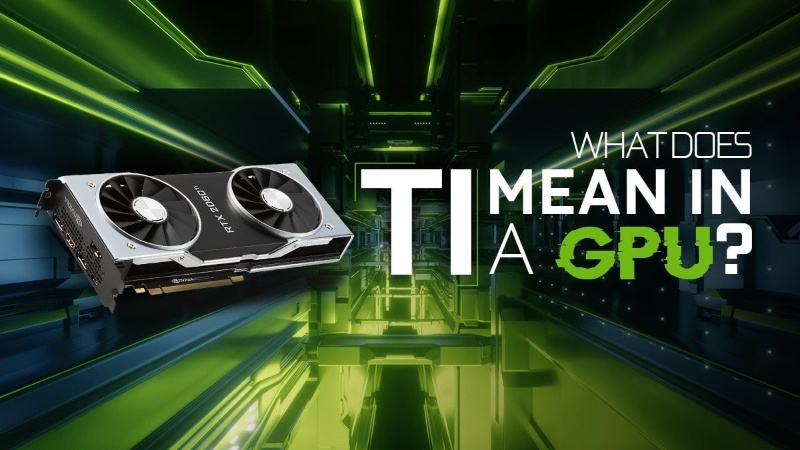
TL;DR: The “Ti” Performance Gap in AI Compute
The Technical Distinction: “Ti” (Titanium) signifies a mid-cycle refresh with higher CUDA core density and often expanded VRAM/Bandwidth, bridging the gap between standard models and the next-tier flagships.
Inference ROI: In AI tasks, Ti models (like the RTX 4080 Super/Ti) often provide 15-20% higher throughput for LLM token generation due to increased memory bus speeds.
The VRAM Wall: For enterprise workloads, a “Ti” upgrade is most critical when it increases the VRAM buffer (e.g., from 12GB to 16GB), allowing larger models like Llama-3-14B to fit entirely on-chip.
WhaleFlux Strategy: We provide Ti-tier hardware as a high-efficiency alternative for prototyping, offering near-flagship performance at a significantly lower hourly TCO.
1. Architecture Analysis: Why “Ti” Matters for Tensors
In professional compute environments, the “Ti” suffix isn’t just marketing—it represents a specific Silicon binning strategy. NVIDIA typically utilizes a more capable die (e.g., using a cut-down version of the AD102 die for an 80-class Ti/Super card) to deliver higher FP32 and Tensor performance.
For AI engineers, this translates to:
- Higher Warp Occupancy: More CUDA cores allow for more concurrent threads during backpropagation.
- Enhanced Thermal Headroom: Many Ti/Super models feature upgraded power delivery systems, crucial for 24/7 WhaleFlux training cycles.
2. VRAM: The Critical Constraint for LLMs
The most significant “Ti” benefit often isn’t the clock speed—it’s the Memory Bus Width. In many generations, Ti versions increase the bus from 192-bit to 256-bit.
At WhaleFlux, we’ve observed that for Agentic Workflows involving high-concurrency requests, the increased bandwidth of Ti/Super cards reduces Time-to-First-Token (TTFT) by up to 15%. This makes them a tactical choice for serving mid-sized models where H100s might be overkill.
3. Strategic TCO: When to Choose Ti on WhaleFlux
Choosing the right GPU tier is an exercise in Compute Economics. We recommend Ti-series instances for:
Iterative Prototyping:
When an 8GB card is too small, but an 80GB H100 is outside the current budget.
Multimodal Inference:
Handling both image generation (Stable Diffusion) and text in a unified pipeline.
Local Fine-tuning:
Small-scale LoRA training that benefits from the Ti’s higher core count without the enterprise-grade pricing of A-series cards.
Expert FAQ
Q: Is an RTX 3090 Ti better than an RTX 4080 for AI?
A: For AI, the 3090 Ti’s 24GB VRAM is superior for large model loading, even though the 4080 has newer cores. In LLM workloads, Capacity is King.
Q: Does WhaleFlux offer Ti-series GPUs for rent?
A: Yes. We curate a selection of high-performance Ti and Super models that offer the best Price-to-Performance ratiofor developers who need more than baseline consumer specs but want to maintain a lean TCO.
Q: How do I monitor if my Ti card is being fully utilized?
A: Through WhaleFlux Full-stack AI Observability, you can track specific metrics like Tensor Core Utilization and VRAM Fragmentation to ensure your Ti hardware is performing at its theoretical peak.