Introduction: The Limitations of Traditional Knowledge Management
Imagine a new employee trying to solve a customer’s technical issue. They turn to the company knowledge base, type in a keyword, and are greeted with dozens of documents from different years and departments. They spend 20 minutes cross-referencing three separate PDFs and a confusing spreadsheet, only to emerge with conflicting information. This scenario plays out daily in organizations worldwide, where traditional knowledge bases—whether intranets, SharePoint sites, or wikis—have become digital graveyards of information. They are difficult to navigate, often outdated, and fundamentally passive. They wait to be searched rather than actively helping employees work smarter.
This era of passive knowledge management is ending. AI Agents are emerging as the transformative solution that turns these static databases into dynamic, proactive assets. These intelligent systems don’t just store information; they understand, reason, and act upon it. However, this powerful transformation is built on a demanding technical foundation: sophisticated large language models that require substantial, reliable computational resources to function effectively at an enterprise scale.
1. The AI Agent Difference: From Reactive Search to Proactive Intelligence
To appreciate the revolution, we must first understand what an AI Agent truly is. It is far more advanced than the basic chatbots of the past or a simple keyword search function. While a chatbot might answer “What is our vacation policy?” with a link to a PDF, an AI Agent operates on a different level entirely.
A modern AI Agent is an autonomous system powered by a large language model that can perceive its environment (your company’s entire digital knowledge), make decisions, and execute actions to achieve specific goals. Its power comes from a framework of advanced capabilities:
Contextual Understanding:
An AI Agent doesn’t just match keywords. It interprets complex questions and discerns user intent. For example, an employee might ask, “How should I handle a client who is upset about a delayed shipment and is threatening to cancel?” The agent understands the context of customer retention, urgency, and logistics, and it searches for relevant solutions accordingly.
Multi-source Integration:
Unlike a traditional search that scans one database, an AI Agent can seamlessly connect information across various sources. It can pull data from a product manual in the knowledge base, check the real-time shipping status via an API, review the client’s past support tickets from Salesforce, and find the relevant escalation protocol from a process document—all within a single interaction.
Action-Oriented Output:
The final differentiator is action. The agent doesn’t just provide an answer; it can execute tasks. In the above scenario, it might not only suggest a script for appeasing the client and offer a discount code but also automatically generate a high-priority ticket for the logistics team to investigate the delay.
The business impact is profound: you effectively gain a knowledgeable digital employee that works 24/7, empowering your human workforce to solve problems faster and more effectively.
2. The Transformation Journey: Three Stages of Knowledge Base Evolution
The integration of AI into knowledge management is not a single event but an evolutionary journey. Most organizations fall into one of three stages:
Stage 1: Passive Repository
This is the starting point for many. The knowledge base is a digital library—a collection of documents, FAQs, and manuals with a basic search function. The burden is entirely on the user to find the right information. It’s a one-way street: you ask, and it (maybe) responds with a list of links to sift through.
Stage 2: Interactive Assistant
Here, companies introduce an AI-powered conversational interface, often a fine-tuned chatbot. Users can ask questions in natural language and receive direct, summarized answers instead of just links. For example, it can answer “What is the process for expense reimbursement?” by pulling the key steps from the HR policy. This is a significant step forward, but the system is still largely reactive—it waits for questions.
Stage 3: Proactive Partner
This is the pinnacle, achieved through a full-fledged AI Agent. The system transitions from being an assistant to a partner. It anticipates needs and takes initiative. For instance, it might proactively message a project manager: “I’ve noticed that Project Beta is nearing its deadline. Based on similar past projects, there’s a 70% probability of a one-week delay. Would you like me to draft a status update for the client and schedule a risk-assessment meeting with the engineering lead?” This is active empowerment, transforming the knowledge base from a reference tool into a strategic asset.
3. Real-World Applications: How AI Agents Activate Corporate Knowledge
The theoretical benefits of AI Agents become concrete when applied to real-world business functions:
Customer Service Enhancement:
When a customer asks a complex question, the support agent doesn’t need to frantically search multiple systems. The AI Agent instantly provides a precise answer by accessing the entire product database, past incident reports, and technical documentation, leading to faster resolution times and higher customer satisfaction.
Employee Onboarding:
Instead of overwhelming new hires with a hundred links, an AI Agent can act as a personal guide. It can answer specific questions like, “What software do I need to install as a designer?” and “Who is my go-to contact for travel approvals?” It can proactively deliver relevant information each week, making the onboarding process smoother and more engaging.
Technical Support:
For internal IT teams, an AI Agent can diagnose issues by analyzing error logs and comparing them against a vast library of historical tickets and solution documents. It can suggest specific fixes and, if needed, automatically pre-populate a support ticket with all the relevant diagnostic data.
Sales Enablement:
Before a sales call, an agent can provide the sales team with a concise brief on the client’s history, relevant case studies, and the latest competitive intelligence, all pulled from the company’s internal knowledge repositories and CRM.
4. The Technical Foundation: Computational Requirements for AI Agent Deployment
This intelligence comes with significant infrastructure demands. The sophisticated LLMs that power AI Agents are computationally intensive, requiring powerful Graphics Processing Units (GPUs) to run effectively. Deploying these agents at an enterprise level introduces several critical performance challenges:
Low-Latency Response Requirements:
For an AI Agent to feel like a natural conversation partner, it must respond in real-time. Answers need to come back in seconds, not minutes. This requires the entire LLM to be loaded into the fast memory of high-performance GPUs for instant processing.
High-Availability Needs:
An enterprise knowledge system cannot afford downtime. It must be available 24/7 to employees across different time zones, requiring a robust and redundant infrastructure that can handle continuous operation.
Scalability Challenges:
As more departments and employees adopt the AI Agent, the number of concurrent requests can spike dramatically. The underlying GPU infrastructure must scale seamlessly to meet this growing demand without degradation in performance.
Managing these resources—optimizing GPU utilization across multiple models and thousands of users—is a complex task that can consume valuable engineering time and lead to spiraling cloud costs if not handled efficiently.
5. Powering Transformation: How WhaleFlux Enables Scalable AI Agent Deployment
This is where WhaleFlux becomes an essential partner in your transformation journey. WhaleFlux is an intelligent GPU resource management tool designed specifically for AI-driven enterprises, providing the robust foundation required to deploy and scale AI Agents effectively.
WhaleFlux offers several strategic advantages that directly address the core challenges of AI Agent deployment:
Performance Assurance:
Through intelligent resource allocation, WhaleFlux ensures your AI Agents maintain consistent, low-latency response times even during peak usage periods. It dynamically manages GPU workloads to prevent bottlenecks, guaranteeing that employees get instant answers when they need them most, which builds trust and reliance on the system.
Cost Optimization:
By maximizing the utilization efficiency of every GPU in your cluster, WhaleFlux significantly reduces your total computational costs. It eliminates the waste of over-provisioning or idle resources, allowing you to run multiple, powerful agents across the organization without incurring exorbitant cloud bills.
Simplified Management:
WhaleFlux automates the complex tasks of cluster management, from workload scheduling to resource monitoring. This frees your AI and IT teams from the burdens of infrastructure maintenance, allowing them to focus on what they do best: developing and refining the agent’s capabilities to better serve the business.
6. Hardware Infrastructure: Enterprise-Grade GPU Solutions for AI Agents
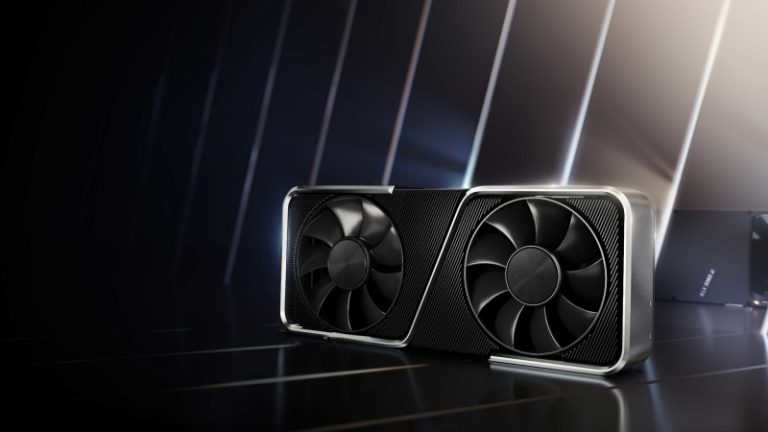
Superior software requires superior hardware. WhaleFlux provides the raw, uncompromising power for your AI Agents through direct access to a purpose-built ecosystem of the latest NVIDIA GPUs.
Our technology stack is designed to meet the diverse needs of enterprise deployment:
High-Performance Tier:
NVIDIA H100/H200 These are the engines for large-scale enterprise deployments. With their massive, high-bandwidth memory, they are ideally suited for serving the most advanced LLMs that power organization-wide agent systems, ensuring lightning-fast responses for thousands of concurrent users.
Production Tier:
NVIDIA A100 A proven and reliable workhorse for robust operational workloads. The A100 offers exceptional performance for training and deploying the powerful agents that handle complex internal knowledge workflows day in and day out.
Development Tier:
NVIDIA RTX 4090 This tier provides a powerful and cost-effective solution for research, development, testing, and smaller-scale specialized applications, giving teams the flexibility they need to innovate.
To provide stability and cost predictability that aligns with enterprise budgeting cycles, our GPUs are available for purchase or for rental with a minimum commitment of one month. This model moves beyond the unpredictable volatility of hourly cloud billing and is perfectly suited for the long-term, always-on nature of a corporate AI Agent.
Conclusion: Building the Future of Enterprise Knowledge Management
The transformation is clear and compelling. AI Agents are the key to unlocking the immense, often untapped, value within your corporate knowledge base. They represent a fundamental shift from passive queries to active empowerment, turning static information into a strategic advantage that drives efficiency, accelerates decision-making, and enhances employee capabilities.
Achieving this future successfully requires more than just sophisticated software; it demands a foundation of reliable, high-performance, and manageable computational infrastructure. The journey from a passive repository to a proactive partner is a technological evolution that depends on powerful and efficient GPU resources.
Ready to build the future of knowledge management in your organization? Leverage the power of WhaleFlux to deploy scalable, reliable, and cost-effective AI Agents that will transform how your company uses knowledge. Start your transformation journey today with WhaleFlux as your dedicated GPU infrastructure partner.
FAQs
1. How do AI Agents transform a static enterprise knowledge base into an active assistant?
AI Agents move knowledge systems from simple retrieval engines to proactive partners by integrating intelligent reasoning and task execution. Traditional systems rely on passive keyword searches . In contrast, an AI Agent first tries to match a user’s question against a pre-defined set of standard Q&A pairs for fast, accurate responses . If no match is found, it performs semantic analysis and logical reasoning across various knowledge entries to generate answers . Advanced agents can go beyond answering questions to take action, such as diagnosing a server issue and automatically executing commands to fix it, completing a full “perception-decision-execution” loop . Tools like WhaleFlux empower this transition by providing the necessary computational power (using NVIDIA GPUs like the H100 or A100) to run the complex models that drive this agent reasoning and execution, ensuring they are both fast and stable.
2. What is RAG and why is it critical for AI Agents powered by knowledge bases?
RAG (Retrieval-Augmented Generation) is the core technical framework that enables AI Agents to provide accurate, context-aware answers. It addresses key limitations of large language models (LLMs), such as outdated knowledge or “hallucinations” . When an Agent receives a query, RAG allows it to dynamically retrieve the most relevant information from your enterprise knowledge base and feed it to the LLM as context before generating an answer . This ensures the response is grounded in your proprietary data, such as internal manuals or case histories. The process involves efficient vector search across processed knowledge, making it far more accurate than old keyword-based searches . Deploying RAG-powered Agents requires robust GPU resources for both the retrieval and generation steps, which is where a managed solution like WhaleFlux is valuable for optimizing the performance of models running on NVIDIA GPUs.
3. What are the best practices for preparing our knowledge content for an AI Agent?
Optimizing your knowledge base content is essential for getting the best results from an AI Agent. The core principle is to create content that is both useful for humans and easily processed by AI . Key best practices include:
- Create Targeted Articles: Write articles that cover a single topic instead of bundling many subjects into one. This helps the AI provide more relevant outputs .
- Structure Your Content: Use clear headings (H1, H2, etc.), short paragraphs, and lists. AI models process structured information more effectively .
- Be Comprehensive and Use Examples: Provide thorough explanations, especially for technical details, and include real-world examples to give the AI sufficient context .
- Manage and Update: Regularly review and update articles to keep information accurate and relevant, which is critical for reliable AI outputs .
4. What are some practical use cases for AI Agents in enterprise knowledge management?
AI Agents can be deployed across various business functions to turn knowledge into action:
- Intelligent Customer Support: Agents can act as a central hub, using intent recognition to classify questions and retrieve precise answers from massive knowledge bases, significantly improving resolution rates .
- Operations & Anomaly Detection: They can monitor real-time data (e.g., from production systems), identify anomalies, perform root cause analysis by consulting knowledge bases, and even suggest or trigger remediation steps .
- Internal Knowledge Assistants: For R&D or engineering teams, Agents can quickly surface relevant technical documentation, past error logs, and validated solutions from internal databases, accelerating problem-solving .
- Decision Support: Agents can analyze data from multiple sources (financial, compliance, market) against business rules and historical knowledge to provide risk assessments and data-driven recommendations .
5. How does WhaleFlux support the deployment and scaling of such AI Agent applications?
WhaleFlux is an intelligent GPU resource management tool designed specifically for AI enterprises, which directly supports the infrastructure needs of powerful AI Agents. Agents that perform complex reasoning, run large RAG models, or handle multi-step execution require significant and stable computational power.
- Optimized for AI Workloads: WhaleFlux optimizes the utilization efficiency of multi-GPU clusters, ensuring that the AI models powering your Agents run efficiently. This leads to faster deployment speeds and more stable performance for end-users .
- Access to Premium NVIDIA Hardware: It provides access to the full range of high-performance NVIDIA GPUs, including the H100, H200, A100, and RTX 4090, allowing you to choose the right hardware for your Agent’s specific model size and latency requirements.
- Cost-Effective Scaling: By improving cluster efficiency, WhaleFlux helps lower cloud computing costs. It offers purchase or rental options (though not hourly rental) that allow businesses to scale their GPU resources to match the demands of their growing AI Agent initiatives without inefficient over-provisioning.