TL;DR: The 2026 GPU Cluster Scaling Standard
The Scaling Law: Linear performance gains require minimizing Communication Overhead. In clusters of 32+ GPUs, the Interconnect (InfiniBand/RoCE) becomes more critical than the individual GPU’s FLOPS.
The ROI Strategy: Shift from Over-provisioning to Intelligent Resource Pooling. By using WhaleFlux, enterprises eliminate “Idle Silicon” costs, reducing TCO by up to 70% compared to traditional on-prem deployments.
The Interconnect Blueprint: Utilize a Non-blocking Clos Topology with GPUDirect RDMA to ensure multi-node training doesn’t stall during gradient synchronization.
WhaleFlux Advantage: Our platform manages Thermal-aware Orchestration and Job Preemption, maximizing the lifespan and efficiency of H100/H200 clusters at scale.
1. The Architecture of Scaling: Beyond Individual Nodes
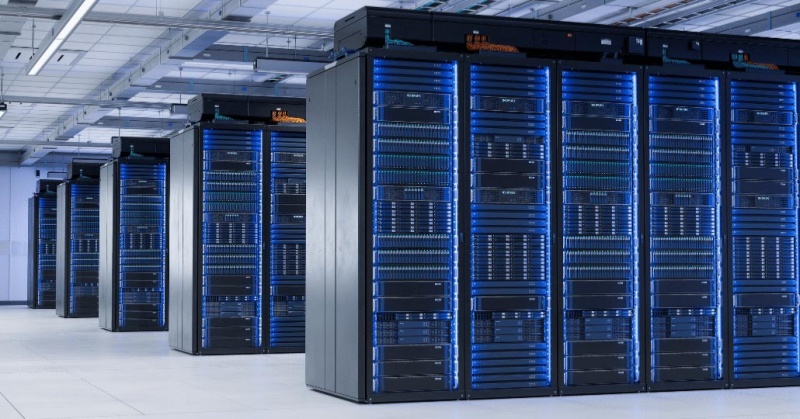
An AI “Cluster” is not a collection of independent servers; it is a Unified Compute Fabric.
Scaling from 8 to 128 GPUs introduces the “Communication Bottleneck.” Without high-speed interconnects like 400Gb/s NDR InfiniBand, your GPUs spend 40% of their time waiting for data from other nodes. At WhaleFlux, we architect our blueprints around Zero-Bottleneck Networking, ensuring that data ingestion never throttles your compute ROI.
2. Cost Optimization: Eliminating the “Compute Tax”
“Breaking the bank” usually happens due to Resource Fragmentation. Most enterprise clusters operate at only 20-30% actual Model Bandwidth Utilization (MBU).
WhaleFlux Intelligent Scaling:
Our platform dynamically partitions workloads, allowing for Fractional GPU usage for inference while reserving full-power clusters for training.
Thermal-Aware Scheduling:
We monitor rack-level thermals via Deep Observability. By proactively migrating tasks from “hot nodes,” we prevent thermal throttling that can silently degrade training performance by 15%.
3. The Blueprint for High-Availability AI
For production-grade Agentic Workflows, downtime is not an option. A robust cluster blueprint must include:
Redundant Storage Fabrics: Utilizing high-performance NVMe tiers for rapid checkpointing.
Automated Node Recovery: WhaleFlux monitors for ECC errors and hardware artifacting. If a node shows pre-failure signatures, it is automatically isolated and replaced.
Observability at Scale: Tracking Time-to-First-Token (TTFT) across the entire cluster to ensure consistent user experience.
4. Cluster Decision Matrix
| Metric | Basic Cloud Setup | WhaleFlux Engineered Cluster |
| Interconnect | Shared 10-25GbE (High Latency) | Dedicated 400Gb/s (Ultra-Low Latency) |
| Scaling Efficiency | Sub-linear (Heavy Overhead) | Near-Linear (RDMA Optimized) |
| Visibility | Surface-level Metrics | Full-stack AI Observability |
| TCO Management | Pay-as-you-go (Expensive) | Predictive Monthly (70% Savings) |
| Reliability | Best-effort | 99.9% Uptime Guarantee |
Expert FAQ
Q: When should an enterprise move from single nodes to a cluster?
A: When your Model Fine-tuning or Large-scale RAG ingestion takes longer than 24 hours on a single 8x GPU node. At this point, the bottleneck shifts to the “Time-to-Market” ROI, necessitating a clustered architecture.
Q: How does WhaleFlux handle multi-tenant isolation in a cluster?
A: Through Virtualized Hardware Enclaves. Each client’s workload is isolated at the networking and memory layer, providing the security of on-prem hardware with the flexibility of a unified platform.
Q: Does WhaleFlux support InfiniBand and RoCE v2?
A: Yes. We tailor the interconnect protocol based on your specific workload. For Monolithic Training, we recommend InfiniBand; for Distributed Inference, RoCE v2 often provides the best balance of cost and performance.