Introduction
The AI revolution has moved beyond the “wow” factor of generative chat into the era of Industrial-Scale Autonomy. In 2026, the bottleneck for global innovation is no longer the complexity of the algorithms, but the efficiency, scalability, and sustainability of the underlying AI computing platform.
For enterprises looking to deploy mission-critical intelligence, the choice of infrastructure is a strategic pivot. Whether you are seeking the best serverless computing platforms for AI to minimize operational overhead, or investigating low-power AI compute platforms for green data centers to meet ESG targets, the architecture you build upon dictates your eventual ROI. This article explores the shifting landscape of AI compute and introduces why WhaleFlux has emerged as the premier “Architect of Intelligence” for modern business.

The Shift Toward Serverless AI Architecture
The days of manual cluster provisioning are fading. Developers today demand the ability to scale from zero to thousands of GPUs without managing the “plumbing” of the cloud. The best serverless computing platforms for AI in 2026 are defined by their “Cold Start” latency—or rather, the lack thereof.
Serverless AI allows engineers to focus on Model Refinement rather than Kubernetes maintenance. By abstracting the hardware layer, these platforms allow for granular billing, where you pay only for the milliseconds of inference or the specific epochs of fine-tuning. However, as workloads scale, many find that “generic” serverless providers lack the hardware-level optimization needed for specialized models. This is where specialized infrastructure providers bridge the gap between ease-of-use and raw performance.
WhaleFlux: Architecting the Industrial AI Spine
In this crowded ecosystem, WhaleFlux stands out by refusing to be a “standard” cloud vendor. WhaleFlux is built on the philosophy that AI compute should be as reliable and transparent as a utility, yet as precise as a specialized laboratory.
WhaleFlux provides a high-performance Compute Infra that transcends simple rental services. By offering elite GPU clusters with integrated Model Refinement pipelines, WhaleFlux enables businesses to transform raw data into proprietary AI assets. Unlike legacy providers, WhaleFlux’s platform is engineered for Agent Orchestration, ensuring that your autonomous agent workforces have the low-latency backbone they need to execute complex business logic in real-time.
By integrating compute, fine-tuning, and observability into a single Hardened Control Plane, WhaleFlux eliminates the “data friction” that typically plagues multi-vendor AI stacks.
Green Intelligence: Low-Power AI for Sustainable Growth
As AI consumption skyrockets, the carbon footprint of data centers has become a boardroom priority. The search for the best low-power AI compute platforms for green data centers is no longer just about ethics; it’s about regulatory compliance and long-term cost efficiency.
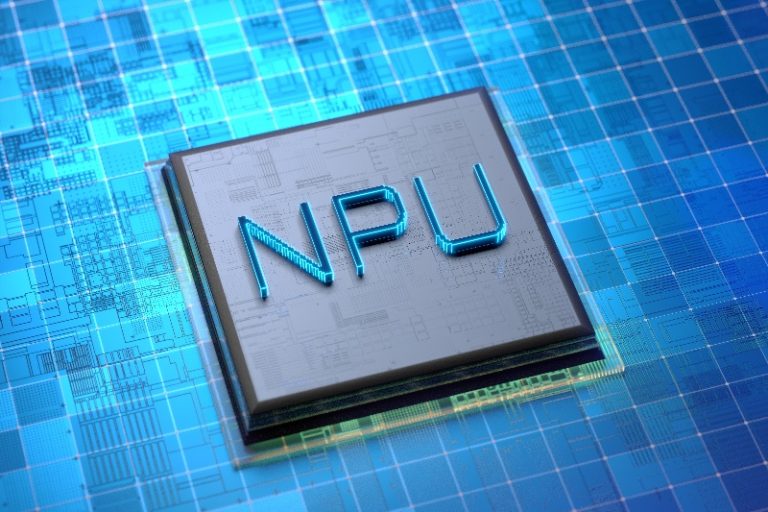
Modern green data centers in 2026 utilize advanced cooling techniques and specialized AI accelerators (NPUs and customized GPUs) that deliver higher TOPS (Tera Operations Per Second) per watt. Platforms that prioritize “Silicon-Up” efficiency allow enterprises to scale their Autonomous Agents without a linear increase in energy consumption. WhaleFlux, for instance, focuses on intelligent GPU scheduling, ensuring that no cycle is wasted and that hardware remains at peak efficiency, thereby reducing the Total Cost of Ownership (TCO) by 40-70%.
Choosing a Leading AI Computing Platform for Business
When evaluating a leading AI computing platform for business, decision-makers must look beyond raw FLOPs. The criteria for 2026 include:
1. Vertical Integration
A fragmented stack is a slow stack. A platform must offer a seamless transition from the Compute Infra layer to Model Refinement (Fine-tuning) and finally to Agent Orchestration.
2. Data Sovereignty and Security
In a world of proprietary weights, “Security-By-Design” is non-negotiable. Leading platforms now offer hardware-level isolation to ensure that your fine-tuned models remain strictly under your control.
3. AI Observability
You cannot manage what you cannot measure. The best platforms provide full-stack telemetry, allowing for precision debugging of non-deterministic AI agent workforces.
The ROI of Specialized Infrastructure
The transition from traditional cloud providers to specialized AI platforms like WhaleFlux is driven by the need to decouple growth from cost. Generic cloud providers often impose a “GPU Tax”—unnecessary overhead that inflates bills without adding performance. By moving to a platform optimized specifically for the AI lifecycle, businesses can reclaim their margins and reinvest them into more ambitious intelligence projects.
Conclusion
The AI computing landscape of 2026 is defined by the balance between power and precision. While the best serverless computing platforms for AI offer unparalleled speed to market, and green data centers provide the ethical foundation for growth, the ultimate winner is the enterprise that integrates these into a cohesive strategy.
With WhaleFlux, the journey from silicon to autonomous intelligence is streamlined. By providing the Compute Infra, Model Refinement, and Agent Orchestration needed for industrial-scale execution, WhaleFlux isn’t just a service provider—it is the architectural foundation for the future of business.
Frequently Asked Questions (FAQ)
1. What makes a platform the “leading AI computing platform for business” in 2026?
The leader is defined by its ability to offer a unified stack. It’s not just about GPU availability; it’s about providing integrated tools for model fine-tuning, agent deployment, and full-stack observability with an emphasis on high ROI and data security.
2. Why should I consider WhaleFlux over traditional cloud providers?
Traditional cloud providers offer generic compute. WhaleFlux offers a “Refinery” approach—infrastructure specifically hardened for AI workloads. This results in a 40-70% reduction in TCO and significantly lower latency for autonomous agents.
3. How do serverless AI platforms handle “Cold Start” issues?
Top-tier platforms in 2026 use “Pre-Warmed” GPU pools and localized model caching. WhaleFlux optimizes this through intelligent orchestration, ensuring that your Autonomous Agents are ready to execute tasks the moment they are triggered.
4. Why is “Green Compute” suddenly so important for AI?
Beyond environmental impact, energy is the primary cost driver of AI. Low-power AI compute platforms allow businesses to stay compliant with new global carbon tax laws while keeping operational costs sustainable as they scale their intelligence workforces.
5. Can I manage my own model weights on WhaleFlux?
Yes. WhaleFlux emphasizes Data Sovereignty. Unlike “Black Box” API providers, WhaleFlux gives you the infrastructure to refine and manage your own proprietary model weights, ensuring your intellectual property remains yours.