I. Introduction: The Rise of the Cluster Model in AI
The artificial intelligence landscape is undergoing a dramatic transformation. As models grow more sophisticated—with large language models (LLMs) now containing hundreds of billions of parameters—they have burst through the computational limits of any single processor. This evolution has given rise to a new paradigm: the cluster model. A cluster model is exactly what it sounds like—a single AI model so large that it must be distributed across multiple GPUs, working in concert to function as one cohesive, immensely powerful unit.
This approach is no longer optional for state-of-the-art AI; it is essential. The sheer size and complexity of modern models mean they cannot fit into the memory of even the most advanced single GPU. However, this necessary shift introduces a significant challenge. Managing a cluster model is a complex dance of data, computation, and synchronization. Without sophisticated orchestration, companies face severe inefficiency, wasted resources, and prohibitively high costs. Successfully harnessing the power of cluster models requires not just powerful hardware, but intelligent management—a challenge that WhaleFlux is specifically engineered to solve for forward-thinking AI enterprises.
II. What is a Cluster Model and Why is it Essential?
A. Beyond a Single GPU’s Limits
So, how do you build a computational entity that is larger than any single building block? The answer lies in sophisticated software techniques that slice a massive model into manageable pieces across a GPU cluster.
Imagine the difference between a single artisan building an entire car by themselves versus a modern automotive assembly line. The artisan is limited by their own physical space, tools, and time. In the assembly line, the car moves from station to station, with each station specializing in a specific task—installing the engine, mounting the wheels, painting the body. The result is a complete car produced with far greater efficiency and at a scale a single person could never achieve.
A cluster model operates on a similar principle. Techniques like tensor parallelism split the model’s layers horizontally across GPUs, with each GPU responsible for a portion of the calculations for every layer. Pipeline parallelism, on the other hand, splits the model vertically, with each GPU handling a specific set of consecutive layers. The data flows from one GPU to the next, like a car moving down an assembly line. This allows a model that might require 80GB of memory to be split across four GPUs with 24GB of memory each, making the previously impossible, possible.
B. The Power of a Cohesive Unit
The benefits of this approach are transformative. First and foremost, it enables organizations to run models that were previously unimaginable, unlocking new capabilities in generative AI, scientific research, and complex simulation. Secondly, by leveraging the combined computational power of multiple GPUs, training times can be slashed from months to weeks or days, dramatically accelerating the pace of innovation. Finally, for inference, a well-orchestrated cluster model can handle a massive number of simultaneous user requests, providing the scalability needed for global AI-powered applications.
III. The Engine Room: GPU Clusters for Modern AI
A. The NVIDIA GPU Lineup for Cluster Models
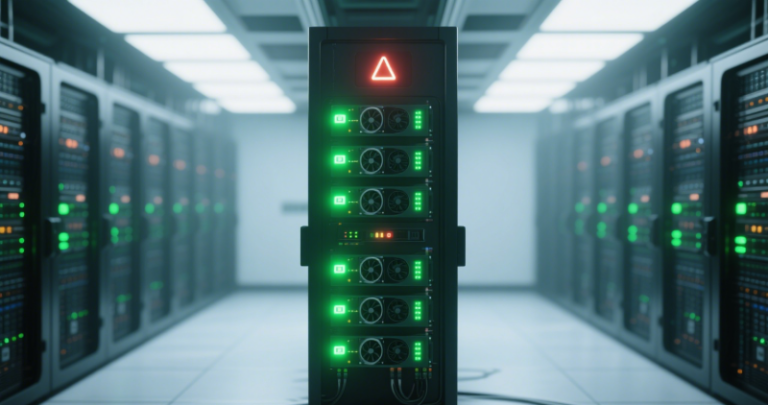
The physical foundation of any cluster model is its GPU fleet. Not all GPUs are created equal for this task, and selecting the right ones is critical for performance and efficiency. The NVIDIA ecosystem offers a tiered lineup perfect for building clusters of any scale:
NVIDIA H100/H200:
These are the supercomputing pillars of modern AI clusters. They are not just powerful individually; they are designed from the ground up for cluster deployment. With ultra-fast interconnects like NVLink, they allow for seamless, high-bandwidth communication between GPUs, which is the lifeblood of efficient model parallelism. For the largest LLMs and most complex models, the H100 and H200 are the undisputed foundation.
NVIDIA A100:
As a proven and reliable workhorse, the A100 remains a top choice for building powerful and efficient model clusters. It offers a superb balance of performance, memory capacity, and interoperability, making it a versatile component in many production AI environments.
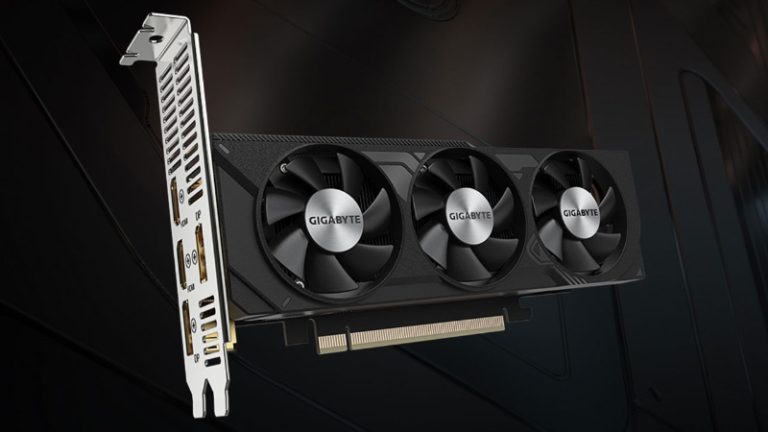
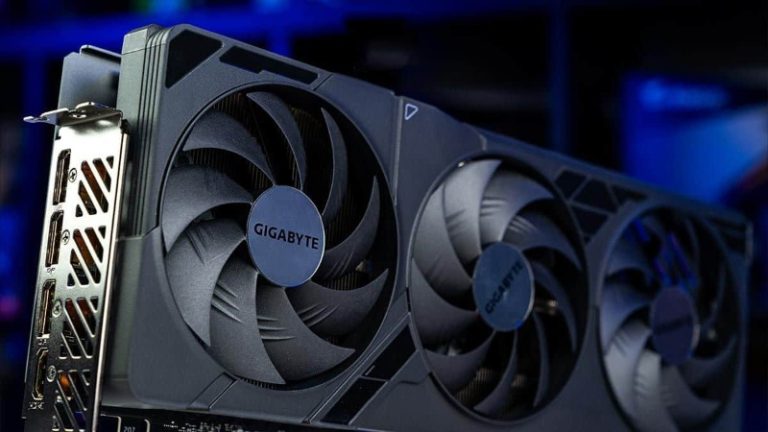
NVIDIA RTX 4090:
This GPU serves as a highly cost-effective building block for specific cluster model use cases. It is ideal for building clusters dedicated to inference or for training smaller-scale cluster models where absolute peak performance is secondary to budget control. It allows more teams to access the power of a multi-GPU approach.
B. The Orchestration Bottleneck
However, simply connecting these powerful GPUs with physical cables is not enough. The true challenge is software. The orchestration layer—the software that manages how the model is split, how data flows between GPUs, how they synchronize their calculations, and how to recover from failures—is incredibly complex. This software bottleneck is where many AI projects stall. Manually managing this orchestration requires deep expertise and constant tuning, pulling valuable data scientists away from their core work and into the weeds of systems administration.
IV. Overcoming the Challenges of Deploying Cluster Models
A. Key Hurdles in Cluster Model Management
When organizations attempt to manage cluster models on their own, they typically collide with three major hurdles:
Low Utilization:
Inefficient scheduling and poor load balancing can lead to a “domino effect” of idleness within the cluster. If one GPU finishes its task and has to wait for another to catch up, it sits idle. This wasted capacity is incredibly expensive, as you are paying for resources you aren’t fully using.
Operational Complexity:
The difficulty of manually configuring parallelism strategies, managing inter-GPU communication, and monitoring the health of a distributed system is immense. A single misconfiguration can lead to model errors, training failures, or painfully slow performance.
Cost Inflation:
The first two challenges directly cause the third. Low utilization and high operational overhead translate directly into exorbitant cloud bills. The financial promise of AI can be quickly erased by the runaway costs of an inefficient cluster model deployment.
B. Introducing a Smarter Way to Manage Clusters
These challenges highlight a critical insight: the problem is not a lack of raw compute power, but a lack of intelligent control over that power. What if the immense complexity of managing a cluster model could be abstracted away? This is the core value proposition of WhaleFlux. WhaleFlux acts as an intelligent automation layer, designed to handle the heavy lifting of multi-GPU orchestration, so your team doesn’t have to.
V. How WhaleFlux Simplifies Cluster Model Deployment
A. Intelligent Orchestration for Maximum Efficiency
WhaleFlux functions as the master conductor for your GPU orchestra. Its intelligent scheduling and resource allocation engine automatically determines the most efficient way to distribute your cluster model across the available GPUs. It dynamically manages the data flow and synchronization, ensuring that all GPUs are working in harmony with minimal idle time. By optimizing the entire workflow, WhaleFlux maximizes the utilization of every single GPU in your cluster, ensuring you get the maximum computational output for your investment.
B. A Unified Fleet for Your Model Cluster
We provide seamless, unified access to a curated fleet of NVIDIA GPUs, including the H100, H200, A100, and RTX 4090. This allows you to build optimized, heterogeneous clusters tailored to your specific needs and budget. You might use a core of H100s for your most demanding model training and supplement with A100s or RTX 4090s for inference clusters or development workloads.
Furthermore, our monthly rental and purchase options provide the stable, dedicated infrastructure that long-running cluster model jobs require. This model eliminates the cost volatility and hidden expenses of per-second cloud billing, giving you predictable costs and a reliable foundation that is always available for your most important AI workloads.
C. Tangible Business Benefits
The result of deploying WhaleFlux is a direct positive impact on your business’s bottom line and innovation speed:
Faster Time-to-Solution:
By eliminating orchestration bottlenecks and maximizing GPU efficiency, WhaleFlux significantly reduces both training and inference times for your cluster models. This means you can iterate faster and deploy new AI capabilities ahead of the competition.
Lower Total Cost:
High GPU utilization directly translates to a lower cost per training run and a lower cost per inference. WhaleFlux turns wasted cycles into valuable computation, providing a clear and compelling return on investment.
Reduced Operational Overhead:
Your AI engineers and data scientists can focus on what they do best—designing and refining models—instead of wrestling with the complexities of systems administration. WhaleFlux handles the infrastructure, so your team can focus on innovation.
VI. Conclusion: Unleashing the Full Potential of Your AI with WhaleFlux
The cluster model is undeniably the future of large-scale artificial intelligence. It is the key that unlocks the next generation of AI capabilities. However, the immense complexity of deploying and managing these models should not be a barrier to innovation.
WhaleFlux provides the managed infrastructure and intelligent orchestration needed to tame this complexity. We offer the powerful NVIDIA GPU hardware, combined with the sophisticated software that ensures your cluster models run at peak efficiency and minimum cost.
Ready to unleash the full potential of your AI initiatives? Leverage WhaleFlux to power your next-generation cluster models and accelerate your path to AI success, without the operational headache.
FAQs
1. What are the primary coordination challenges when deploying large AI models across a multi-GPU cluster?
The main challenge is managing extreme complexity. When a model is distributed across many GPUs (using techniques like tensor or pipeline parallelism), it creates dozens of tightly coupled components (e.g., prefill workers, decode workers, routers). Getting these components to work in unison as efficiently as a single GPU is difficult. Key issues include:
- Synchronization Overhead: Inefficient scheduling can leave some components running while others wait, causing GPU idle time and poor utilization.
- Communication Bottlenecks: If dependent components are placed on physically distant GPUs (e.g., in different server racks), network latency can drastically slow down the entire inference process.
- Resource Fragmentation: As jobs of varying sizes start and stop, GPU resources can become scattered across the cluster in small, unusable chunks, making it impossible to schedule new large-scale jobs.
2. How can scheduling strategies like “Gang Scheduling” and “Bin-Packing” tame cluster chaos?
Advanced scheduling strategies are critical for efficiency:
- Gang Scheduling (All-or-Nothing): This ensures all components of a distributed workload start simultaneously. It prevents the scenario where some parts of your model are running and consuming resources while others are stuck waiting, which can lead to deadlock and wasted GPU cycles.
- Bin-Packing for Consolidation: This strategy actively fights resource fragmentation. Instead of spreading new workloads across many partially empty nodes, it packs them onto as few nodes as possible. This leaves other nodes completely free and ready to accept large, multi-GPU jobs, thereby increasing overall cluster availability and utilization.
3. What is GPU memory swapping, and how does it improve efficiency for inference workloads?
GPU memory swapping (or model hot-swapping) is a technique that dynamically loads and unloads AI models between GPU and CPU memory based on demand.
- How it works: When a model isn’t receiving requests, it’s swapped out to the host’s CPU memory, freeing up precious GPU VRAM. When a request arrives, the model is rapidly swapped back into GPU memory for execution.
- Efficiency Gain: This allows multiple models to share a single physical GPU (NVIDIA A100, H100, etc.) even if their combined memory footprint exceeds the GPU’s capacity. It dramatically improves GPU utilization and reduces the number of idle GPUs needed to serve a diverse set of models, leading to significant cost savings while keeping latency acceptable (often in the 2-3 second range for reactivation).
4. Why is a structured validation process crucial before deploying on a new GPU cluster?
Hardware failures and misconfigurations are major risks that can derail long-running AI training jobs. A systematic validation framework, like the one used by providers such as Together AI, is essential for reliability. This process typically includes:
- GPU and NVLink Health: Stress-testing individual GPUs and the high-speed links (NVLink) between them to catch early hardware failures.
- Network and Storage Verification: Validating the low-latency network fabric (e.g., InfiniBand) and storage performance to ensure they won’t bottleneck distributed training.
- End-to-End Model Test: Running a representative training task (e.g., using PyTorch FSDP) to measure real-world throughput and cluster stability under load.
5. How does a platform like WhaleFlux provide a comprehensive solution for efficient multi-GPU deployment?
WhaleFlux is an intelligent GPU resource management tool designed to integrate and automate the best practices needed to “tame” complex multi-GPU clusters. It directly addresses the core challenges:
- Unified Intelligent Scheduling: WhaleFlux incorporates advanced strategies like gang scheduling and bin-packing to coordinate workloads, minimize fragmentation, and maximize the utilization of valuable NVIDIA GPU resources (from RTX 4090 to H100 and H200).
- Optimized Resource Utilization: By intelligently managing resources, including leveraging techniques like GPU memory swapping for inference workloads, WhaleFlux ensures more work gets done with fewer idle resources, directly lowering cloud computing costs.
- Stability for Large Models: It abstracts away the immense complexity of manually orchestrating distributed training and inference across a cluster. This provides a stable platform that accelerates the deployment and enhances the reliability of large language models, allowing AI teams to focus on development rather than infrastructure chaos.