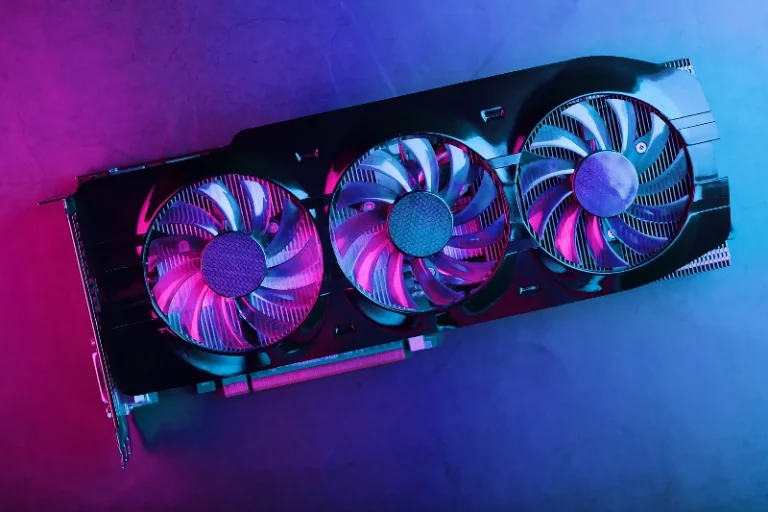
I. Introduction: The Allure and Illusion of the Budget GPU
We’ve all been there. Faced with a challenging project and limited funds, our first instinct is to search for that perfect “budget GPU” – the magical component that delivers maximum performance for minimum cost. Gamers scour reviews for the best “budget 1440p GPU,” while AI developers might look at an NVIDIA RTX 4090 as their “budget” high-end option compared to even more expensive data center cards. This search for value is natural and financially sensible, at least on the surface.
However, for artificial intelligence companies with serious ambitions, this pursuit of a standalone “budget GPU” is fundamentally misguided. It’s an illusion that can actually hinder progress and increase long-term costs. The reality is that for production-scale AI work, a single GPU – no matter how powerful or cost-effective – represents a computational dead end. You might be able to prototype on one, but you cannot sustainably train and deploy large language models or complex AI systems on isolated hardware.
True cost-effectiveness in AI isn’t about finding the cheapest piece of hardware. It’s about maximizing the value you extract from computational resources. This is where the conversation needs to evolve from “What GPU should I buy?” to “How can I access the computational power I need in the most efficient way possible?” This shift in thinking reveals a smarter budget strategy, one embodied by WhaleFlux. Rather than focusing on low-cost ownership, WhaleFlux redefines what “budget” means for AI companies by providing cost-efficient access to top-tier NVIDIA GPUs through intelligent resource management.
II. The True Meaning of “Budget” in an AI Context
A. It’s About Total Cost of Ownership (TCO)
When most people think about a “budget GPU,” they’re focusing exclusively on the sticker price. This is a dangerous oversimplification for AI companies. The true “budget” consideration should be Total Cost of Ownership (TCO), which includes numerous hidden expenses beyond the initial purchase.
For any GPU used in AI work, the real TCO includes:
- The hardware purchase price
- Electricity consumption (high-performance GPUs are power-hungry)
- Cooling solutions to prevent thermal throttling
- Physical space in data centers or offices
- Maintenance and potential repairs
- Depreciation as newer, more efficient models are released
- Most importantly: the opportunity cost of time lost to slower training and iteration
A “cheap” GPU that takes three weeks to complete a training job versus one week on a more powerful system isn’t actually cheap. The additional two weeks of development time, delayed product launches, and slower iteration cycles often cost far more than any savings on hardware.
B. The Performance-Per-Dollar Metric
The smarter way to evaluate AI computing resources is through performance-per-dollar. This means looking at computational throughput – measured in teraflops for AI-specific tasks – relative to the total cost. A GPU that costs $5,000 and delivers 100 teraflops provides better value than one costing $3,000 that only delivers 40 teraflops, even though the latter has a lower sticker price.
This performance-per-dollar calculation becomes even more significant when you consider that AI training time directly impacts your time to market. In the fast-moving AI industry, being weeks or months behind competitors due to slower hardware can be fatal to a business. What appears to be a “budget” decision today could become an extremely expensive strategic mistake tomorrow.
C. The Scalability Factor
Perhaps the most crucial aspect of a true “budget” solution for AI is scalability. A hardware purchase that can’t grow with your needs is the opposite of cost-effective. Many AI startups make the mistake of buying GPUs that serve their immediate needs, only to find themselves constrained six months later when their models and datasets grow.
A genuine budget-friendly solution must provide seamless scaling options. If your “budget” decision today forces you into another major hardware purchase next year, you haven’t actually saved money – you’ve just deferred and potentially increased your costs. The ability to scale resources up and down based on project requirements is where real savings are found in AI infrastructure.
III. The WhaleFlux Model: The Ultimate “Budget” GPU Strategy for AI
A. Access Over Ownership
The WhaleFlux model fundamentally challenges the traditional approach to GPU acquisition by prioritizing access over ownership. Why tie up significant capital in hardware that begins depreciating the moment you unbox it? Why bear the full burden of maintenance, upgrades, and utilization risk when you can access the same computational power through a more flexible model?
With WhaleFlux, companies can access precisely the GPU resources they need for specific projects without massive upfront investment. This approach transforms GPU computing from a capital expenditure (CapEx) to an operational expenditure (OpEx), which is often more manageable for growing businesses. You’re not paying for hardware that might sit idle between projects; you’re paying for computational power when you actually need it.
B. Your “Budget” Gateway to High-End Power
WhaleFlux makes high-performance NVIDIA GPUs accessible and “budget-friendly” through a sensible rental model. Companies can access the exact GPUs that drive cutting-edge AI research – including the NVIDIA H100, H200, A100, and RTX 4090 – through predictable monthly payments. With a minimum commitment of just one month, businesses can align their computational expenses with their project timelines.
This model is particularly valuable because it provides access to hardware that might otherwise be financially out of reach. Purchasing multiple H100 GPUs outright could require hundreds of thousands of dollars in capital, putting them beyond the reach of many startups and growing companies. Through WhaleFlux, these same organizations can access this world-class computational power for a fraction of the cost, making truly high-performance AI development accessible to companies of all sizes.
C. Maximizing Every Compute Dollar
Where WhaleFlux truly redefines “budget” computing is through its intelligent resource management platform. The traditional approach of owning GPUs often leads to significant waste through underutilization. GPUs might sit idle overnight, between jobs, or during development phases. Industry studies suggest that many organizations utilize only 30-40% of their owned GPU capacity.
WhaleFlux’s intelligent management system ensures near-optimal utilization of every GPU in its clusters. Through advanced orchestration, load balancing, and resource allocation, the platform minimizes idle time and ensures that your computational resources are working efficiently around the clock. This efficient utilization is where the real savings occur – you’re not just paying for access to GPUs; you’re paying for a system that ensures those GPUs deliver maximum value for every dollar spent.
IV. A Practical Comparison: Buying a “Budget” GPU vs. Using WhaleFlux
A. Scenario: The 6-Month AI Project
Let’s examine a practical scenario to illustrate the difference between these approaches. Imagine an AI company embarking on a 6-month project to develop and train a new large language model.
Path A (The “Budget” Purchase):
The company decides to purchase hardware, believing this to be the cost-effective choice. They invest $50,000 in GPUs and supporting infrastructure. Immediately, they face several challenges:
- The hardware begins depreciating from day one
- They bear full responsibility for setup, maintenance, and troubleshooting
- During the first two months of experimentation and development, the GPUs are significantly underutilized
- In month four, they realize they need more computational power but are locked into their initial purchase
- After the project completes, the GPUs sit underutilized until the next major initiative
- The company has tied up $50,000 in capital that could have been used for hiring, marketing, or other business needs
Path B (The WhaleFlux Way):
The same company chooses to rent a GPU cluster through WhaleFlux for their 6-month project:
- No large upfront capital investment required
- They access exactly the GPUs they need from day one
- During initial development phases, they can use smaller, less expensive configurations
- As their needs grow during training, they seamlessly scale their resources
- They pay a predictable monthly fee that aligns with their project budget
- After project completion, they simply stop renting, with no ongoing costs or underutilized assets
- Their capital remains available for other business investments
B. The Real “Budget” Winner
When we examine the total cost and flexibility of each approach, the “budget” winner becomes clear. The traditional purchase approach appears cheaper initially but carries hidden costs in depreciation, maintenance, opportunity cost, and underutilization. The WhaleFlux model provides greater financial flexibility, better alignment with project needs, and ultimately delivers more computational value per dollar spent.
The agility afforded by the WhaleFlux approach also provides significant business advantages. The ability to rapidly scale resources means companies can pursue opportunities they might otherwise miss due to hardware constraints. This strategic flexibility often proves far more valuable than any perceived savings from hardware ownership.
V. Conclusion: Invest in AI, Not in Hardware
A. Recap
The search for the perfect “budget GPU” is ultimately a misguided pursuit for AI companies. The best “budget” solution isn’t a specific piece of hardware but a smart strategy for accessing computational power. Focusing on Total Cost of Ownership, performance-per-dollar, and scalability reveals that traditional hardware ownership is often neither the most cost-effective nor the most strategic approach.
B. The WhaleFlux Advantage
WhaleFlux delivers the performance of high-end NVIDIA GPUs with the financial sensibility of a truly budget-conscious model. By providing flexible access to top-tier hardware combined with intelligent resource management, WhaleFlux ensures that AI companies can focus their resources on what truly matters: developing innovative AI solutions. The platform’s efficient utilization and scalable model mean companies never pay for more than they need while always having access to what they require.
C. Call to Action
It’s time to fundamentally rethink how we approach AI infrastructure budgeting. Stop searching for a mythical “budget GPU” and start investing in a budget-smart AI infrastructure strategy with WhaleFlux. Visit our website today to discover how our flexible GPU access model can help your company achieve more with less, accelerating your AI development while optimizing your computational spending. The most budget-friendly decision you can make is to ensure every compute dollar delivers maximum value – and that’s exactly what WhaleFlux enables.
FAQs
1. Isn’t buying “budget” or last-generation GPUs the most cost-effective way for a startup?
While purchasing older or lower-tier GPUs has a lower upfront cost, it often leads to higher Total Cost of Ownership (TCO) and strategic disadvantages. These “budget” cards may lack the performance (like Tensor Cores) or memory bandwidth needed for efficient modern model training, leading to longer development cycles, missed market opportunities, and increased engineering costs to work around limitations. More critically, ownership locks you into static, depreciating assets. In contrast, accessing top-tier NVIDIA GPUs like the H100 or A100 through rental or managed services converts a large capital expenditure (CapEx) into a flexible operational expense (OpEx). This preserves cash, allows you to match resources precisely to project phases (scaling up for training, down for inference), and provides a pathway to superior cost efficiency over time.
2. How does flexible access to GPUs provide a competitive advantage beyond just cost?
Flexible access is a strategic enabler for agility and innovation. AI projects are iterative and unpredictable; being able to instantly provision a multi-GPU cluster for a large experiment or switch to a different NVIDIA GPU type (e.g., from A100 for training to RTX 4090 for cost-effective inference testing) allows teams to experiment freely and accelerate iteration. This agility is often unattainable with owned hardware due to procurement delays and fixed capacity. It allows startups to “punch above their weight,” accessing data center-grade power like NVIDIA H200 without the massive upfront investment, thereby reducing time-to-market for their AI products.
3. What are the hidden technical and operational burdens of owning a GPU cluster?
Owning a GPU cluster shifts the full burden of infrastructure management to your team, which is a significant distraction from core AI development. These hidden costs include:
- Complex Setup & Maintenance: Managing drivers, CUDA stacks, deep learning frameworks, and scheduling software (like Kubernetes or Slurm).
- Performance Optimization: Manually tuning workloads and managing data pipelines to maximize the utilization of your fixed hardware, a challenging task where inefficiencies directly increase costs.
- Reliability & Upkeep: Dealing with hardware failures, cooling issues, power management, and security patches.
- Rapid Obsolescence: The pace of AI hardware innovation means owned GPUs can become technically outdated within their depreciation cycle, affecting your long-term competitiveness.
4. Doesn’t renting GPU resources pose a risk of vendor lock-in or unpredictable costs?
While lock-in is a valid concern with some cloud services, specialized GPU access platforms are designed to offer flexibility and cost control. The key is to choose a provider that offers transparent pricing models (e.g., monthly rental) and supports a wide range of standard NVIDIA GPU hardware, preventing dependency on a single proprietary ecosystem. Managed services like WhaleFlux directly address cost predictability by optimizing multi-GPU cluster utilization, ensuring you pay for active compute, not idle hardware. By improving scheduling efficiency and workload stability, it helps transform variable cloud costs into a more predictable and efficient expense line.
5. For companies needing high-performance GPUs, how does a tool like WhaleFlux make “access” superior to “ownership”?
WhaleFlux is an intelligent GPU resource management tool that embodies the principle of “efficient access over burdensome ownership.” It allows AI companies to leverage the full spectrum of high-performance NVIDIA GPUs (including H100, H200, A100) without the capital outlay and operational overhead of owning them. Here’s how it shifts the paradigm:
- Maximizes Return on Access: It doesn’t just provide GPU access; it ensures that access is used with extreme efficiency. By optimizing workload scheduling across clusters, it dramatically increases utilization rates, which directly lowers the effective cost per computation.
- Delivers Performance Parity with Ownership: It provides the deployment speed and stability needed for production-grade large language model work, offering a seamless experience that rivals or exceeds a well-managed in-house cluster.
- Offers Strategic Flexibility: By supporting purchase or rental of the latest NVIDIA hardware, WhaleFlux lets companies strategically access the right tools for the job—whether that’s scaling to hundreds of H100s for a training sprint or deploying on optimized A100 instances for inference—all through a unified management layer.