Have you ever asked a large language model (LLM) a question about a specific topic—like your company’s latest internal project report or a dense, 200-page technical manual—only to receive a confident-sounding but completely made-up answer? This common frustration, often called an “AI hallucination,” happens because models like ChatGPT are designed to generate fluent text based on their vast, static training data. They aren’t built to know your private, new, or specialized information.
But what if you could give an AI the ability to “look up” information in real-time, just like a skilled researcher would scan through a library of trusted documents before answering your question?
Enter Retrieval-Augmented Generation, or RAG. It’s a powerful architectural framework that is revolutionizing how businesses deploy accurate, trustworthy, and cost-effective AI. In simple terms, RAG gives an AI model a “search engine” and a “working memory” filled with your specific data, allowing it to ground its answers in factual sources.
The Librarian Analogy: From Black Box to Research Assistant
Imagine a traditional LLM as a brilliant, eloquent scholar who has memorized an enormous but fixed set of encyclopedias up to a certain date. Ask them about general knowledge, and they excel. Ask them about yesterday’s news, your company’s Q4 financials, or the details of an obscure academic paper, and they must guess or fabricate based on outdated or incomplete memory.
Now, imagine you pair this scholar with a lightning-fast, meticulous librarian. Your role is simple: you ask a question. The librarian (the retrieval system) immediately sprints into a vast, private archive of your choosing—your documents, databases, manuals, emails—and fetches the most relevant pages or passages. They hand these pages to the scholar (the generation model), who now synthesizes the provided information into a clear, coherent, and—crucially—source-based answer.
That is RAG in a nutshell. It decouples the model’s knowledge from its reasoning, breaking the problem into two efficient steps: first, find the right information; second, use it to formulate the perfect response.
Why RAG? The Limitations of “Vanilla” LLMs
To appreciate RAG’s value, we must understand the core challenges of standalone LLMs:
Static Knowledge:
Their world ends at their last training cut-off. They are unaware of recent events, new products, or your private data.
Hallucinations:
When operating outside their trained domain, they tend to “confabulate” plausible but incorrect information, a critical risk for businesses.
Lack of Traceability:
You cannot easily verify why an LLM gave a particular answer, posing audit and compliance challenges.
High Cost of Specialization:
Continuously re-training or fine-tuning a giant model on new data is computationally prohibitive, slow, and expensive for most organizations.
RAG elegantly solves these issues by making the model’s source material dynamic, verifiable, and separate from its core parameters.
How RAG Works: A Three-Act Play
Deploying a RAG system involves three continuous stages: Indexing, Retrieval, and Generation.
Act 1: Indexing – Building the Knowledge Library
This is the crucial preparatory phase. Your raw documents (PDFs, Word docs, web pages, database entries) are processed into a searchable format.
- Chunking: Documents are split into manageable “chunks” (e.g., paragraphs or sections). Getting the chunk size right is an art—too small loses context, too large dilutes relevance.
- Embedding: Each text chunk is converted into a numerical representation called a vector embedding. This is done using an embedding model, which encodes semantic meaning into a long list of numbers (a vector). Think of it as creating a unique “fingerprint” for the idea expressed in that text. Semantically similar chunks will have similar vector fingerprints.
- Storage: These vectors, along with their original text, are stored in a specialized database called a vector database. This database is optimized for one thing: finding the closest vector matches to a given query at incredible speed.
Act 2: Retrieval – The Librarian’s Sprint
When a user asks a question:
- The user’s query is instantly converted into its own vector embedding using the same model from the indexing phase.
- This query vector is sent to the vector database with a command: “Find the ‘K’ most similar vectors to this one.” This is typically done via a mathematical operation called nearest neighbor search.
- The database returns the text chunks whose vectors are closest to the query vector—the most semantically relevant passages from your entire library.
Act 3: Generation – The Scholar’s Synthesis
The retrieved relevant chunks are now packaged together with the original user query and fed into the LLM (like GPT-4 or an open-source model like Llama 3) as a prompt. The prompt essentially instructs the model: “Based only on the following context information, answer the question. If the answer isn’t in the context, say so.”
The LLM then generates a fluent, natural-language answer that is directly grounded in the provided sources. The final output can often include citations, allowing users to click back to the original document.
The Tangible Benefits: Why Businesses Are Racing to Adopt RAG
Accuracy & Reduced Hallucinations:
Answers are tied to source documents, dramatically lowering the rate of fabrication.
Dynamic Knowledge:
Update your AI’s knowledge by simply adding new documents to the vector database—no model retraining required.
Transparency & Trust:
Source citations build user trust and enable fact-checking, which is vital for legal, medical, or financial applications.
Cost-Effectiveness:
It’s far more efficient to update a vector database than to retrain a multi-billion parameter LLM. It also allows you to use smaller, faster models effectively, as you provide them with the necessary specialized knowledge.
Security & Control:
Knowledge remains in your controlled database. You can govern access, redact sensitive chunks, and audit exactly what information was used in a response.
Where RAG Shines: Real-World Applications
RAG is not a theoretical concept; it’s powering real products and services today:
- Enterprise Chatbots: Internal assistants that answer questions about HR policies, software documentation, or project histories.
- Customer Support: Agents that pull answers from product manuals, knowledge bases, and past support tickets to resolve issues instantly.
- Legal & Compliance: Tools that help lawyers search through case law, contracts, and regulations in natural language.
- Research & Development: Accelerating literature reviews by querying across thousands of academic papers and technical reports.
Powering the RAG Engine: The Critical Role of GPU Infrastructure
A RAG system’s performance—its speed, scalability, and reliability—hinges on robust computational infrastructure. The two most demanding stages are embedding generation and LLM inference.
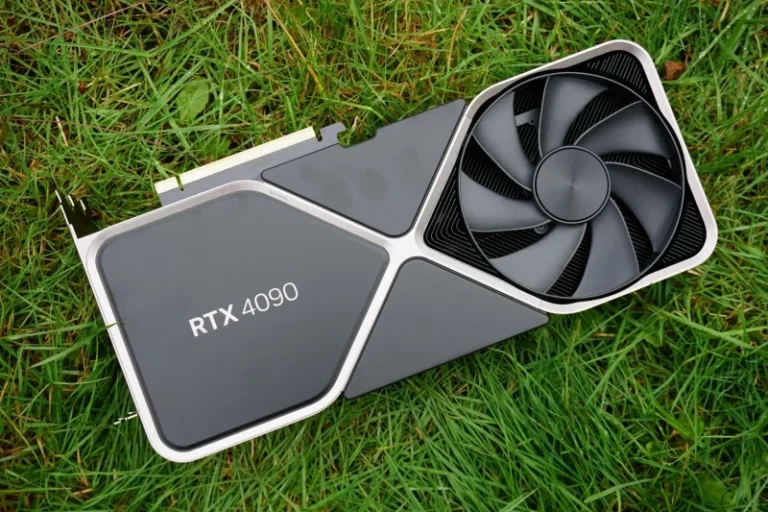
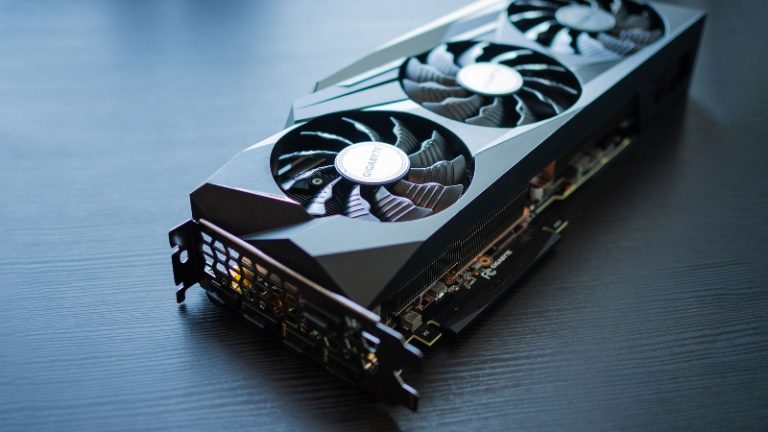
Creating high-quality vector embeddings for millions of document chunks and running low-latency inference with a powerful LLM are both computationally intensive tasks that require potent, parallel processing power. This is where access to dedicated, high-performance NVIDIA GPUs becomes a strategic advantage, not just a technical detail. The parallel architecture of GPUs like the NVIDIA H100, A100, or even the powerful RTX 4090 is perfectly suited for the matrix operations at the heart of AI inference and embedding generation.
However, for an enterprise running mission-critical RAG applications, simply having GPUs isn’t enough. They need to be managed, optimized, and scaled efficiently. This is precisely the challenge that WhaleFlux is designed to solve.
WhaleFlux is an intelligent GPU resource management platform built for AI-driven enterprises. It goes beyond basic provisioning to optimize the utilization of multi-GPU clusters, ensuring that the computational engines powering your RAG system—from embedding models to large language models—run at peak efficiency. By dynamically allocating and managing NVIDIA GPU resources (including the latest H100, H200, and A100 series), WhaleFlux helps businesses significantly reduce cloud costs while dramatically improving the deployment speed and stability of their AI applications. For a complex, multi-component system like a RAG pipeline—which might involve separate models for retrieval and generation running concurrently—WhaleFlux’s ability to orchestrate and monitor these workloads across a unified platform is invaluable. It provides the essential infrastructure layer that turns powerful GPU hardware into a reliable, scalable, and cost-effective AI factory.
Related FAQs
1. Do I always need a vector database to build a RAG system?
While a vector database is the standard and most efficient tool for the retrieval stage due to its optimized similarity search capabilities, it is technically possible to use other methods (like keyword search with BM25) for simpler applications. However, for any system requiring semantic understanding—where a query like “strategies for reducing customer turnover” should match documents discussing “client retention tactics”—a vector database is the industry-standard and recommended choice.
2. How is RAG different from fine-tuning an LLM on my documents?
They are complementary but distinct approaches. Fine-tuning retrains the model’s internal weights to change its behavior and style, making it better at a specific task (like writing in your brand’s tone). RAG provides the model with external, factual knowledge at the time of query. The best practice is often to use RAG for accurate, source-grounded knowledge and combine it with a fine-tuned model for perfect formatting and tone.
3. What are the main challenges in implementing a production RAG system?
Key challenges include: Chunking Strategy (finding the optimal document split for preserving context), Retrieval Quality (ensuring the system retrieves the most relevant and complete information, handling multi-hop queries), and Latency (managing the combined speed of retrieval and generation to keep user wait times low). This last challenge is where GPU performance and management platforms like WhaleFlux become critical, as they directly impact the inference speed and overall responsiveness of the system.
4. How can WhaleFlux specifically help with deploying and running a RAG application?
WhaleFlux provides the integrated infrastructure backbone for the demanding components of a RAG pipeline. Its AI Model service can streamline the deployment and scaling of both the embedding model and the final LLM. Its GPU management core ensures these models have dedicated, optimized access to NVIDIA GPU resources (like H100 or A100 clusters) for fast inference. Furthermore, AI Observability tools allow teams to monitor the performance, cost, and health of each stage (retrieval and generation) in real-time, identifying bottlenecks and ensuring reliability. For complex deployments, WhaleFlux’s support for custom AI services means the entire RAG pipeline can be packaged and managed as a unified, scalable application.
5. We’re considering building a proof-of-concept RAG system. What’s the first step with WhaleFlux?
The first step is to define your performance requirements and scale. Contact the WhaleFlux team to discuss your projected needs: the volume of documents to index, the expected query traffic, and your choice of LLM. WhaleFlux will then help you select and provision the right mix of NVIDIA GPU resources (from the H100 for massive-scale deployment to cost-effective RTX 4090s for development) on a rental plan that matches your project timeline. Their platform simplifies the infrastructure setup, allowing your data science and engineering teams to focus on perfecting the RAG logic—chunking, prompt engineering, and evaluation—rather than managing servers and clusters.