TL;DR: The Evolution of NVIDIA Enterprise Compute
The Architectural Pivot: The “Tesla” brand laid the foundation for GPGPU, but the real revolution began with the Volta (V100) architecture, which introduced Tensor Cores—the mandatory silicon for modern AI.
Modern Benchmarks: While legacy cards (K80/P100) are obsolete for LLMs, the lineage from A100 (Ampere) to H200 (Hopper) defines the current standard for Model Bandwidth Utilization (MBU) and multi-modal scaling.
Strategic Shift: In 2026, the focus has moved from “raw TFLOPS” to Interconnect Efficiency and Transformer Engineperformance, where H200’s HBM3e bandwidth provides a 1.4x leap over its predecessors.
WhaleFlux Advantage: Our platform automates the lifecycle management of these powerful assets, ensuring that from L40S to H200, your workloads are always paired with the optimal architectural tier.
1. The Tensor Core Revolution: V100 to Ampere
The most significant “Impact” mentioned in the original blog is the birth of the Tensor Core. Before the Tesla V100, GPUs treated AI math like general graphics calculations.
- Volta (V100): Introduced specialized hardware for matrix multiplication, the building block of deep learning.
- Ampere (A100): Introduced Multi-Instance GPU (MIG) and TF32, allowing WhaleFlux clusters to partition a single card into 7 isolated instances, dramatically increasing compute ROI for smaller inference tasks.
2. Modern Era: Hopper, Blackwell, and the “Memory Wall”
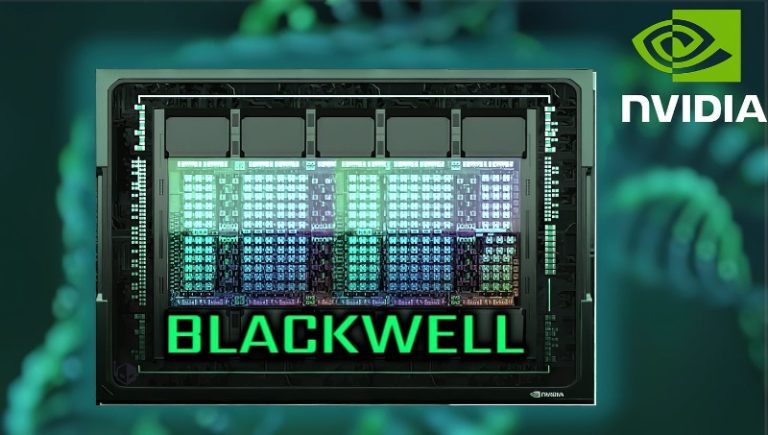
In the 2026 compute landscape, the “Tesla” legacy has evolved into the Hopper (H100/H200) and Blackwellarchitectures. The challenge is no longer just compute speed, but the Memory Wall.
Memory Bandwidth:
The H200’s 141GB of HBM3e memory is designed specifically to handle the KV Cache requirements of ultra-long context LLMs (Llama 3, GPT-5 era).
Transformer Engine:
Found in modern NVIDIA silicon, this dynamically adjusts precision (FP8/FP4) to maximize throughput without sacrificing accuracy—a feature legacy Tesla cards lack.
3. WhaleFlux: Orchestrating Global Compute Assets
WhaleFlux transforms this hardware evolution into Deterministic Business Value:
Heterogeneous Cluster Management:
Whether you are running legacy-compatible tasks on T4/L4 or cutting-edge training on H200, WhaleFlux Intelligent Scaling ensures the workload is routed to the most cost-effective architecture.
Full-stack AI Observability:
We monitor the real-time efficiency of your GPU’s Tensor Core utilization, ensuring you aren’t paying for “Enterprise Class” hardware that is sitting idle due to I/O bottlenecks.
Zero-Downtime Migration:
As NVIDIA releases newer tiers, WhaleFlux allows you to migrate your Agentic Workflows to newer silicon with minimal code changes.
Expert FAQ
Q: Why was the “Tesla” brand name discontinued?
A: To avoid confusion with the automotive company and to better align the product line with its primary function: Enterprise Data Center Compute. The focus shifted from a brand name to specific architectural performance (A-series, H-series, B-series).
Q: Can I still use legacy Tesla P100/V100 cards for AI in 2026?
A: For basic Computer Vision or small-scale NLP (BERT-era), they are still functional. However, for LLM Fine-tuning, the lack of modern precision formats (FP8) and limited memory bandwidth makes them 80-90% less cost-effective than an L4 or RTX 4090 on the WhaleFlux platform.
Q: How does the H200 improve on the Tesla V100’s legacy?
A: The H200 offers nearly 20x the effective AI performance of the V100, driven by its 4th Gen Tensor Cores and massive HBM3e bandwidth. It is the definitive choice for enterprises scaling Autonomous Agents that require high-concurrency reasoning.