TL;DR: NVIDIA L4 vs. L40S Selection Matrix (2026)
- The L4 Verdict: The industry standard for High-Density Inference and Video AI. It delivers 120x more video performance than CPUs at a 72W TDP, making it the most cost-effective choice for edge AI and media processing.
- The L40S Verdict: A versatile powerhouse for Multi-Modal AI and Large Language Model (LLM) fine-tuning. With its enhanced Transformer Engine and 48GB GDDR6, it bridges the gap between pure graphics and H100-level compute.
- Engineering Advantage: WhaleFlux leverages Intelligent Scaling to optimize these GPUs, reducing TCO by 70% for real-time agent responses and complex graphics rendering.
- Strategic Choice: Choose L4 for cost-sensitive scaling (Inference); Choose L40S for throughput-intensive adaptation (Fine-tuning & Omniverse).
1. Architectural Precision: Ada Lovelace in the Data Center
Unlike the H100’s Hopper architecture designed for massive batch training, the L4 and L40 series leverage the Ada Lovelace architecture. This makes them the premier choice for Single-Precision (FP32) and AI-augmented graphics(DLSS 3.5+).
At WhaleFlux, we’ve observed that for Agentic Workflows requiring low-latency “thought cycles,” the L4’s efficiency allows for massive horizontal scaling without the thermal overhead of larger H-series nodes.
2. L4: The Efficiency Champion for Edge & Video
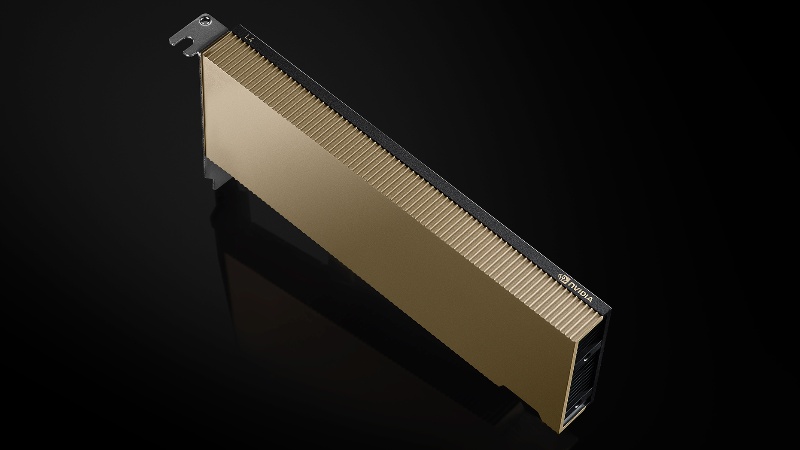
The NVIDIA L4 is the compact powerhouse of our Compute Infrastructure.
- TDP Efficiency: Operating at just 72W, it fits into any server environment.
- Media Prowess: With 4th Gen Tensor Cores and dedicated hardware encoders, it excels in real-time video analytics and generative media.
- WhaleFlux Optimization: Through Deep Observability, we monitor L4 clusters to ensure maximum utilization for high-concurrency, small-model inference (7B-14B).
3. L40 / L40S: The Versatile Heavyweight
The L40S is the refined version of the L40, specifically tuned for the Model Refinery needs of 2026.
- Transformer Engine: Significantly accelerates LLM training and inference via FP8 precision.
- Graphic-Compute Synergy: Ideal for NVIDIA Omniverse and high-fidelity AI simulations.
- Enterprise Scaling: With 48GB of VRAM, the L40S is WhaleFlux’s recommended path for fine-tuning mid-range models (up to 34B) where H100 availability might be constrained.
4. WhaleFlux Platform Intelligence: Beyond Raw Silicon
WhaleFlux transforms L4 and L40S hardware into a Unified AI Platform:
- Workload Auto-Routing: Our platform identifies if your task is “Inference-heavy” or “Compute-heavy,” automatically routing it to L4 or L40S nodes to maximize ROI.
- Precision Scaling: We enable automated quantization (FP8/INT8) on L40S clusters, allowing you to fit larger models into the 48GB buffer without deterministic loss.
- TCO Transparency: WhaleFlux provides real-time cost-per-token analytics, proving that for many inference tasks, an L4 cluster provides better business value than underutilized H100s.
Expert FAQ
Q: Can I fine-tune an 8B model on an NVIDIA L4?
A: Yes, but it is optimized for inference. For fine-tuning, the L40S is superior due to its larger 48GB memory buffer and higher memory bandwidth, which prevents the “Memory Wall” during backpropagation.
Q: What is the main difference between L40 and L40S for AI?
A: The L40S features an upgraded Transformer Engine and higher clock speeds, resulting in up to 1.2x – 1.5x better performance in LLM-specific tasks compared to the original L40.
Q: How does WhaleFlux improve the uptime of L4/L40 nodes?
A: Through Full-stack AI Observability, we track hardware health in real-time. If a node exhibits thermal anomalies, WhaleFlux Intelligent Scaling proactively migrates the workload before a failure occurs.