I. Introduction: The Computational Revolution Powering AI
Imagine you’re trying to solve a giant jigsaw puzzle. Doing it alone, one piece at a time, would take forever. Now, imagine you could enlist a thousand helpers, each simultaneously working on different sections of the puzzle. The difference in speed would be astronomical.
This is the fundamental shift that has powered the AI boom. For decades, we relied on Central Processing Units (CPUs), the reliable “solo workers” of computing. But as AI models grew, consuming terabytes of data and requiring trillions of calculations, CPUs became a bottleneck. They are brilliant at handling complex tasks one after another, but they simply couldn’t keep up with the massive, repetitive mathematical workloads of machine learning.
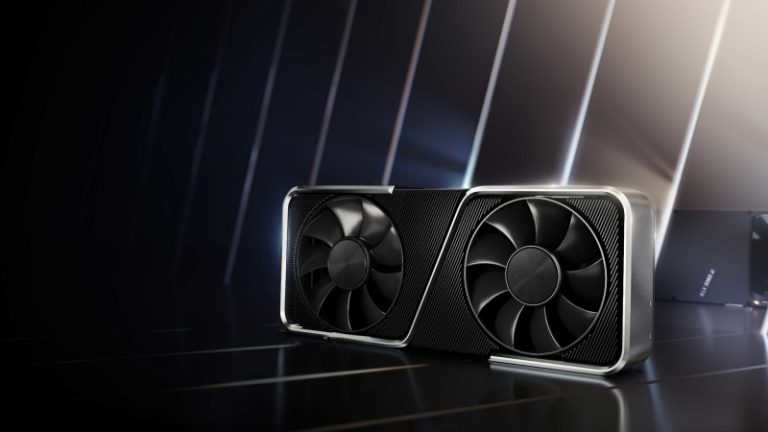
The breakthrough came from an unexpected place: the graphics card. Originally designed to render millions of pixels in parallel for video games, the Graphics Processing Unit (GPU) was perfectly architected for a new kind of task: GPU computing. This is the practice of using a GPU’s massively parallel architecture to perform general-purpose scientific and engineering computing, and it has become the undisputed engine of modern artificial intelligence.
But raw power is not enough. For AI enterprises, accessing, managing, and optimizing this power across multiple GPUs is a monumental challenge. This is where WhaleFlux enters the story. WhaleFlux is the essential platform that allows AI enterprises to not just access powerful GPU computing capabilities, but to manage them with intelligent efficiency. We turn the raw, untamed potential of silicon into reliable, production-ready results, faster and for less cost.
II. Defining GPU Computing: It’s All About Parallelism
A. What is GPU Computing?
At its core, GPU computing is the use of a Graphics Processing Unit (GPU) as a co-processor to accelerate workloads that would typically run on a CPU. The key difference lies in their design philosophy. A CPU is like a Swiss Army knife—versatile and excellent at handling a few complex tasks sequentially. A GPU, in contrast, is more like a warehouse of thousands of specialized knives, all cutting the same simple shape at the same time. It has thousands of smaller, more efficient cores designed to handle multiple simple tasks simultaneously. This is GPU parallel computing in action: breaking down a large problem into thousands of smaller, independent pieces and solving them all at once.
B. CPU vs. GPU: A Simple Analogy
Think of processing a year’s worth of sales receipts. A CPU (the specialist accountant) would go through each receipt one by one, performing all the necessary calculations for each one. It’s thorough, but slow for a massive stack. A GPU, however, would hire a thousand junior accountants, giving each a single receipt. They all perform the same simple calculation (e.g., “extract the final price”) at the exact same time. The entire stack is processed in the time it takes one person to handle a single receipt. This is the transformative power of parallelism.
C. Why Parallelism Matters for AI
This parallel architecture is perfectly suited for the mathematical heart of AI. Training a neural network isn’t one giant calculation; it’s billions upon billions of simpler matrix multiplications and additions. These operations can be perfectly distributed across a GPU’s thousands of cores. Every core works on a different piece of the data, allowing the model to learn from the entire dataset simultaneously. Without GPU parallel computing, training today’s large language models would take decades instead of weeks or days. It is, quite simply, the technology that made modern AI feasible.
III. NVIDIA’s Dominance in High-Performance Computing (HPC) and AI
A. The Gold Standard for HPC
While the concept of GPU computing is broad, one name has become synonymous with it in the AI and scientific communities: NVIDIA. Through its pioneering CUDA platform and relentless innovation in hardware, NVIDIA has established itself as the undisputed leader in the high performance computing GPU market. When researchers simulate climate models, when pharmaceutical companies discover new drugs, and when tech giants train their largest AI models, they are overwhelmingly doing so on NVIDIA hardware.
B. The Hardware Backbone
The progress in AI has been directly fueled by successive generations of powerful NVIDIA GPUs. Today’s ecosystem is powered by a range of hardware tailored for different needs:
The Data Center Titans:
The NVIDIA H100 and H200 are the current flagships, built from the ground up to accelerate transformer-based AI models, making them the engine rooms for training and deploying the world’s largest LLMs.
The Proven Workhorse:
The NVIDIA A100 remains a incredibly powerful and widely adopted GPU for a vast range of enterprise AI workloads, offering a fantastic balance of performance and maturity.
The Desktop Powerhouse:
The NVIDIA RTX 4090 brings staggering computational power to a single desktop, making it an ideal tool for AI researchers and developers for prototyping, testing, and running smaller-scale models.
Critically, this entire ecosystem of powerful hardware is directly accessible through WhaleFlux, providing businesses with a single, reliable source for the computational power they need.
C. The Full Stack Advantage
NVIDIA GPU computing is more than just hardware; it’s a deeply mature and robust software ecosystem. The CUDA programming model, along with a rich set of libraries like cuDNN and cuBLAS, provides the foundational tools that developers use to harness the GPU’s power. WhaleFlux is built upon this very ecosystem, ensuring full compatibility and optimal performance, so your team can work with the tools they know and trust.
IV. The Challenge: Taming Raw GPU Power for Enterprise AI
A. The Management Bottleneck
Acquiring a single high-end GPU is one thing. Orchestrating a cluster of them to work in harmony as a single, cohesive supercomputer is an entirely different challenge. This is the management bottleneck that stalls many AI initiatives. Businesses face the immense complexity of:
- Cluster Orchestration: Efficiently distributing workloads across multiple GPUs and servers.
- Software Stack Management: Dealing with driver compatibility, library versions, and containerization.
- Resource Allocation: Preventing “GPU hoarding” and ensuring that valuable resources aren’t sitting idle while other projects wait in a queue.
The raw power of GPU computing is wasted if your team is constantly fighting to keep the lights on.
B. The High Cost of Inefficiency
This bottleneck has a direct and painful impact on the bottom line. Poorly managed GPU clusters lead to severe underutilization. You might be paying for eight powerful high performance computing GPUs, but if they are only actively calculating 30% of the time, you are flushing 70% of your investment down the drain. This inefficiency translates directly into soaring cloud bills and critically slows down model deployment, as data scientists wait for resources to become available or for jobs to finally complete. The benefits of NVIDIA GPU computing are completely negated by operational chaos.
C. Introducing the Solution
This is the core problem WhaleFlux is designed to solve. WhaleFlux is not just a hardware provider; it is the intelligent management layer that sits on top of your NVIDIA GPU computing infrastructure. It automates the complexity, eliminates the waste, and ensures that your business extracts the maximum possible value and performance from every dollar spent on GPU resources.
V. How WhaleFlux Unlocks Efficient and Accessible GPU Computing
A. Simplified Access to Power
The first step to efficiency is easy access. WhaleFlux provides a streamlined gateway to the most powerful high performance computing GPUs on the market, including the H100, H200, A100, and RTX 4090. We remove the headaches of sourcing, procurement, and physical setup, giving your team immediate access to the computational power they need through a centralized platform. You get the hardware, without the hassle.
B. Intelligent Resource Management
This is where WhaleFlux truly shines. Our platform’s core intelligence lies in its ability to optimize GPU parallel computing across an entire cluster. WhaleFlux dynamically monitors workload demands and automatically allocates GPU resources to where they are needed most. It ensures that all GPUs in the cluster are kept busy, drastically reducing idle time and eliminating resource contention. This intelligent orchestration is what transforms a collection of powerful but disjointed GPUs into a smooth, efficient, and highly productive supercomputer, directly lowering costs and accelerating project timelines.
C. A Flexible Model for Growth
We understand that AI projects are dynamic. That’s why WhaleFlux offers both rental and purchase options for our NVIDIA GPUs. Our rental model, with a minimum commitment of one month, is specifically designed for project-based work, prototyping, and scaling. It allows a startup to access an H100 cluster for a crucial training run or a larger enterprise to temporarily expand capacity without a long-term capital commitment. This flexibility makes the power of NVIDIA GPU computing accessible to a much wider range of businesses, fueling innovation at every stage.
VI. Conclusion: Compute Smarter, Not Just Harder
The message is clear: GPU computing is the non-negotiable foundation of modern AI, and NVIDIA provides the most powerful and mature hardware and software ecosystem to build upon. However, the final, critical ingredient for success is not just computational power, but computational efficiency.
The businesses that will lead the next wave of AI innovation won’t be the ones with the most GPUs; they will be the ones who use them the most wisely. They will be the ones who have eliminated management overhead, maximized utilization, and aligned their computational costs directly with their project outcomes.
This is the WhaleFlux advantage. We are the strategic partner that empowers your business to focus on what it does best—innovation and AI development—by handling the immense complexity of high performance computing GPU infrastructure. We provide the tools to compute smarter, not just harder.
Ready to harness the true power of NVIDIA GPU computing for your business? Visit WhaleFluxtoday to explore our rental and purchase options and discover how our intelligent management platform can accelerate your AI initiatives, reduce your costs, and power your next breakthrough.
FAQs
1. Why is GPU computing considered the core engine for modern AI development?
GPU computing has become the backbone of modern AI primarily due to its parallel processing capability, which is far superior to traditional CPUs for handling the massive matrix operations and data-intensive tasks inherent in AI workloads—such as training large language models (LLMs), computer vision, and deep learning. NVIDIA GPUs, including high-performance models like H100, H200, and A100, are optimized with specialized architectures (e.g., CUDA cores, Tensor Cores) that accelerate AI computations exponentially. Without GPU computing, training complex LLMs or running real-time AI inference at scale would be computationally infeasible or prohibitively slow.
2. What are the main challenges in harnessing GPU resources efficiently for AI, and how does WhaleFlux address them?
The key challenges in efficient GPU resource harnessing include low utilization rates of multi-GPU clusters, high cloud computing costs, and unstable deployment of LLMs. WhaleFlux, an intelligent GPU resource management tool designed for AI enterprises, tackles these issues by optimizing resource allocation across multi-GPU clusters. It ensures that NVIDIA GPUs (e.g., RTX 4090, A100) operate at peak efficiency, reducing idle time and thus lowering overall cloud costs. Additionally, WhaleFlux streamlines the deployment process of LLMs on NVIDIA GPU clusters, enhancing both deployment speed and long-term operational stability.
3. Which NVIDIA GPU models are available through WhaleFlux for AI-related GPU computing tasks?
WhaleFlux offers a comprehensive range of NVIDIA GPU models to cater to diverse AI workload requirements. The available models include, but are not limited to: NVIDIA H100, NVIDIA H200, NVIDIA A100, and NVIDIA RTX 4090. These models cover various performance tiers—from high-end options like H100/H200 (ideal for large-scale LLM training) to mid-to-high performance models like A100 and RTX 4090 (suitable for inference, small-to-medium model training, and AI prototype development).
4. Does WhaleFlux support hourly rental of NVIDIA GPUs, and what are its available procurement models?
No, WhaleFlux does not support hourly rental of NVIDIA GPUs. It provides two primary procurement models tailored for AI enterprises: outright purchase and long-term rental. This design aligns with the needs of AI teams that typically require stable, long-duration GPU access for continuous model training or persistent inference workloads. Enterprises can select the most cost-effective model based on their project scale, budget, and long-term GPU resource demands.
5. How does WhaleFlux enhance the deployment speed and stability of large language models (LLMs) on NVIDIA GPU clusters?
WhaleFlux optimizes LLM deployment on NVIDIA GPU clusters through three core capabilities: 1) Intelligent resource scheduling: It dynamically allocates NVIDIA GPU resources (e.g., H200, A100) based on the LLM’s computational requirements, avoiding resource bottlenecks. 2) Cluster efficiency optimization: It minimizes inter-GPU communication latency, which is critical for scaling LLMs across multi-GPU setups. 3) Real-time monitoring and maintenance: It provides continuous oversight of NVIDIA GPU performance, enabling proactive troubleshooting of potential issues (e.g., overheating, load imbalance) that could disrupt deployment. Together, these features significantly accelerate LLM deployment and ensure consistent, stable operation on NVIDIA GPU infrastructure.