Introduction: The End of the Privacy-Performance Tradeoff
For years, the evolution of Artificial Intelligence was haunted by a fundamental compromise. If you wanted the lightning-fast, high-reasoning power of a Large Language Model (LLM), you had to send your data to a massive cloud data center—effectively handing over a “copy” of your personal information to a tech giant. If you wanted absolute privacy, you had to settle for smaller, “on-device” models that lacked the “IQ” for complex tasks.
On November 11, 2025, Google officially ended that tradeoff. With the announcement of Google Private AI Compute (PAC), the search giant introduced a paradigm shift: cloud-level processing power wrapped in local-level privacy. By leveraging custom hardware and a “zero-trust” cloud architecture, PAC allows your Pixel 10 to tap into the most advanced Gemini models while ensuring that not even Google can see what you’re doing.
1. Defining Google Private AI Compute (PAC)
At its core, Google Private AI Compute (PAC) is a cloud-based processing platform designed to extend the privacy and security of your smartphone into Google’s massive data centers.
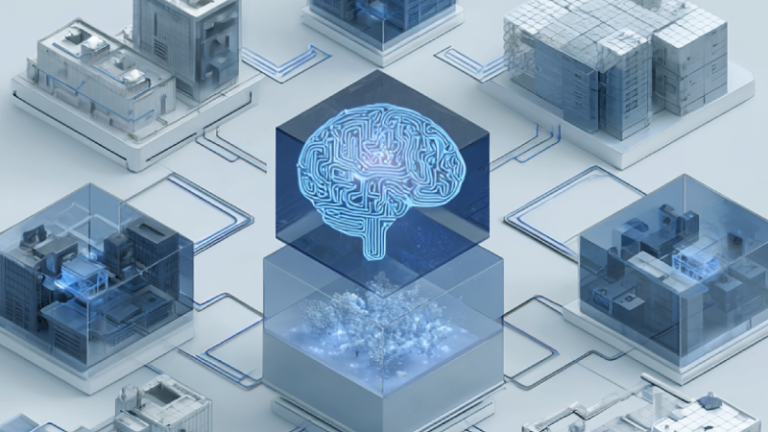
Instead of a traditional cloud server where data is “decrypted” to be processed, PAC creates what Google calls a “secure, fortified space.” Think of it as a virtual clean room: your sensitive data (like emails, calendar events, or voice recordings) enters the room, the AI processes it, the results are sent back to you, and the room is instantly incinerated. Nothing is stored, nothing is logged, and no human at Google has the “key” to enter the room while your data is inside.
2. The Technical Blueprint: Titanium, TPUs, and Isolation
The magic of PAC isn’t just in the software; it’s rooted in bespoke hardware. Google’s announcement highlighted three critical technological pillars that make google private ai compute nov 11 2025 a reality:
Titanium Intelligence Enclaves (TIE)
Building on Google’s long history with the Titan security chip, the PAC architecture utilizes the new Titanium Intelligence Enclaves. These are hardware-isolated zones within the server’s CPU and TPU that create a physical barrier between the AI workload and the rest of the data center infrastructure. Even if an attacker—or a rogue Google administrator—gained “root access” to the server, they would remain physically locked out of the Titanium enclave where your data is being processed.
Custom Tensor Processing Units (TPUs)
To run models as massive as Gemini 1.5 Pro or Ultra with “zero visibility,” Google has optimized its custom TPUs(Tensor Processing Units) to support hardware-level encryption-in-use. This ensures that while the AI is “thinking,” the data remains encrypted even in the system’s volatile memory (RAM).
Remote Attestation & IP Blinding
When your phone connects to the PAC, it doesn’t just “trust” the cloud. Your Pixel 10 performs a process called Remote Attestation, cryptographically verifying that the cloud server is running the exact, unmodified, privacy-protected code it claims to be. Furthermore, PAC uses IP Blinding Relays to mask your identity, ensuring that Google’s AI servers don’t even know which specific user is sending the request.
3. Real-World Impact: Pixel 10, Magic Cue, and Beyond
The first devices to benefit from this google private ai compute announcement nov 11 2025 are the Pixel 10 series. The integration of PAC has unlocked features that were previously too “heavy” for mobile chips:
Magic Cue:
This next-generation proactive assistant can now scan your Gmail, Google Calendar, and even your screenshots to provide “just-in-time” suggestions. Because of PAC, Magic Cue can use the high-reasoning power of Gemini in the cloud to understand context—like finding a flight number from an old email while you are on a call—without that sensitive data ever being accessible to Google’s advertising engines.
Upgraded Recorder App:
The Pixel Recorder now supports high-fidelity summarization and transcription in dozens of additional languages. By offloading the heavy lifting to PAC, the app can handle hour-long meetings with near-perfect accuracy, all while maintaining a “sealed” privacy environment.
4. Stability in the Private Cloud: The WhaleFlux Connection
As we move AI processing into these “fortified enclaves,” the complexity of the underlying infrastructure reaches a tipping point. Managing a massive cluster of GPUs and TPUs that are physically isolated and cryptographically sealed is an operational nightmare. If a server in a PAC cluster fails, you can’t just “remote in” and look at the data to see what went wrong—the hardware is designed to prevent exactly that.
This is where the philosophy of “stability before scale” becomes essential. In high-performance, privacy-first environments, you need a management layer that is as intelligent as the AI it supports. WhaleFlux represents the next generation of infrastructure resilience.
As a Self-Healing System, WhaleFlux is designed to monitor the health of these complex AI clusters in real-time. By utilizing failure prediction innovation, WhaleFlux can identify a degrading TPU or a memory leak within a secure enclave before it leads to a system crash. Because PAC environments are ephemeral and isolated, a crash can mean the permanent loss of a user’s session context. WhaleFlux ensures that the “sealed cloud” remains a stable cloud, proactively rerouting workloads to healthy nodes so that the privacy of the user is never interrupted by a hardware failure.
5. Google PAC vs. Apple PCC: The New Privacy Standard
The tech world has inevitably compared Google Private AI Compute to Apple’s Private Cloud Compute (PCC)announced in 2024.
While Apple was first to market, Google’s nov 11 2025 announcement demonstrates a more “cloud-native” approach. By using its global network of TPUs, Google can offer significantly more “raw compute” to its agents (like Magic Cue) than the initial versions of Apple’s PCC, which relied more heavily on smaller, localized server clusters.
Conclusion: A New Era of Trust
The google private ai compute nov 11 2025 announcement is a watershed moment for the industry. It signals that the “Wild West” era of AI data collection is ending. We are moving toward a future where “The Cloud” is no longer a place where privacy goes to die, but a secure extension of our personal devices.
As AI becomes more personal and proactive through features like Magic Cue, the infrastructure that supports it must be two things: Private and Resilient. By combining Google’s hardware-level isolation with the self-healing stability of platforms like WhaleFlux, we are finally building an AI ecosystem that is powerful enough to change our lives and secure enough to trust with our secrets.