For the past two years, the corporate world has been obsessed with Retrieval-Augmented Generation (RAG). It was the first “bridge” that allowed static Large Language Models (LLMs) to talk to dynamic, private data. RAG solved the hallucination problem for many, turning AI into an incredibly efficient librarian. But as we move into 2026, the librarian is no longer enough. Enterprises are demanding Action.
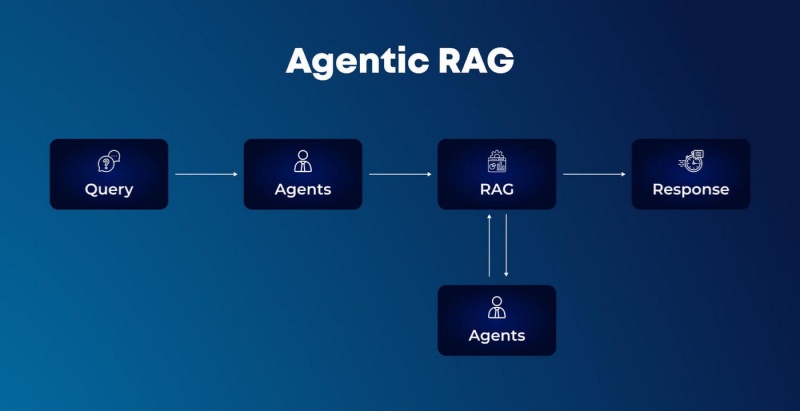
The industry is currently undergoing a fundamental shift: the evolution from Contextual Retrieval (RAG) to Contextual Agency (AI Agents). We are moving from systems that simply “find and tell” to systems that “reason and do.” This evolution marks the birth of true Contextual Intelligence—where an AI doesn’t just understand the query but has the agency to call tools, execute workflows, and complete closed-loop tasks.
However, the leap from a RAG pipeline to a reliable AI Agent is fraught with technical hurdles, particularly the “reliability gap” in tool-calling. This is where the underlying infrastructure and Model Refinement processes, such as those pioneered by WhaleFlux, become the deciding factor in a project’s success.
The Limitation of RAG: Knowledge Without Power
RAG was a massive leap forward. By fetching relevant document chunks and stuffing them into the prompt’s context window, we gave LLMs a “temporary memory” of enterprise facts.
The RAG workflow is essentially linear:
User Query: “What was our Q3 churn rate?”
Retrieval: Search the vector database.
Augmentation: Attach the churn report to the prompt.
Generation: The model summarizes the report.
While powerful, RAG is inherently passive. It is a one-way street ending in a text response. If the user asks the follow-up, “Fix the underlying billing issue causing the churn,” a RAG system hits a wall. It has the knowledge, but it lacks the agency to interact with the billing system.
The Rise of the Agent: Intelligence with Agency
An AI Agent differs from a RAG system because it possesses a Loop of Reasoning. It doesn’t just generate text; it generates a Plan. Agents are equipped with “Tools”—APIs, Python interpreters, or database connectors—and the autonomy to decide when and how to use them.
The Agentic workflow is iterative:
- Perception: Understand the goal.
- Planning: “First, I need to check the billing logs. Then, I need to identify the affected users. Finally, I will apply a credit to their accounts.”
- Action (Tool Calling): The agent generates a specific JSON command to call the
Billing_API. - Observation: The agent reads the API’s response. Did it work? If not, refine the plan and try again.
This “Closed-Loop” capability is what transforms AI from a consultant into a Digital Worker. But for this loop to hold, the agent must be nearly perfect at Tool-calling. If the agent misses a comma in an API call or confuses a “User_ID” with an “Account_ID,” the loop breaks, and the automation fails.
The Reliability Gap: Why “Off-the-Shelf” Models Fail
Most developers start by using “frontier” models (like GPT-4 or Claude 3.5) for their agents. While these models are brilliant at general reasoning, they often stumble when faced with proprietary enterprise tools.
Generic models are trained on the open internet. They don’t know your company’s specific Legacy_ERP_v2 API schema. They might struggle with the nuances of your internal data structures, leading to “Near-Miss Tool Calls”—where the model tries to use a tool but provides the wrong parameters. In a production environment, a 90% success rate in tool-calling is a failure; you need 99.9%.
WhaleFlux: Refining the Brain for Precision Action
This is where WhaleFlux enters the architectural stack. WhaleFlux isn’t just a place to host models; it is a Model Refinery.
We believe that true agency requires Specialized Intelligence. To bridge the gap between “Contextual Retrieval” and “Autonomous Action,” models must be refined for the specific environment they inhabit.
WhaleFlux Model Refinement provides the precision tools necessary to transform a general-purpose base model into a highly specialized Agentic Engine. Through our integrated Fine-tuning pipelines, enterprises can train their models on their specific API schemas, internal documentation, and historical “correct” tool-calling logs.
By performing Supervised Fine-Tuning (SFT) on WhaleFlux’s high-performance Compute Infra, you aren’t just teaching the model facts; you are teaching it the Grammar of your Business.
The WhaleFlux Advantage in Tool-Calling Accuracy:
Schema Mastery:
Fine-tuning on WhaleFlux ensures your agent understands the exact JSON requirements of your private APIs, reducing syntax errors to near zero.
Domain Alignment:
WhaleFlux helps align the model’s reasoning path with your industry’s specific logic (e.g., medical triage or financial risk assessment).
Low-Latency Execution:
Because WhaleFlux synchronizes the Compute Infra with the refined models, the “Reasoning-to-Action” latency is minimized, which is critical for agents performing multi-step tasks.
From Retrieval to Closed-Loop Workforces
When you combine Contextual Intelligence (the “What”) with Refined Agency (the “How”), you create an Autonomous Agent Workforce.
Imagine a Customer Success Agent on the WhaleFlux platform:
- Retrieval: It uses RAG to understand the customer’s history.
- Refinement: Using its Fine-tuned brain, it identifies that the customer is eligible for a loyalty discount based on a complex internal policy.
- Action: It calls the
Discount_Servicetool to apply the credit. - Verification: It calls the
Email_Serviceto notify the customer and logs the action in the CRM.
This is a Closed-Loop Task. The human is no longer the “middleman” who has to take the information from the AI and manually type it into another system. The AI has become the executor.
Conclusion
RAG was the necessary first step, proving that AI could be grounded in reality. But the future of enterprise AI belongs to Agents. The transition from “finding information” to “executing workflows” is the most significant leap in productivity we will see this decade.
However, agency requires a level of precision that general-purpose models cannot provide out of the box. By utilizing WhaleFlux and its Model Refinement capabilities, organizations can harden their agents, ensuring that every tool call is accurate, every plan is logical, and every loop is closed. Don’t just build an AI that knows your business—build one that works for it.
Frequently Asked Questions (FAQ)
1. Is RAG still useful if I am building an AI Agent?
Yes, absolutely. Think of RAG as the agent’s “Reference Library.” Agents use RAG to gather the context they need before they decide which tool to call. RAG provides the knowledge, while the Agent provides the action.
2. How does fine-tuning on WhaleFlux improve tool-calling?
Standard models are “jacks of all trades.” When you fine-tune on WhaleFlux, you are giving the model thousands of examples of your specific API calls. This teaches the model to recognize the patterns and constraints of your specific tools, drastically reducing the hallucination of parameters.
3. Do I need massive amounts of data for Model Refinement on WhaleFlux?
Not necessarily. For tool-calling specialization, “quality over quantity” is key. A few hundred high-quality examples of correct tool interactions can significantly boost an agent’s performance on the WhaleFlux platform.
4. What is “Closed-Loop” automation?
Closed-loop automation refers to a process where the AI identifies a problem, plans a solution, executes the necessary actions via tools, and then verifies that the problem is solved—all without requiring a human to manually bridge the gap between steps.
5. How does WhaleFlux ensure the security of my proprietary tool-calling data?
WhaleFlux utilizes Hardware-Level Sovereignty. Your fine-tuning datasets and the resulting model weights are sequestered in secure enclaves. This ensures that your “Business Grammar”—the secret sauce of how your company operates—remains strictly under your control.