Introduction: The Great Convergence of 2026
We have moved past the era where Artificial Intelligence and Quantum Computing were parallel tracks. In 2026, they have collided to create the Sovereign AI Computer—a hybrid system where the brute-force parallel power of GPUs meets the multi-dimensional probability space of qubits.
The industry has realized that while GPUs are the kings of training, they face a “complexity wall” when it comes to ultra-high-dimensional optimization. This is where ai quantum computing steps in. By offloading specific, intractable mathematical kernels to a Quantum Processing Unit (QPU), we are seeing breakthroughs in everything from carbon capture to real-time generative physical models. However, this hybrid future introduces a level of system fragility never seen before. To succeed, organizations must master both the sub-atomic and the structural.
1. Defining the Hybrid Stack: AI and Quantum Computing
The relationship in ai and quantum computing is synergistic rather than competitive. In a modern 2026 deployment, the workload is split:
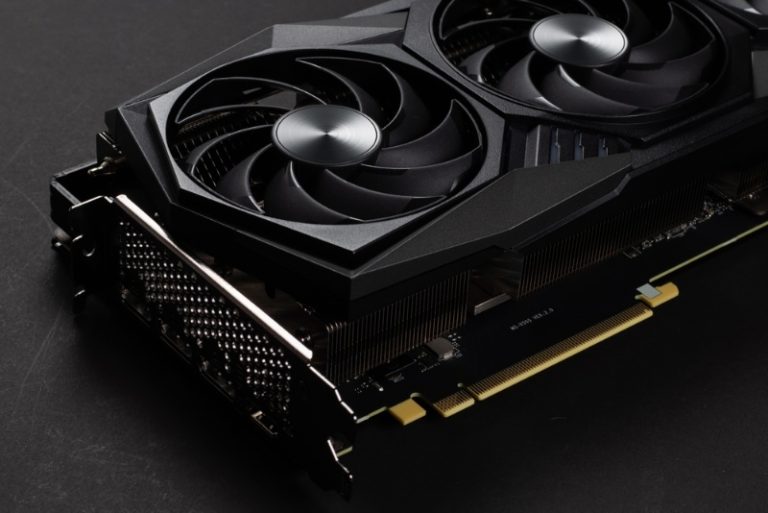
- The Classical Heavy-Lifter: NVIDIA Blackwell or Rubin GPUs handle the massive data pre-processing and the “agentic” layers of the AI.
- The Quantum Optimizer: The QPU handles the “Hard-NP” problems, such as protein folding or cryptographic optimization, that would take a classical cluster years to solve.
This quantum computing ai architecture allows for what researchers call “Infinite Inference”—the ability to run models that can simulate millions of simultaneous outcomes in milliseconds.
2. NVQLink: The Rosetta Stone of Hybrid Compute
One of the most significant breakthroughs in nvidia quantum computing ai is the introduction of NVQLink. While the original NVLink revolutionized how GPUs talk to each other, NVQLink is an open, universal interconnect designed to bridge the gap between GPUs and QPUs.
With sub-4 microsecond latency and 400Gb/s throughput, NVQLink transforms the quantum processor from a “peripheral device” into a first-class peer within the AI Computer. By using the CUDA-Q platform, developers can now write a single C++ program that orchestrates CPUs, GPUs, and QPUs simultaneously, creating a unified, coherent system for the first time in history.
3. Quantum-Classical Resilience: Introducing WhaleFlux
As we integrate these disparate technologies, the system’s “blast radius” for failure grows exponentially. A single GPU failure in an NVQLink-connected cluster doesn’t just stop a training job—it can desynchronize the entire quantum state, leading to catastrophic data loss.
This is where the philosophy of “stability before scale” becomes the industry standard. WhaleFlux has emerged as the critical “Self-Healing” layer for these hybrid environments. While traditional monitoring tools are too slow for the microsecond-scale operations of a quantum-AI stack, WhaleFlux uses advanced failure prediction to identify degrading hardware signatures.
Whether it’s a subtle memory ECC error on a Grace-Blackwell node or a thermal anomaly in the QPU control system, WhaleFlux intervenes before the crash. By automatically rerouting workloads or isolating faulty components, WhaleFlux ensures that your multi-million dollar ai quantum computing investment maintains the uptime required for long-running simulations.
4. D-Wave and Quantum Computer Neural Enhancement
The practical application of d-wave quantum ai quantum computing has taken center stage in 2026. Unlike gate-based systems, D-Wave’s quantum annealing is being used for quantum computer neural enhancement.
By utilizing ai codes popularized by researchers like Tarasek, companies are now using quantum hardware to “prune” and optimize neural networks at the architectural level. These neural enhancement ai codes allow for the creation of “Lean Models”—AI that possesses the power of a trillion-parameter model but the efficiency of a much smaller one, all thanks to quantum-optimized weight distribution.
5. Quantum Computing vs AI: A False Dichotomy
The old debate of ai vs quantum computing has been replaced by a focus on Quantum-Classical Hybridization.
- Quantum computing vs ai used to be about which would solve the world’s problems first.
- Today, quantum computers and ai are viewed as two parts of the same brain.
The GPU is the “fast-thinking” intuitive engine, while the Quantum unit is the “slow-thinking” deep-logic engine. The companies leading the market in 2026 are those who have stopped choosing between them and started building integrated clusters secured by resilient infrastructure management.
Conclusion: Engineering the Future of Intelligence
The shift toward ai quantum computing represents the most significant architectural change in the history of information technology. By combining nvidia quantum computing ai hardware with D-Wave‘s optimization power and securing the entire stack with WhaleFlux‘s self-healing stability, we are finally building computers that can keep pace with the speed of human thought.
As we move forward, the metric for success is no longer just “number of qubits” or “number of GPUs.” The new gold standard is Resilient Compute—the ability to run the world’s most complex hybrid models with the absolute certainty that the system will not fail.
Frequently Asked Questions
1. What is the main difference between NVLink and NVQLink?
NVLink is used for high-speed communication between GPUs within a cluster. NVQLink is a specialized, open-architecture interconnect designed specifically to link GPUs with Quantum Processing Units (QPUs) at microsecond latencies.
2. Is “quantum computer neural enhancement” available for commercial use?
Yes, in 2026, many enterprise AI labs use quantum annealing (like D-Wave) and specialized ai codes (such as those from the Tarasek framework) to optimize the structure and energy efficiency of their large-scale neural networks.
3. How does WhaleFlux prevent crashes in a quantum-AI hybrid system?
WhaleFlux acts as a “Self-Healing” system. It monitors hardware health at a granular level and uses failure prediction to move workloads away from degrading nodes before a crash occurs, protecting the delicate synchronization between the GPU and QPU.
4. Why is D-Wave often mentioned alongside AI?
D-Wave specializes in “quantum annealing,” which is particularly effective at solving combinatorial optimization problems. These are the same types of problems that AI “agents” struggle with in logistics, finance, and network design.
5. Does an AI Computer require a different type of data center?
Yes. AI quantum computing typically requires a hybrid data center that supports both high-density liquid-cooled GPU racks and specialized cooling (like dilution refrigerators) for quantum processors, all linked via a unified fabric.