Introduction: The Shift from Centralized to Distributed Intelligence
For the past decade, the narrative of Artificial Intelligence was written in the cloud. Massive data centers processed every query, trained every model, and sent results back across the globe. But as we move through 2026, the “gravity” of data has shifted. We are no longer content waiting for a round-trip to a distant server.
Whether it’s a self-driving car making a split-second braking decision or a robotic arm on a factory floor identifying a microscopic defect, the “brain” must be where the action is. This is the era of edge AI computing. By bringing high-performance silicon directly to the source of data, we are enabling a new generation of AI edge computers that are faster, more private, and more resilient than their cloud-dependent predecessors.
1. What is AI Edge Computing?
At its core, edge computing AI refers to the deployment of machine learning models directly onto hardware located at the “edge” of the network—near the sensors, cameras, and users. Unlike traditional cloud AI, which suffers from latency and bandwidth constraints, AI in edge computing processes data locally.
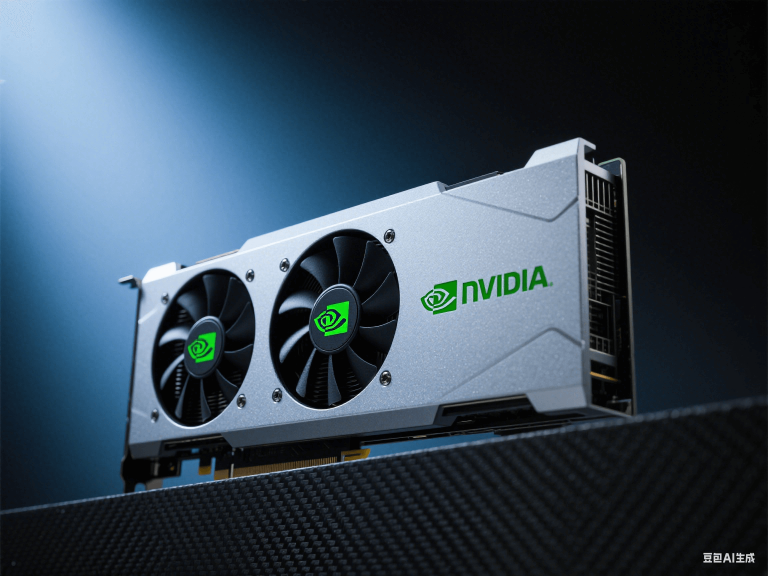
In 2026, the hardware has caught up to the ambition. Modern edge AI computers are no longer just low-power IoT devices; they are “mini-supercomputers” equipped with NPU (Neural Processing Unit) and GPU acceleration, capable of running complex Large Language Models (LLMs) and high-fidelity vision transformers without an internet connection.
2. Best AI Inference Edge Computing for Autonomous Vehicles
One of the most demanding applications of this technology is in transportation. To achieve Level 4 and Level 5 autonomy, vehicles require the best AI inference edge computing available. In 2026, the industry has standardized around high-throughput, low-latency platforms like the NVIDIA DRIVE AGX Thor and Jetson Thor.
These platforms are designed to handle “Physical AI”—the intersection of generative reasoning and real-world action. For autonomous vehicles, this means:
- Sensor Fusion: Merging data from LiDAR, Radar, and 12+ cameras in real-time.
- Predictive Pathing: Using Alpamayo-class models to predict pedestrian behavior 5 seconds into the future.
- Fail-Safe Redundancy: Ensuring that even if a sensor fails, the edge AI computer can navigate to a safe stop.
3. Computer Vision Edge AI News: The Rise of Visual Reasoning
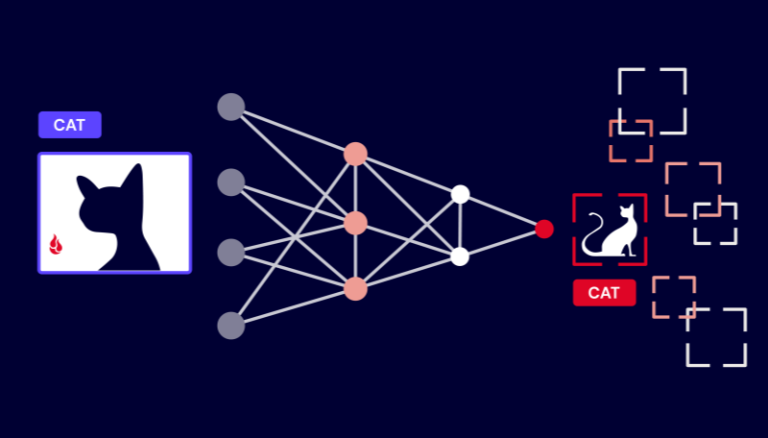
Recent computer vision edge AI news from late 2025 and early 2026 highlights a massive leap in “Visual Reasoning.” We have moved past simple object detection (e.g., “This is a car”) to contextual understanding (e.g., “This car is swerving and likely to hit the curb”).
Key updates include:
AI-RAN Integration:
Companies like Nokia and NVIDIA are turning mobile towers into edge AI hubs, allowing smart city cameras to process vision data at the “network edge” to reduce city-wide traffic congestion.
On-Device VLA Models:
The release of Vision-Language-Action (VLA) models for humanoid robots has allowed machines to understand natural language commands like “pick up the blue cup” and execute the physical movement entirely via ai edge computing.
4. Stability at the Edge: Introducing WhaleFlux
As we deploy thousands of AI edge computers across cities, factories, and vehicle fleets, a critical challenge emerges: Infrastructure Fragility. An edge device in a remote location or a moving vehicle is exposed to harsh vibration, temperature swings, and fluctuating power—all of which can cause GPU degradation or “silent” errors.
This is where the philosophy of “stability before scale” becomes a life-saving requirement. WhaleFlux has emerged as the essential management layer for distributed AI infrastructure. While most tools focus on the cloud, WhaleFlux provides full-stack observability and self-healing capabilities for edge environments.
By integrating WhaleFlux into an edge AI computer cluster, organizations can:
- Predict Failures: Identify a degrading GPU or NPU in an autonomous delivery bot before it breaks down in traffic.
- Automate Orchestration: Use WhaleFlux to seamlessly push model updates to 10,000 edge nodes simultaneously without interrupting active inference.
- Optimize TCO: Achieve up to 99.9% utilization of edge resources, ensuring that every watt of power used for edge computing AI is maximized.
In the high-stakes world of autonomous systems, WhaleFlux acts as the “reliability engine” that ensures the intelligence at the edge never flickers out.
5. Hardware Trends: Edge Computing AI November 2025 and Beyond
The hardware landscape of edge computing AI November 2025 saw the launch of the “AI PC” and “AI Workstation” as standard enterprise tools.
Intel Panther Lake & AMD Ryzen AI:
These chips have brought over 50 TOPS (Tera Operations Per Second) of NPU power to standard laptops, turning every office computer into an edge AI computer.
The “Rubin” Influence:
While NVIDIA’s Rubin architecture dominates the data center, its architectural “DNA” has filtered down into the Jetsonfamily, allowing for 10x more efficient inference at the edge compared to 2024 models.
Conclusion: The Era of Localized Intelligence
The trajectory of edge AI computing in 2026 is clear: we are moving away from “Cloud-First” to “Edge-Essential.” Whether it’s through the best AI inference edge computing for autonomous vehicles or the massive deployment of vision-based sensors in smart factories, the demand for localized, real-time compute is insatiable.
However, as the “Edge” becomes the new “Core,” the industry must prioritize resilience. By pairing cutting-edge AI edge computers with self-healing management platforms like WhaleFlux, we can build an autonomous world that isn’t just smart, but reliably intelligent. The future of AI isn’t just in the sky; it’s right here, on the ground, at the edge.
Frequently Asked Questions
1. What is the main benefit of edge AI computing over cloud AI?
The primary benefits are Latency (faster response times), Privacy (data stays on-site), and Reliability (the system works without an internet connection).
2. Which is the best AI edge computer for robotics in 2026?
The NVIDIA Jetson AGX Orin and the newer Jetson Thor are currently considered the gold standard for robotics due to their high TOPS-per-watt ratio and massive software ecosystem.
3. How does WhaleFlux help with autonomous vehicle fleets?
WhaleFlux provides a centralized dashboard to monitor the health of the GPU/NPU clusters inside every vehicle. It predicts hardware failures before they happen and ensures that model updates are deployed safely across the entire fleet.
4. Is computer vision at the edge better than in the cloud?
For real-time applications (like security or driving), edge vision is superior because it eliminates the delay of sending high-resolution video streams over the internet.
5. What happened in edge computing AI in November 2025?
November 2025 marked the widespread release of “AI PCs” with dedicated NPUs and the announcement of AI-RAN (AI-powered Radio Access Networks), which allow mobile networks to process AI tasks locally for nearby users.