I. Introduction: The Untapped AI Potential of GeForce GPUs
When we talk about the engines driving the artificial intelligence revolution, one name consistently stands out: NVIDIA. From massive data centers to research labs, NVIDIA’s GPU technology has become the universal language of deep learning. While headlines often focus on the colossal power of data-center cards like the H100, there’s another, more accessible family of NVIDIA GPUs waiting in the wings, packed with untapped potential: the GeForce series.
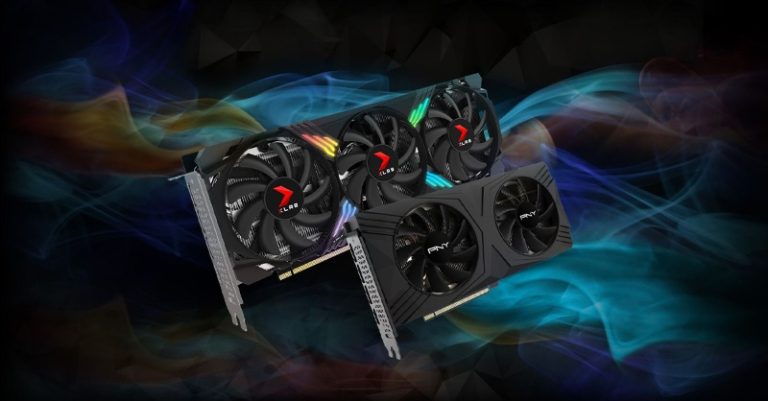
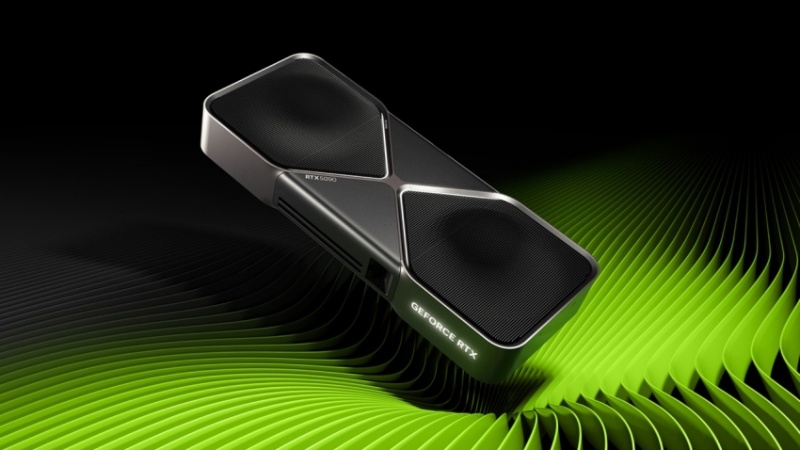
For many AI teams, especially startups, research groups, and enterprises building their first models, the NVIDIA GeForce lineup—epitomized by the incredibly powerful RTX 4090—represents a compelling entry point. These GPUs, born from the gaming world, have evolved into serious computational tools, offering remarkable performance for a fraction of the cost of their data-center counterparts. They provide a accessible on-ramp to the AI highway, capable of handling tasks from model fine-tuning to mid-scale inference.
However, this potential comes with a significant challenge. Harnessing the power of a single GeForce GPU is one thing; managing a cluster of them efficiently in a professional, multi-user, multi-project environment is an entirely different problem. This is where the raw power of GeForce meets the complex reality of enterprise AI development.
II. The GeForce GPU Advantage in AI: Power and Accessibility
Why consider GeForce GPUs for serious AI work? The answer lies in a powerful combination of performance, accessibility, and cost-effectiveness.
First and foremost is cost-effective performance. A GPU like the NVIDIA RTX 4090, with its vast number of CUDA cores and generous VRAM, delivers staggering computational power specifically for parallelizable tasks like AI. For specific workloads such as fine-tuning large language models (LLMs), running computer vision simulations, or handling batch inference jobs, a cluster of GeForce GPUs can deliver performance that rivals more expensive setups, but at a dramatically lower initial investment. This makes advanced AI development financially feasible for a much wider range of organizations.
Their role is particularly crucial in prototyping, research, and smaller-scale deployments. Before committing a $30,000 data-center GPU to a new, unproven model architecture, teams can rapidly iterate and experiment on GeForce hardware. This allows for faster development cycles, more aggressive experimentation, and de-risking projects before scaling up. A small cluster of GeForce RTX GPUs can serve as a highly capable, dedicated environment for a development team, avoiding the queues and costs associated with shared, high-end infrastructure for everyday tasks.
In essence, GeForce GPUs act as a vital bridge, seamlessly connecting the world of accessible computing with the high-stakes realm of professional AI. They fill the critical gap between a developer’s laptop and a full-scale data center rack, enabling organizations to build and validate their AI ambitions without prohibitive upfront costs.
III. The Management Hurdle: Why GeForce GPUs Need an Orchestrator
The very accessibility of GeForce GPUs can become their greatest weakness in a professional setting. While their hardware is powerful, they lack the built-in management and orchestration features of their data-center siblings. This creates a significant operational hurdle.
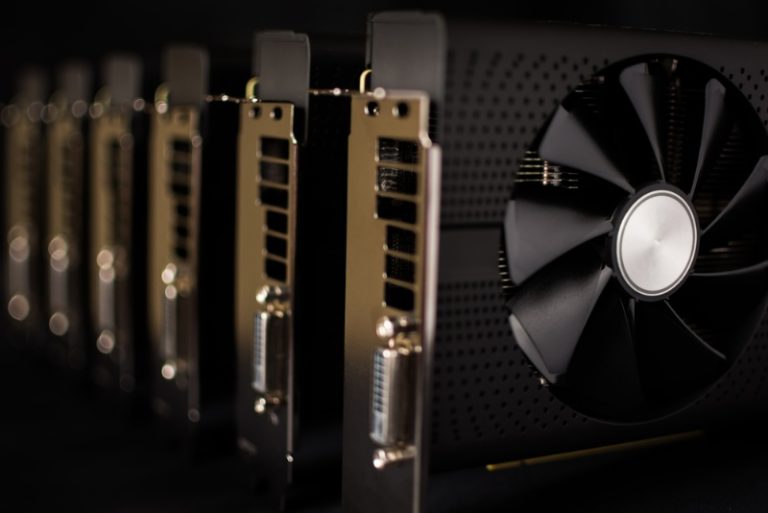
The primary difficulty lies in manually managing a cluster for consistent performance. Imagine a team of five data scientists sharing a rack of four GeForce RTX 4090s. Who gets priority? How do you ensure one long-running training job doesn’t block everyone else? How do you distribute a large inference workload across all four GPUs evenly? Without a dedicated tool, this becomes a manual, time-consuming process for engineers, leading to frustrating bottlenecks, idle hardware, and inter-team conflicts over resources.
This directly leads to the risk of underutilization, which completely negates the GeForce GPU’s cost advantage. A GPU sitting idle is a waste of money, whether it costs $2,000 or $20,000. In a manual setup, it’s common to see utilization rates plummet to 30-40% as jobs wait in queues, resources are poorly allocated, and workloads are not packed efficiently. The “affordable” GPUs suddenly become a very expensive and inefficient asset.
Furthermore, there is a pressing need for enterprise-grade stability and scheduling. AI development isn’t a 9-to-5 operation. Training jobs might need to run overnight; inference APIs need to be always-on. Managing driver stability, scheduling non-urgent jobs for off-peak hours, and ensuring high availability on consumer-grade hardware is a complex challenge. For AI to move from a research project to a core business function, it requires a reliable, scheduled, and stable infrastructure—something that is incredibly difficult to achieve with a manual GeForce setup.
IV. Introducing WhaleFlux: Enterprise Management for Your GeForce Fleet
This is precisely where WhaleFlux transforms the equation. WhaleFlux is an intelligent GPU resource management tool designed to bring enterprise-grade orchestration to your fleet of NVIDIA GeForce GPUs. We provide the sophisticated software layer that unlocks the true professional potential of this powerful and accessible hardware.
Think of WhaleFlux as the intelligent brain for your entire GPU operation. It sees your cluster of GeForce RTX GPUs not as individual components, but as a unified pool of computational power. WhaleFlux automatically handles the complex logistics of workload management, turning your accessible GeForce hardware into a seamless, powerful, and reliable AI development platform.
The key features of WhaleFlux are designed specifically to overcome the management hurdles of GeForce clusters:
Automated Workload Distribution:
WhaleFlux intelligently analyzes incoming AI jobs and dynamically distributes them across all available GPUs in your cluster. Whether you’re running a mix of GeForce RTX 4090s and A100s or a homogeneous fleet of GeForce cards, WhaleFlux ensures the right task goes to the right GPU at the right time, maximizing throughput and minimizing wait times.
Advanced Scheduling and Queue Management:
Our platform allows teams to submit jobs with priorities and dependencies. WhaleFlux then manages the queue, ensuring critical tasks are completed first while efficiently packing smaller jobs around them to keep utilization high.
Stability and Monitoring:
WhaleFlux provides deep visibility into the health and performance of every GPU in your cluster. It helps preempt issues, manages drivers, and ensures your GeForce-based infrastructure delivers the stability required for production AI work.
With WhaleFlux, the process of deploying models onto your GeForce hardware is drastically simplified. What was once a manual and error-prone process becomes a single, automated command, allowing your AI team to focus on building models, not managing hardware.
V. Building a Scalable, Cost-Effective AI Infrastructure with WhaleFlux
The ultimate power of combining GeForce GPUs with WhaleFlux is the creation of a truly scalable and cost-optimized AI infrastructure.
WhaleFlux allows teams to start with GeForce GPUs and scale seamlessly. A startup can begin its AI journey with a small, affordable cluster of GeForce RTX cards, managed flawlessly by WhaleFlux. As their models and user base grow, they can seamlessly integrate data-center GPUs like the NVIDIA H100 or A100 into the very same WhaleFlux-managed environment. The platform automatically recognizes the new hardware and begins assigning the most demanding workloads to these more powerful cards, while the GeForce GPUs continue to handle fine-tuning, testing, and inference. This creates a smooth, non-disruptive growth path from prototype to production.
The most immediate financial impact is a dramatic improvement in the utilization rate of your GeForce GPUs. By eliminating manual management and idle time, WhaleFlux pushes utilization from a typical 30-40% to 80% and above. This means you are getting more than twice the computational output from the same hardware investment. The return on investment (ROI) for your GeForce fleet is accelerated significantly, as every dollar spent on hardware is leveraged to its maximum potential.
Finally, WhaleFlux enables the creation of a unified, optimized environment. There is no longer a need for a hard choice between “affordable” GeForce GPUs and “powerful” data-center GPUs. With WhaleFlux, you can build a hybrid cluster that leverages the best of both worlds. Use cost-effective GeForce RTX cards for the bulk of your development and inference work, and reserve the immense power of H100s for your largest model training campaigns. WhaleFlux intelligently manages this heterogeneous environment as a single, cohesive unit, ensuring optimal performance and cost-efficiency across your entire AI portfolio.
VI. How to Get Started with WhaleFlux and NVIDIA GeForce GPUs
Integrating WhaleFlux into your AI workflow is a straightforward process designed to get you up and running quickly.
You can access NVIDIA GeForce GPUs, along with the full spectrum of NVIDIA data-center GPUs like the H100, H200, and A100, directly through WhaleFlux. We offer both purchase options for long-term projects and flexible rental plans for teams that need to scale their resources for a defined period.
To align with our goal of providing stable, predictable, and cost-effective infrastructure, our rental model requires a minimum commitment of one month. This approach discourages the inefficient, short-term usage patterns common in hourly cloud services and allows us to provide a more reliable and optimized environment for serious AI development, all at a more predictable cost.
Getting started is simple:
- Consultation: Contact our team for a free consultation. We’ll discuss your specific AI workloads, goals, and budget.
- Cluster Design: We’ll help you design the optimal GPU cluster, recommending the right mix of GeForce and other NVIDIA GPUs to meet your needs.
- Integration and Onboarding: Our team will guide you through the seamless integration of WhaleFlux into your environment, ensuring your team can start leveraging its power immediately.
VII. Conclusion: Power, Managed
The narrative is clear: NVIDIA GeForce GPUs represent a massive opportunity for AI enterprises, offering a powerful and accessible entry point into the world of deep learning. However, their true potential remains locked away without the sophisticated management required for professional, scalable AI development.
WhaleFlux provides the key. It is the essential layer of intelligence that unlocks the raw power of your GeForce fleet, transforming it from a collection of individual gaming cards into a cohesive, enterprise-grade AI compute cluster. By automating management, maximizing utilization, and enabling seamless scalability, WhaleFlux empowers AI teams to build infrastructure that is not only powerful and scalable but also remarkably cost-effective.
The future of AI is not just about having more power; it’s about managing the power you have more intelligently. Stop letting infrastructure complexity slow you down.
Ready to unlock the true potential of your AI projects? Contact WhaleFlux today to schedule your consultation and design a GPU cluster that grows with you.
FAQs
1. Can NVIDIA GeForce GPUs really be used for serious AI work?
Yes, absolutely. Modern NVIDIA GeForce GPUs, like the RTX 4090, are powerful tools for AI. They are built on the same architecture as professional data center cards and feature dedicated AI hardware like Tensor Cores. With substantial VRAM (up to 24GB), they are excellent for local development, experimentation with large language models (LLMs), fine-tuning, and inference on smaller-scale models.
2. How do GeForce GPUs like the RTX 4090 compare to professional GPUs like the H100 for AI?
While powerful, GeForce GPUs have different design goals. The RTX 4090 is a cost-effective powerhouse for individual workstations. In contrast, a professional GPU like the NVIDIA H100 is built for scale, reliability, and maximum throughput in data centers. Key differences include:
- Interconnect: GeForce GPUs lack high-speed multi-GPU interconnects like NVLink, which are critical for large-scale distributed training.
- Precision & Features: Cards like the H100 support more advanced data types (like FP8) and have features like Transformer Engine for optimized LLM training.
- Ecosystem: Professional GPUs are supported by enterprise-grade drivers and are designed for 24/7 operation in multi-user server environments.
3. What are the main limitations when using multiple GeForce GPUs for AI?
The primary challenge is communication bottleneck. Without high-speed interconnects like NVLink, data between multiple GeForce GPUs must travel through the slower PCIe bus. This can severely limit performance scaling in multi-GPU training scenarios. Managing workloads and resources efficiently across several GeForce cards also requires sophisticated software orchestration to avoid idle resources.
4. What is smart GPU management and why is it critical when using GeForce cards for AI?
Smart GPU management involves using software to intelligently schedule, monitor, and optimize AI workloads across available GPU resources. For GeForce cards, this is critical because it helps overcome their limitations. Effective management can:
- Automatically allocate jobs to the least busy GPU.
- Queue tasks to ensure full utilization without manual intervention.
- Provide clear visibility into the utilization and performance of each card in a workstation or cluster.
5. How does WhaleFlux help organizations leverage GeForce and other NVIDIA GPUs efficiently?
WhaleFlux is an intelligent GPU resource management tool designed to unify and optimize GPU infrastructure. It allows organizations to integrate cost-effective NVIDIA GeForce GPUs (like the RTX 4090) alongside professional NVIDIA GPUs (like H100, A100) into a single, smart resource pool. WhaleFlux’s software intelligently schedules the right workload to the right GPU based on its capabilities—using GeForce cards for development and smaller jobs while reserving H100 clusters for large-scale training. This maximizes the value of all hardware investments, reduces cloud costs, and accelerates AI deployment by ensuring optimal utilization of every GPU.