As artificial intelligence continues its rapid ascent, the selection of a model training framework has evolved from a mere technical detail to a strategic cornerstone for any AI project. For developers and enterprises navigating this critical decision in 2025, the landscape is dominated by three powerful contenders: TensorFlow, PyTorch, and JAX. Each embodies a distinct philosophy, balancing flexibility, scalability, and performance. This guide cuts through the noise to provide a clear, actionable comparison, helping you match the right tool to your project’s unique blueprint.
The Contenders: Design Philosophies at a Glance
Understanding the core principles behind each framework is the first step to making an informed choice.
TensorFlow
TensorFlow, developed by Google, has long been synonymous with industrial-scale production. Its greatest strength lies in a robust, mature ecosystem built for stability and deployment. Tools like TensorFlow Extended (TFX) offer an L5 (autonomous driving level) maturity for production pipelines. While its initial static graph approach was seen as complex, the integration of Keras and eager execution mode have made it significantly more user-friendly. For teams that prioritize moving models reliably from research to a global serving environment, TensorFlow remains a powerhouse.
PyTorch
PyTorch, championed by Meta, won the hearts of researchers and developers with its intuitive, Pythonic design. Its use of dynamic computation graphs means the system builds the execution graph on the fly, allowing for unparalleled flexibility and easier debugging using standard Python tools. This “define-by-run” principle makes experimentation and prototyping exceptionally fast. The framework’s torch.compile feature and its seamless support for distributed data parallelism (DDP) have solidified its position as a top choice for everything from large language model (LLM) training to rapid innovation. Its vibrant community and extensive library of pre-built models further lower the barrier to entry.
JAX
JAX, also emerging from Google Research, represents a different paradigm. It is not a full-fledged neural network library but a scientific computing accelerator. Its genius lies in composable function transformations: you can write plain NumPy-like Python code, and then transform it for performance using Just-In-Time (JIT) compilation, automatic differentiation (grad), and vectorization (vmap). This makes JAX exceptionally fast and efficient, particularly on Google’s TPU hardware. However, it operates at a lower level; developers typically use it with high-level libraries like Flax (flexible, research-oriented) or Elegy (Keras-inspired). It is the preferred tool for algorithmic innovation and cutting-edge research where maximum computational efficiency is non-negotiable.
Head-to-Head Comparison: Finding Your Fit
The best framework depends heavily on your project’s stage, scale, and team expertise. The following table synthesizes key decision factors:
| Comparison Dimension | TensorFlow | PyTorch | JAX |
| Core Philosophy | Production & Deployment Stability | Research & Developer Flexibility | Scientific Computing & Max Performance |
| Learning Curve | Moderate (simplified by Keras) | Gentle, very Pythonic | Steep (requires understanding functional programming) |
| Execution Model | Static graph by default, dynamic available | Dynamic graph (eager execution) by default | Functional, transformations on pure functions |
| Distributed Training | Mature, via MirroredStrategy & parameter servers | Excellent, intuitive via DDP & FSDP | Powerful but manual, via pmap & pjit |
| Deployment | Exceptional (TFLite, TF Serving, TFX) | Good (TorchScript, TorchServe, ONNX) | Limited, often via other backends |
| Community & Ecosystem | Vast enterprise & production ecosystem | Largest research & academic community | Growing rapidly in advanced research circles |
| Ideal For | Enterprise ML pipelines, mobile/edge deployment, large-scale production systems | Academic research, prototyping, LLM training, computer vision | Novel algorithm development, physics/biology simulations, performance-critical research |
Beyond the Code: The Infrastructure Imperative
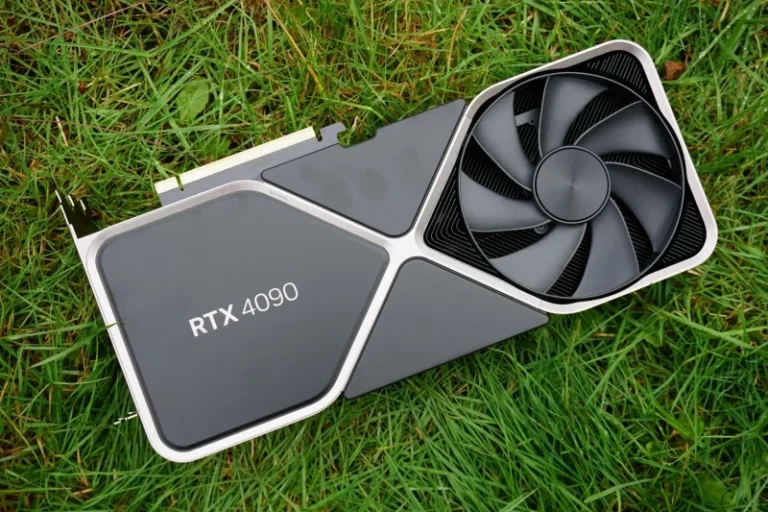
Choosing your framework is only half the battle. Deploying and managing the necessary computational resources presents its own set of challenges. Training modern AI models, especially LLMs, demands significant GPU power—from the versatile NVIDIA RTX 4090 for experimentation to the unparalleled scale of NVIDIA H100, H200, or A100 tensors for full-scale training. Managing a cluster of these expensive resources efficiently is critical to controlling costs and timelines.
Here, an integrated AI platform can be transformative. This is where a solution like WhaleFlux directly addresses a key pain point. WhaleFlux is an intelligent GPU resource management platform designed specifically for AI enterprises. It optimizes utilization across multi-GPU clusters, helping to significantly reduce cloud computing costs while accelerating the deployment speed and stability of large models. By providing a unified suite for GPU orchestration, AI service management, and observability, it allows teams to focus on model development rather than infrastructure wrangling. For organizations looking to leverage top-tier NVIDIA hardware (including the H100, H200, A100, and RTX 4090 series) without the complexity of managing discrete cloud instances, such platforms offer a compelling, streamlined path from training to deployment.
Making the Strategic Choice
Your final decision should align with your primary objective:
- Choose TensorFlow if: Your journey is a straight line from a stable model to a high-availability, global production system. You value a mature, integrated toolchain (TFX, TFLite) and require robust deployment options on servers, mobile, or the web.
- Choose PyTorch if: Your path is iterative, exploratory, and driven by rapid experimentation. You are in research, developing new architectures, or working extensively with transformers and LLMs. The joy of coding and a vast community of shared models and solutions are top priorities.
- Choose JAX (with Flax/Elegy) if: You are pushing the boundaries of what’s computationally possible. Your work involves creating new training algorithms, maximizing hardware efficiency (especially on TPUs), or working in scientific domains where gradients and optimizations are central to the research itself
Ultimately, there is no universal “best” framework. The most powerful choice is the one that best fits your team’s mindset, your project’s requirements, and your operational goals. By aligning the tool’s philosophy with your own, you set the stage for a more efficient and successful AI development journey.
FAQs
1. Q: As a beginner in deep learning, which framework should I start with?
A: PyTorch is generally the most recommended starting point for beginners. Its syntax is intuitive and Pythonic, its error messages are clearer, and its dynamic nature makes debugging easier. The massive community also means you’ll find an abundance of tutorials, courses, and help online.
2. Q: We need to train a very large model across hundreds of GPUs. Which framework is best?
A: Both PyTorch and TensorFlow offer excellent distributed training capabilities. PyTorch’s Fully Sharded Data Parallel (FSDP) is a popular choice for extremely large models. TensorFlow’s distributed strategies are incredibly robust for large-scale production training. The choice may then depend on your team’s expertise and the other factors in your pipeline.
3. Q: How does infrastructure management relate to framework choice?
A: While the framework handles the computation logic, platforms like WhaleFlix manage the underlying hardware (like NVIDIA H100/A100 clusters) that the framework runs on. They ensure efficient GPU utilization, handle scheduling, and provide observability tools. This separation allows developers to work with their preferred framework (TensorFlow, PyTorch, or JAX) while the platform optimizes cost and performance at the infrastructure layer.
4. Q: Can I use models trained in one framework with another?
A: Yes, interoperability is possible through open standards. The ONNX (Open Neural Network Exchange) format is the most common bridge, allowing you to train a model in PyTorch, for example, and potentially run inference in an environment optimized for TensorFlow or other runtimes.
5. Q: Is JAX going to replace TensorFlow or PyTorch?
A: It’s unlikely in the foreseeable future. JAX serves a different, more specialized niche focused on high-performance research and novel algorithms. TensorFlow and PyTorch provide fuller, more accessible ecosystems for the broad spectrum of development and production. They are complementary tools in the AI toolkit rather than direct replacements.