How AI and Cloud Computing are Converging
Introduction
The digital age has been marked by remarkable independent advancements in both Artificial Intelligence (AI) and cloud computing. However, when these two titans of tech join forces, they give rise to a synergy potent enough to fuel an entirely new wave of technological innovation. This convergence is not just enhancing capabilities in data analytics and storage solutions; it is reimagining how we interact with and derive value from technology.
The Synergy of AI and Cloud Computing
The unification of AI and cloud computing is no mere melding; it is an orchestrated fusion of strengths where each technology amplifies the capabilities of the other. Cloud computing presents an almost boundless arena for AI operations, granting access to on-demand computing power and expansive data storage possibilities. This environment is primordial for the growth of AI, which thrives on data and requires significant computational resources to evolve.
Enabling Scalability and Accessibility
The cloud provides a scalable infrastructure that can grow with the demands of AI algorithms. This elasticity means that as AI models become more complex or as datasets expand, the cloud can adapt with additional resources. Startups to large enterprises can leverage this capability, entering arenas that were once dominated by tech giants with significant on-premise resources. Accessibility is another key boon, with cloud services democratizing AI by offering high-level compute resources remotely to anyone with internet access.
Advancements in Machine Learning Platforms
Cloud providers have recognized the necessity of specialized platforms for machine learning and AI. For instance, services such as Google Cloud AI, Amazon SageMaker, and Microsoft Azure Machine Learning provide integrated environments for the training, deployment, and management of machine learning models. These services offer pre-built algorithms and the ability to create custom models, significantly reducing the time and knowledge barrier for businesses to incorporate AI solutions.
Data Management and Analytics at Scale
AI’s insatiable appetite for data pairs perfectly with the cloud’s solution to storage. Cloud platforms can effectively manage vast datasets, making it feasible to store and process the big data which AI systems analyze. Furthermore, AI enhances cloud capabilities by introducing analytics and machine learning directly into the data repositories, allowing for more advanced data processing and extraction of insights.
Intelligent Automation and Resource Optimization
AI introduces smart automation of cloud infrastructure management, optimizing resource usage without human intervention. Algorithms predict resource needs, automatically adjusting capacity, and ensuring efficient operation. This not only decreases costs but also improves the performance of hosted applications and services.
Case Studies: Successful Convergence in Action
The convergence of AI and cloud computing has led to successful implementations across various sectors:
Healthcare Delivery and Research
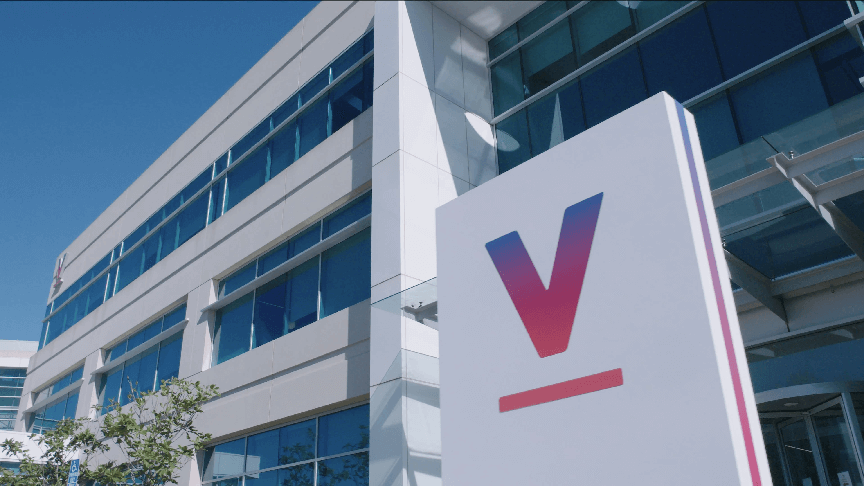
In healthcare, Project Baseline by Verily (an Alphabet company) is a stellar example. The initiative leverages cloud infrastructure for an AI-driven platform that collects and analyzes vast amounts of health-related data. This convergence enables predictive analytics for disease patterns and personalizes patient care protocols, translating into tangible improvements in patient outcomes.
Retail and Consumer Insights
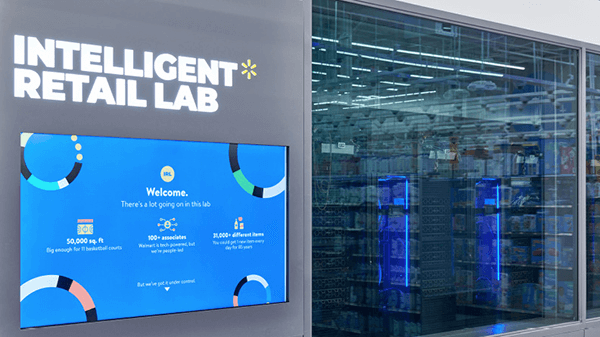
In the retail space, Walmart harnesses cloud-based AI to refine logistical operations, manage inventory, and personalize shopping experiences for customers. Through their data analytics and machine learning tools, Walmart can predict shopping trends and optimize supply chains, reducing waste and improving customer satisfaction.
Financial Services and Risk Management
JPMorgan Chase has turned to the cloud to bolster its AI capabilities for real-time fraud detection. Their AI models, hosting complex algorithms on cloud platforms, scan transaction data to identify potential threats, significantly reducing the occurrence of false positives and enhancing the security of client assets.These cases underscore the powerful impact of AI and cloud computing’s convergence on operational efficiency, user experience, and outcome-driven strategies. As organizations continue to realize the benefits of this collaboration, it’s becoming increasingly clear that the duo of AI and cloud computing stands at the heart of the next frontier in digital transformation.
Challenges and Potential Solutions
The merger of AI and cloud computing is paving the way for a smarter technology landscape. However, it’s not without its share of challenges that require strategic solutions:
Data Privacy and Governance
As data becomes more centralized in the cloud and AI models more nuanced in their data requirements, privacy concerns escalate. Solutions like federated learning allow AI model training on decentralized data, enhancing user privacy without compromising the dataset’s utility. Additionally, implementing stronger data governance and privacy laws aligned with technological advances can provide a structured approach to maintaining user trust.
Securing AI and Cloud Platforms
Securing the infrastructure underpinning AI and the cloud is critical. This means deploying advanced cybersecurity measures such as AI-driven threat detection systems, end-to-end encryption for data in transit and at rest, and multi-factor authentication. Regular security assessments and adherence to compliance standards like GDPR or HIPAA for specific industries can fortify the AI and cloud ecosystem against cyber threats.
Tackling the Skills Shortage
The sophisticated nature of AI and the expansive scope of cloud computing creates a high demand for specialized talent. Companies can forge partnerships with academic institutions to create targeted curricula that meet industry needs. Investing in continuous employee development through workshops and certifications can also help mitigate the skills gap and empower existing workforce members to adapt to new roles necessitated by AI and cloud technology.
Future Prospects
As the fusion between AI and cloud computing strengthens, the horizon of digital innovation expands:
IoT and AI: Smarter Devices Everywhere
The Internet of Things (IoT) stands to benefit immensely from AI and cloud computing, transitioning from simple connectivity to intelligent, autonomous operations. AI can be leveraged to process and analyze data collected by IoT devices to facilitate real-time decisions, while cloud platforms ensure global accessibility and scalability for IoT systems.
Amplifying Edge Computing
Edge computing is set to revolutionize how data is processed by bringing computation closer to the source of data creation. The convergence with AI allows for smarter edge devices that can process data on-site, reducing latency and reliance on centralized data centers. Cloud services come into play by providing management and orchestration layers for these distributed networks.
Building the Foundations of Smart Cities
Smart cities stand as testament to the potential of AI and cloud collaboration. They use AI’s analytical power and the cloud’s vast resource pool to optimize urban services, from traffic management to energy distribution. As smart cities evolve, they’ll likely become more responsive and adaptive, creating urban environments that are not only interconnected but also intelligent.In this landscape of emerging opportunities, businesses must pivot to embrace a future where AI and cloud computing no longer function as standalone tools, but as integrated components of a comprehensive tech ecosystem, propelling innovation at the speed of thought.
The Evolution of NVIDIA GPUs: A Deep Dive into Graphics Processing Innovation
Beyond the Specs: Hardware as a Strategic Asset
In the industrial AI landscape of 2026, hardware history isn’t just a timeline of chips; it’s a map of architectural shifts that define the unit economics of intelligence. For an enterprise, understanding the leap from an A100 to a Blackwell (B200) isn’t about marketing—it’s about Deterministic ROI.
Every generational jump has introduced a new “efficiency frontier.” At WhaleFlux, we view these architectures not just as raw compute, but as the foundational layers for a scalable Agent Workforce.
1. The Foundation: Pascal to Volta (2016-2018)
Before 2016, GPUs were primarily graphics engines adapted for general math. With the Pascal (P100) architecture, NVIDIA introduced NVLink, the high-speed interconnect that made distributed model fine-tuning viable by breaking the PCIe bandwidth bottleneck.
However, the real “Big Bang” for AI was Volta (V100), which introduced Tensor Cores.
The Architectural Gain
Volta enabled mixed-precision arithmetic (FP16/FP32). This allowed models to adapt faster without losing numerical stability—a philosophy that remains core to the WhaleFlux Model Refinery today.
2. The Inflection Point: Ampere & The Granularity of Compute (2020)
The Ampere (A100) architecture solved the most significant problem in AI clusters: Resource Fragmentation. By introducing Multi-Instance GPU (MIG), Ampere allowed a single GPU to be partitioned into seven isolated hardware instances.
WhaleFlux Insight
Our Deep Observability suite was architected to capitalize on this granularity. By slicing A100s, the WhaleFlux platform allows multiple Autonomous Agents to run on a single physical card with zero cross-interference, drastically lowering the entry cost for enterprise model refinement.
3. The Transformation: Hopper & The Transformer Engine (2022-2024)
With Hopper (H100/H200), the focus shifted from general-purpose compute to the specialized Transformer Engine. This was a recognition that Large Language Models (LLMs) require unique non-linear math handling.
| Architecture | Core Innovation | Fine-tuning/Inference Gain | WhaleFlux Use-Case |
| Ampere (A100) | MIG & TF32 | 2-3x vs. V100 | Multi-tenant Agent Hosting |
| Hopper (H100) | Transformer Engine (FP8) | 4-9x vs. A100 | Industrial-scale Fine-tuning |
| Blackwell (B200) | 2nd Gen Transformer Engine | Up to 30x vs. H100 | Real-time Agent Workforce |
4. The Future: Blackwell and the FP4 Revolution (2025+)
The Blackwell architecture introduces a seismic shift: FP4 precision. This allows models to be compressed and executed at 4-bit precision without losing cognitive depth.
The ROI Impact
This effectively doubles the capacity of existing Compute Infra. For companies using WhaleFlux, Blackwell represents the transition from “batch processing” to a truly real-time, responsive digital workforce.
5. WhaleFlux: The Generational Bridge
As an All-in-one AI Integrated Platform, WhaleFlux abstracts the complexity of this rapid evolution. Our AI Platform Intelligence ensures that your Agent Workforce remains architecture-agnostic.
Cross-Generational Orchestration
We enable seamless migration of fine-tuning tasks from older A100 clusters to H200s as your performance needs scale.
Adaptive Precision Management
Our Model Refinery automatically applies the optimal quantization (FP8 for Hopper, FP4 for Blackwell) to maximize throughput per dollar.
Observability-Driven Maintenance
By correlating architectural history with real-time Deep Observability, we ensure hardware nodes are never overstressed by workloads they weren’t designed to handle.
Conclusion
Choosing a GPU generation is a long-term commitment to a specific cost structure. Whether you are leveraging the stability of A100s or the frontier speeds of Blackwell, the goal is the same: maximizing the intelligence output per watt.WhaleFlux provides the integrated ecosystem of infrastructure, models, and agents to ensure that as NVIDIA evolves, your business stays ahead of the curve.
Expert FAQ
1. Is it still worth using A100s for fine-tuning in 2026?
Yes. For models under 30B parameters, the A100 80GB remains an exceptionally stable and cost-effective “workhorse.” When managed via WhaleFlux, it provides a superior ROI for domain-specific model adaptation.
2. How does the Transformer Engine in the H100 actually speed up my tasks?
It dynamically adjusts precision levels (switching between FP8 and FP16) within each layer of the model. This reduces the memory footprint and speeds up backpropagation during the fine-tuning process.
3. What is the biggest risk when moving to newer architectures like Blackwell?
Software compatibility and thermal management. Newer cards draw significantly more power. WhaleFlux mitigates this through Deep Observability, ensuring your platform-level cooling and power delivery are aligned with the hardware’s demand.
4. Why does WhaleFlux focus on NVIDIA rather than other manufacturers?
NVIDIA’s software stack (CUDA) and its rapid architectural iteration (like the jump to FP4) currently provide the most reliable environment for deploying Autonomous Agents at scale.
5. How does WhaleFlux’s platform intelligence handle different GPU generations?
Our Integrated Platform treats the hardware as a pool of “Intelligent Capacity.” We use Thermal-aware Orchestrationto route lightweight tasks to older nodes while reserving high-performance silicon for intensive model refinement.