Beyond the Specs: Hardware as a Strategic Asset
In the industrial AI landscape of 2026, hardware history isn’t just a timeline of chips; it’s a map of architectural shifts that define the unit economics of intelligence. For an enterprise, understanding the leap from an A100 to a Blackwell (B200) isn’t about marketing—it’s about Deterministic ROI.
Every generational jump has introduced a new “efficiency frontier.” At WhaleFlux, we view these architectures not just as raw compute, but as the foundational layers for a scalable Agent Workforce.
1. The Foundation: Pascal to Volta (2016-2018)
Before 2016, GPUs were primarily graphics engines adapted for general math. With the Pascal (P100) architecture, NVIDIA introduced NVLink, the high-speed interconnect that made distributed model fine-tuning viable by breaking the PCIe bandwidth bottleneck.
However, the real “Big Bang” for AI was Volta (V100), which introduced Tensor Cores.
The Architectural Gain
Volta enabled mixed-precision arithmetic (FP16/FP32). This allowed models to adapt faster without losing numerical stability—a philosophy that remains core to the WhaleFlux Model Refinery today.
2. The Inflection Point: Ampere & The Granularity of Compute (2020)
The Ampere (A100) architecture solved the most significant problem in AI clusters: Resource Fragmentation. By introducing Multi-Instance GPU (MIG), Ampere allowed a single GPU to be partitioned into seven isolated hardware instances.
WhaleFlux Insight
Our Deep Observability suite was architected to capitalize on this granularity. By slicing A100s, the WhaleFlux platform allows multiple Autonomous Agents to run on a single physical card with zero cross-interference, drastically lowering the entry cost for enterprise model refinement.
3. The Transformation: Hopper & The Transformer Engine (2022-2024)
With Hopper (H100/H200), the focus shifted from general-purpose compute to the specialized Transformer Engine. This was a recognition that Large Language Models (LLMs) require unique non-linear math handling.
| Architecture | Core Innovation | Fine-tuning/Inference Gain | WhaleFlux Use-Case |
| Ampere (A100) | MIG & TF32 | 2-3x vs. V100 | Multi-tenant Agent Hosting |
| Hopper (H100) | Transformer Engine (FP8) | 4-9x vs. A100 | Industrial-scale Fine-tuning |
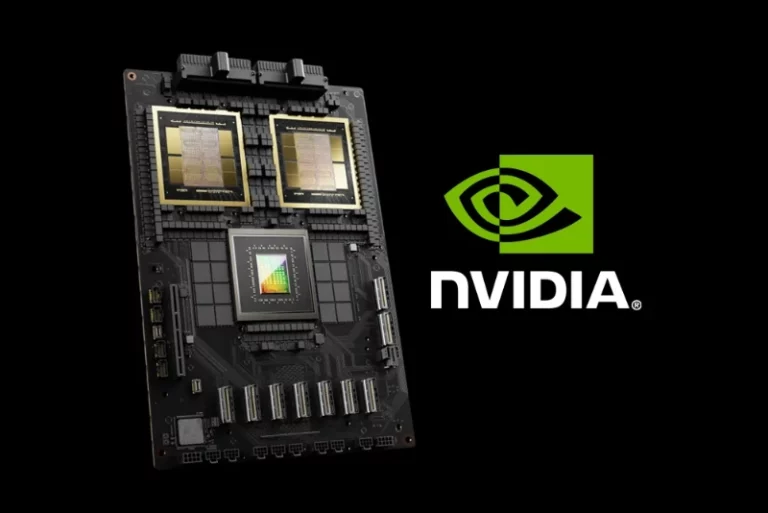
| Blackwell (B200) | 2nd Gen Transformer Engine | Up to 30x vs. H100 | Real-time Agent Workforce |
4. The Future: Blackwell and the FP4 Revolution (2025+)
The Blackwell architecture introduces a seismic shift: FP4 precision. This allows models to be compressed and executed at 4-bit precision without losing cognitive depth.
The ROI Impact
This effectively doubles the capacity of existing Compute Infra. For companies using WhaleFlux, Blackwell represents the transition from “batch processing” to a truly real-time, responsive digital workforce.
5. WhaleFlux: The Generational Bridge
As an All-in-one AI Integrated Platform, WhaleFlux abstracts the complexity of this rapid evolution. Our AI Platform Intelligence ensures that your Agent Workforce remains architecture-agnostic.
Cross-Generational Orchestration
We enable seamless migration of fine-tuning tasks from older A100 clusters to H200s as your performance needs scale.
Adaptive Precision Management
Our Model Refinery automatically applies the optimal quantization (FP8 for Hopper, FP4 for Blackwell) to maximize throughput per dollar.
Observability-Driven Maintenance
By correlating architectural history with real-time Deep Observability, we ensure hardware nodes are never overstressed by workloads they weren’t designed to handle.
Conclusion
Choosing a GPU generation is a long-term commitment to a specific cost structure. Whether you are leveraging the stability of A100s or the frontier speeds of Blackwell, the goal is the same: maximizing the intelligence output per watt.WhaleFlux provides the integrated ecosystem of infrastructure, models, and agents to ensure that as NVIDIA evolves, your business stays ahead of the curve.
Expert FAQ
1. Is it still worth using A100s for fine-tuning in 2026?
Yes. For models under 30B parameters, the A100 80GB remains an exceptionally stable and cost-effective “workhorse.” When managed via WhaleFlux, it provides a superior ROI for domain-specific model adaptation.
2. How does the Transformer Engine in the H100 actually speed up my tasks?
It dynamically adjusts precision levels (switching between FP8 and FP16) within each layer of the model. This reduces the memory footprint and speeds up backpropagation during the fine-tuning process.
3. What is the biggest risk when moving to newer architectures like Blackwell?
Software compatibility and thermal management. Newer cards draw significantly more power. WhaleFlux mitigates this through Deep Observability, ensuring your platform-level cooling and power delivery are aligned with the hardware’s demand.
4. Why does WhaleFlux focus on NVIDIA rather than other manufacturers?
NVIDIA’s software stack (CUDA) and its rapid architectural iteration (like the jump to FP4) currently provide the most reliable environment for deploying Autonomous Agents at scale.
5. How does WhaleFlux’s platform intelligence handle different GPU generations?
Our Integrated Platform treats the hardware as a pool of “Intelligent Capacity.” We use Thermal-aware Orchestrationto route lightweight tasks to older nodes while reserving high-performance silicon for intensive model refinement.