When we talk about AI costs, the conversation often starts and ends with the eye-watering price of training a large model. While training is indeed a major expense, it’s merely the most visible part of a much larger financial iceberg. The true financial impact of an AI initiative—its Total Cost of Ownership (TCO)—is spread across its entire lifecycle: from initial experimentation and training, through deployment and maintenance, to the ongoing cost of serving predictions (inference) at scale. This TCO includes not just explicit cloud bills, but also hidden expenses like energy consumption, engineering overhead, and the opportunity cost of idle resources.
Understanding this full spectrum is crucial for making strategic decisions, ensuring ROI, and building sustainable AI practices. This guide will break down the explicit and hidden costs across the AI lifecycle and provide a framework for smarter financial management.
Part 1: The Upfront Investment: Training and Development Costs
The training phase is the R&D capital of AI. It’s a high-stakes investment with complex cost drivers.
1.1 The Obvious Culprit: Compute Power for Training
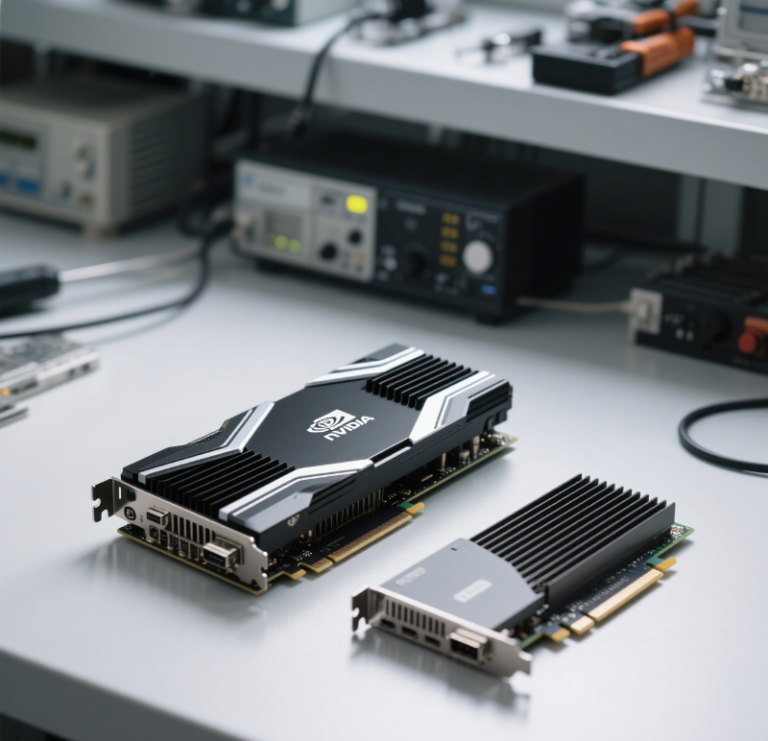
This is the cost most people think of. Training modern models, especially large neural networks, requires immense computational power, almost always from expensive GPUs or specialized AI accelerators (like TPUs).
- Hardware Choice Matters: Using an NVIDIA A100 GPU cluster is vastly more expensive per hour than using older generation GPUs or even high-end CPUs, but it can complete the job in a fraction of the time. The calculation is Cost = (Instance Hourly Rate) x (Hours to Convergence).
- The Experimentation Multiplier: A single successful training run is never the whole story. Data scientists run dozens or hundreds of experiments: tuning hyperparameters, testing different architectures, and validating against new data splits. The cumulative cost of all failed or exploratory experiments often dwarfs the cost of the final training job. This is a major hidden cost in the development phase.
1.2 The Data Foundation: Curation, Storage, and Preparation
Before a single calculation happens, there’s the data.
- Acquisition & Labeling: Purchasing datasets or paying for data annotation/labeling can be a significant upfront cost.
- Storage: Storing terabytes of raw and processed data in cloud object storage (like S3) or fast SSDs for active work incurs ongoing costs.
- Processing & Engineering: The compute cost for running data pipelines (using tools like Spark) to clean, transform, and featurize data is a substantial pre-training expense often overlooked in simple models.
1.3 The Human Capital: Development Time and Expertise
The salaries of your data scientists, ML engineers, and researchers are the largest TCO component for many organizations. Inefficient workflows—waiting for resources, debugging environment issues, manually tracking experiments—drastically increase this human cost by slowing down development cycles.
Enter WhaleFlux: This is where an integrated platform shows its value in cost control. WhaleFlux tackles training costs head-on by providing a centralized, managed environment. Its experiment tracking capabilities bring order to the chaotic experimentation phase, allowing teams to reproduce results, avoid redundant runs, and kill underperforming jobs early—directly reducing wasted compute spend. Furthermore, its intelligent resource scheduling can optimize job placement across cost-effective hardware (like leveraging spot instances where possible), making every training dollar more efficient.
Part 2: The Deployment Bridge: Turning Code into Service
A trained model file is useless to a business application. Deploying it is a separate engineering challenge with its own cost profile.
2.1 Infrastructure and Orchestration
- Serving Infrastructure: You need servers (virtual or physical) to host your model API. This means selecting VMs, containers (Kubernetes pods), or serverless functions, each with different cost models (reserved vs. on-demand, per-second billing).
- Orchestration Overhead: Managing Kubernetes clusters or serverless deployments requires dedicated DevOps/MLOps engineering time, a significant hidden operational cost.
2.2 Engineering for Production
Building the actual deployment pipeline—CI/CD, monitoring, logging, security hardening—requires substantial engineering effort. This cost is often buried in broader platform team budgets but is essential and non-trivial.
2.3 The Model “Tax”: Optimization and Conversion
A model trained for peak accuracy is often too bulky and slow for production. The process of model optimization—through techniques like quantization (reducing numerical precision), pruning (removing unnecessary parts of the network), or compilation for specific hardware—requires additional engineering time and compute resources for the conversion process itself.
Part 3: The Long Tail: Inference and Operational Costs
This is where costs scale with success. As your application gains users, inference costs become the dominant, ongoing expense.
3.1 The Per-Prediction Price Tag: Compute for Inference
Every API call costs money.
Hardware Efficiency:
A model running on an underpowered CPU may have a low hourly rate but process requests slowly, hurting user experience. A powerful GPU has a high hourly rate but processes many requests quickly. The key metric is cost per 1,000 inferences (CPTI). Optimizing models and choosing the right hardware (even considering edge devices) is critical to minimizing CPTI.
Load Patterns & Scaling:
Traffic is rarely steady. Provisioning enough servers for peak load means paying for them to sit idle during off-hours. Autoscaling solutions help but add complexity and can have warm-up delays (the “cold start” problem), which impacts both cost and latency.
3.2 The Silent Energy Guzzler
Energy consumption is a direct and growing cost center, both financially and environmentally.A large GPU server can consume over 1,000 watts. At scale, 24/7, this translates to massive electricity bills in your own data center or is baked into the premium of your cloud provider’s rates. Optimizing inference isn’t just about speed; it’s about doing more predictions per watt.
3.3 The Maintenance Burden: Monitoring, Retraining, and Governance
- Observability: You need tools to monitor model performance, data drift, and system health. These tools have their own cost, and analyzing their outputs requires human time.
- Model Decay & Retraining: Models degrade as the world changes. The cost of periodically gathering new data, retraining, and re-deploying updated models is a recurring operational expense over the model’s lifetime.
- Governance & Compliance: Managing model versions, audit trails, and ensuring compliance with regulations (like GDPR) requires processes and tools, contributing to the long-term TCO.
WhaleFlux’s Operational Efficiency: In the inference phase, WhaleFlux directly targets operational spend. Its intelligent model serving can auto-scale based on real-time demand, ensuring you’re not paying for idle resources. Its built-in observability provides clear visibility into performance and cost-per-model metrics, helping teams identify optimization opportunities. By unifying the toolchain, it also reduces the operational overhead and “tool sprawl” that inflates engineering maintenance costs.
Part 4: A Framework for Managing AI TCO
To control costs, you must measure and analyze them holistically.
1.Shift from Project to Product Mindset:
View each model as a product with its own P&L. Account for all lifecycle costs, not just initial development.
2.Implement Cost Attribution:
Use tags and dedicated accounts to track cloud spend down to the specific project, team, and even individual model or training job. You can’t manage what you can’t measure.
3.Optimize Across the Lifecycle:
- Training: Use experiment tracking, early stopping, and consider more efficient model architectures from the start.
- Deployment: Invest in model optimization (quantization, pruning) to reduce inference costs.
- Inference: Right-size hardware, implement auto-scaling, and explore cost-effective hardware options (inferentia chips, etc.).
4.Evaluate Build vs. Buy vs. Platform:
Continually assess if building and maintaining custom infrastructure is more expensive than leveraging a managed platform that consolidates costs and provides efficiency out-of-the-box.
Conclusion: Intelligence on a Budget
The true “Cost of Intelligence” is a marathon, not a sprint. It’s the sum of a thousand small decisions across the model’s lifespan. By looking beyond the sticker shock of training to include deployment complexity, per-prediction economics, energy use, and ongoing maintenance, organizations can move from surprise at the cloud bill to strategic cost governance.
Platforms like WhaleFlux are designed explicitly for this TCO challenge. By integrating the fragmented pieces of the ML lifecycle—from experiment tracking and cost-aware training to optimized serving and unified observability—they provide the visibility and control needed to turn AI from a capital-intensive research project into an efficiently run, cost-predictable engine of business value. The goal is not just to build intelligent models, but to do so intelligently, with a clear and managed total cost of ownership.
FAQs: The Total Cost of AI Ownership
1. Is training or inference usually more expensive?
For most enterprise AI applications that are deployed at scale and used continuously, inference costs almost always surpass training costs over the total lifespan of the model. Training is a large, one-time (or periodic) capital expenditure, while inference is an ongoing operational expense that scales directly with user adoption.
2. What are the most effective ways to reduce inference costs?
The two most powerful levers are: 1) Model Optimization: Quantize and prune your production models to make them smaller and faster. 2) Hardware Right-Sizing: Profile your model to run on the least expensive hardware that meets your latency requirements (e.g., a modern CPU vs. a high-end GPU). Autoscaling to match traffic patterns is also essential.
3. How significant is energy cost in the overall TCO?
It is a major and growing component. For cloud deployments, it’s baked into your compute bill. For on-premise data centers, it’s a direct line-item expense. Energy-efficient models and hardware don’t just reduce environmental impact; they directly lower operational expenditure, especially for high-throughput, 24/7 inference workloads.
4. What is the hidden cost of “idle resources” in AI?
This is a massive hidden cost. It includes: GPUs sitting idle between training jobs or during low-traffic periods, storage for old model versions and datasets that are never used, and development environments that are provisioned but not active. Good platform governance and automated resource scheduling are key to minimizing this waste.
5. How can I justify the TCO of a platform like WhaleFlux to my finance team?
Frame it as a cost consolidation and optimization tool. Instead of presenting it as an extra expense, demonstrate how it reduces waste in the three most expensive areas: 1) Compute: By optimizing training jobs and inference serving. 2) Engineering Time: By automating MLOps tasks and reducing tool sprawl. 3) Risk: By preventing costly production outages and model degradation. The platform’s cost should be offset by its direct savings across these broader budget lines.