Introduction: From “Ask” to “Act”
For the past few years, the world was obsessed with chatbots. We asked questions, and AI gave us answers. But in 2026, the paradigm has shifted. We no longer want an AI that talks; we want an ai agent that controls your computer to get things done.
The industry has moved from Generative AI to Agentic AI—systems that don’t just suggest a response but actually take control of the keyboard, the database, and the cloud infrastructure to execute complex multi-step tasks. As these ai agents take control of my computer environments, the enterprise world is looking to tech titans to see who can provide the most secure and reliable “digital workforce.”
In this landscape, Oracle has emerged as a surprisingly aggressive leader. This post evaluates the cloud computing company oracle on agentic ai and examines the critical infrastructure needed to keep these autonomous agents from crashing the very systems they manage.

1. The Mechanics: How an AI Agent Controls Your Computer
When we say an ai agent control computer functions, we aren’t talking about sci-fi possession. We are talking about Large Action Models (LAMs) and specialized interface controllers.
Modern agents use a “perceive-plan-act” loop:
- Perceive: The agent “sees” the screen or reads the API documentation of your software.
- Plan: It breaks a high-level goal (e.g., “Reconcile the Q3 logistics invoices”) into 50 sub-tasks.
- Act: The ai agent takes control of computer inputs, clicking buttons, moving data between Excel and ERP systems, and sending emails—all without human intervention.
This shift allows for a 1:100 ratio of human oversight to task execution, fundamentally decoupling revenue growth from headcount.
2. Evaluation: Oracle’s Play in the Agentic AI Era
Oracle (ORCL) has historically been viewed as a legacy database company, but its 2026 trajectory tells a different story. To evaluate the cloud computing company oracle on agentic ai, we must look at their “Embedded-First” strategy.
The “Agentic Database” 26ai
Oracle’s crown jewel is the Oracle Database 26ai. Unlike competitors who treat AI as a bolt-on service, Oracle has moved the vector search and the agentic reasoning inside the data layer. This means an agent doesn’t have to “call” the data; it lives within it, drastically reducing latency and increasing security.
Fusion Applications: Pre-Built Agents
Oracle has deployed over 50 native AI agents across its Fusion Cloud (ERP, HCM, SCM). These aren’t just assistants; they are “Assurance Advisors” that monitor supply chain disruptions and autonomously initiate re-routing of shipments. Oracle’s strength lies in its vertical integration—they own the data, the application, and the cloud infrastructure (OCI).
The Verdict
Oracle is currently a Market Leader in enterprise agentic AI. Their unique RDMA (Remote Direct Memory Access) networking allows their agents to coordinate across massive clusters faster than traditional cloud providers. However, their “closed-loop” ecosystem can be a double-edged sword for companies wanting to use third-party models.
3. The Stability Paradox: Why Agents Need WhaleFlux
As ai agents take control of my computer and enterprise systems, a new danger emerges: The Feedback Loop of Failure. If an autonomous agent encounters a hardware “hiccup” or a network delay while it is in the middle of a multi-step financial transaction, the results can be catastrophic. Agents are non-deterministic; if the infrastructure is unstable, the agent’s behavior becomes unpredictable.
This is where the philosophy of “stability before scale” is put to the test. To truly let ai agents that control your computer run free, you need a self-healing infrastructure layer.
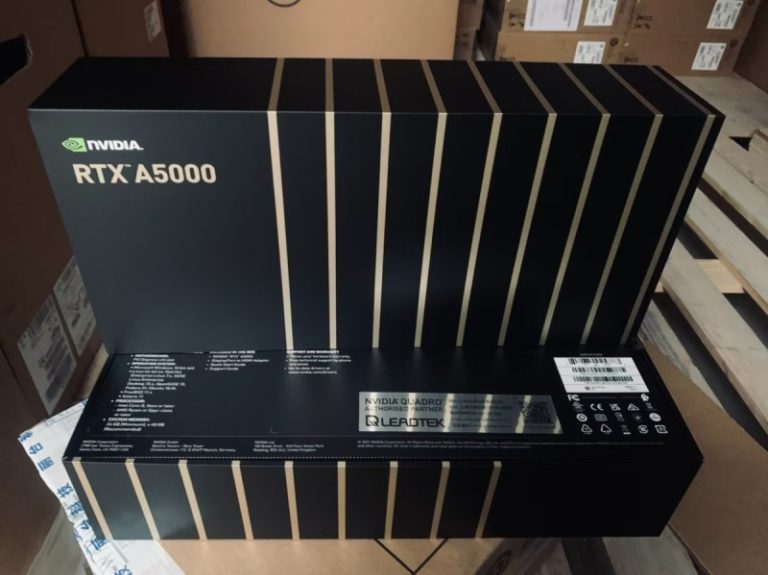
WhaleFlux is the invisible guardian of this autonomous era. While Oracle provides the “brain” (the agent), WhaleFlux provides the “immune system” for the underlying GPU and CPU clusters. By using failure prediction innovation, WhaleFlux detects when a node is about to degrade before the agent starts its task. If an agent is about to take control of a system that is showing signs of instability, WhaleFlux can pause the execution or move the agent’s environment to a healthy node.
In the world of agentic AI, reliability is the only path to trust. You wouldn’t let an AI agent control your computer if you didn’t trust the computer to stay online. WhaleFlux ensures that the “digital worker” always has a stable stage to perform on.
4. Risks and Governance: When AI Agents Control Your Computer
The prospect of ai agents controlling your computer brings valid fears regarding security and “hallucination in action.”
- Permission Scoping: Enterprises are implementing “Least Privilege” models where agents only have access to specific buttons and data fields.
- Human-in-the-Loop (HITL): For high-value actions (e.g., a $1M wire transfer), the agent takes control up to the final “Send” button, then waits for a human thumbprint.
- Audit Trails: Oracle’s agentic platform provides an immutable log of every “thought” and “click” the agent made, ensuring accountability.
Conclusion: The New Workforce
The evaluation is clear: Oracle is no longer a legacy giant; it is the infrastructure titan of the agentic age. But as we move toward a future where ai agents control computer systems entirely, the focus must shift from “What can the agent do?” to “How stable is the system running the agent?”
By combining Oracle’s powerful agentic frameworks with the self-healing resilience of WhaleFlux, enterprises can finally move past the pilot phase. We are entering an era where your computer doesn’t just wait for your command—it anticipates your needs and executes them on a foundation of ironclad stability.
Frequently Asked Questions
1. Is it safe to let an ai agent control my computer?
In an enterprise context, yes, provided there are strict “sandboxes” and governance layers. Modern agents operate within a defined scope and cannot access files or functions they aren’t explicitly permitted to use.
2. How is Oracle different from Microsoft or Google in Agentic AI?
Oracle’s primary advantage is its data-centricity. Because most of the world’s mission-critical data already sits in Oracle databases, their agents can act on that data with higher security and lower latency than agents that have to fetch data from external sources.
3. What happens if a GPU fails while an agent is taking control of a task?
Without a system like WhaleFlux, the agent’s task would likely fail, potentially leaving the database in an inconsistent state. WhaleFlux prevents this by predicting hardware failure and moving the agent’s “context” to a healthy server before the crash occurs.
4. Will ai agents that control your computer replace human workers?
They are designed to replace tasks, not necessarily people. By handling repetitive “clicking and moving” data, agents allow humans to focus on strategy, exception handling, and creative problem-solving.
5. Can I use WhaleFlux with Oracle Cloud Infrastructure (OCI)?
Yes. WhaleFlux is designed to provide an additional layer of hardware health monitoring and self-healing for any high-performance compute environment, including OCI-based GPU clusters running agentic workloads.