I. Introduction: Why a Simple GPU Update is Critical for AI
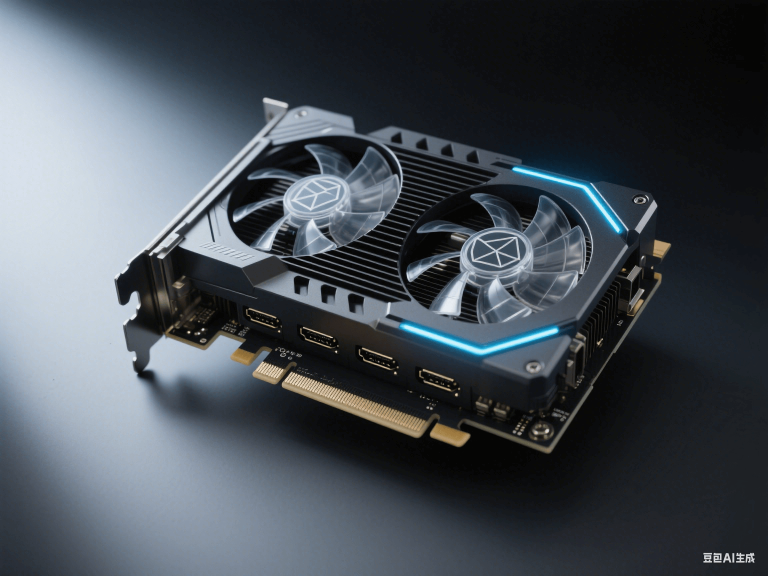
In the high-stakes world of artificial intelligence, every computational advantage matters. While AI teams rightly focus on model architecture and data quality, they often overlook a fundamental component that can make or break their projects: the GPU driver. Think of this driver as the essential translator between your complex AI software and the powerful NVIDIA GPU hardware it runs on. When this translator is outdated, the conversation breaks down.
An up-to-date GPU driver is not a luxury; it’s a necessity for achieving optimal performance, ensuring system stability, and maintaining security. NVIDIA frequently releases driver updates that contain crucial optimizations for the latest AI frameworks and libraries, bug fixes that prevent mysterious training crashes, and patches for security vulnerabilities. For an AI team, running a days-long training job on outdated drivers is like embarking on a cross-country road trip with a misfiring engine—you might reach your destination, but the journey will be slower, more costly, and prone to unexpected breakdowns.
The hidden cost of outdated drivers is measured in wasted resources. In a multi-GPU cluster, a single driver-induced crash can invalidate days of computation, costing thousands of dollars in cloud bills and pushing back project deadlines. The time your data scientists spend diagnosing these obscure errors is time not spent on innovation.
Fortunately, there is a smarter approach that moves beyond this repetitive, manual maintenance cycle. WhaleFlux is not just a provider of powerful NVIDIA GPUs; it is a comprehensive, intelligent management platform designed specifically for AI enterprises. We simplify and automate the entire infrastructure lifecycle, including the critical task of keeping your GPU environment perfectly tuned and up-to-date, so your team can focus on what they do best: building groundbreaking AI.
II. How to Update Your NVIDIA GPU: A Step-by-Step Guide
A. The Manual Method: For Individual Workstations
For a developer working on a single machine, keeping a GPU updated is a relatively straightforward process. Here’s how to do it:
Identifying Your GPU:
The first step is knowing exactly what hardware you have. On a Windows PC, you can open the Device Manager, expand the “Display adapters” section, and see your NVIDIA GPU model (e.g., “NVIDIA GeForce RTX 4090” or “NVIDIA A100”). On Linux, the nvidia-smi command in the terminal will provide a wealth of information, including your GPU model and current driver version.
Using NVIDIA’s Official Channels:
Always get your drivers directly from the source to ensure stability and security. For consumer-grade cards like the RTX 4090, you can visit the NVIDIA Driver Downloads website and manually search for your product. Many users of these cards also use the GeForce Experience application, which can automatically notify you of new drivers. For data-center GPUs like the A100 or H100, the best practice is to use the drivers provided on the NVIDIA Enterprise Driver Portal for maximum compatibility in professional environments.
The Process:
Once you’ve downloaded the correct driver, the installation is simple. Run the installer, and when given the option, select “Custom Installation.” Then, check the box that says “Perform a clean installation.” This is a crucial step—it removes all traces of previous driver versions, preventing conflicts that can cause instability. After the installation completes, restart your computer to ensure the new driver is loaded correctly.
B. The Challenge of Scaling: From One PC to a Cluster
The process above is manageable for one machine. But what happens when your “workstation” is a cluster of 8, 16, or 32 NVIDIA A100 and H100 GPUs spread across multiple servers? Manually updating each GPU becomes a logistical nightmare. The process is time-consuming, highly prone to human error, and risks creating inconsistent environments across your cluster. A single server with a missed update can become the weak link that causes cascading failures or performance bottlenecks in a distributed training job. This operational complexity is a massive drain on engineering resources and a significant barrier to agile AI development.
III. Beyond the Driver: The Real “GPU Update” for AI is Scalable Power
A. Updating Hardware, Not Just Software
While keeping drivers current is essential, the most impactful “GPU update” an AI company can make often isn’t software-based—it’s about the hardware itself. The field of AI is advancing at a breathtaking pace, and each new generation of NVIDIA GPUs, like the H100 and H200, brings monumental leaps in performance and efficiency for training large language models. Sticking with older hardware means your competitors are training better models in a fraction of the time and at a lower cost. A true strategic “update” means ensuring your company has access to the computational power needed to compete and win.
B. The WhaleFlux Hardware Advantage
This is where WhaleFlux provides a game-changing advantage. We empower businesses to perform a fundamental “infrastructure update” without the massive capital expenditure and logistical headache of purchasing new hardware outright. Through WhaleFlux, your team gains immediate access to a fleet of the latest NVIDIA GPUs, including the flagship H100 and H200 for massive LLM workloads, the proven A100 for a wide range of enterprise AI, and the powerful RTX 4090 for development and prototyping. This effectively allows you to leapfrog generations of hardware, keeping your AI capabilities on the cutting edge.
C. The Flexible Update Path
WhaleFlux makes this powerful transition both strategic and accessible through our flexible rental model. With a minimum commitment of just one month, you can “test drive” a cluster of H100s for a critical project, scale up your A100 capacity for a quarterly training sprint, or rent an RTX 4090 for a new prototype. This approach transforms a “GPU update” from a complex, capital-intensive IT project into a nimble, operational business decision. You can align your computational power perfectly with your project roadmap, ensuring you always have the right tools for the job without long-term financial lock-in.
IV. How WhaleFlux Automates and Simplifies GPU Management
A. Automated Driver & Software Management
WhaleFlux eliminates the manual burden of maintenance entirely. When you use our platform, you are deploying your workloads onto a fully managed environment. We handle the entire software stack, including GPU drivers, CUDA toolkits, and AI frameworks. Our systems are pre-configured with tested, stable, and optimized driver versions, and we manage updates seamlessly across the entire cluster. This ensures consistency, reliability, and peak performance for all your jobs, freeing your team from the tedious and error-prone cycle of manual updates.
B. Proactive Health Monitoring
Beyond simple updates, the WhaleFlux platform includes intelligent, proactive monitoring that continuously scans the health and performance of every GPU in your cluster. It can flag potential issues—such as thermal throttling, memory errors, or performance degradation—that might be resolved by a driver update or other maintenance. This proactive approach prevents problems before they impact your jobs, maximizing uptime and ensuring your valuable compute resources are always running efficiently.
C. Focus on Innovation, Not Maintenance
The ultimate value of WhaleFlux is the freedom it grants your AI team. By automating the infrastructure layer—including the perpetual question of how to update your GPU—we allow your data scientists and engineers to redirect their focus. Instead of troubleshooting driver conflicts and managing servers, they can dedicate 100% of their intellectual energy to the core challenges of algorithm design, model training, and deployment. This is how you accelerate innovation and gain a real competitive edge.
V. Conclusion: Update for Performance, Partner for Scale
Staying current with GPU drivers is a non-negotiable practice for any serious AI team; it is the baseline for performance and stability. However, the broader and more strategic goal is to maintain a modern, efficient, and scalable AI infrastructure that can evolve as fast as the technology itself.
WhaleFlux delivers a powerful dual value proposition to achieve this. First, we provide a fully managed platform that automates the maintenance and optimization of your GPU software environment. Second, we offer seamless, flexible access to the latest and most powerful NVIDIA hardware, from the H100 to the RTX 4090, allowing you to “update” your entire compute capability on demand.
Stop letting manual maintenance and hardware constraints slow your progress. It’s time to partner with a platform built for scale. Visit WhaleFlux today to explore our managed GPU solutions and ensure your AI infrastructure is always operating at its peak, letting you focus on building the future.
FAQs
1.How does updating GPU drivers benefit AI workloads beyond fixing bugs?
Updating your NVIDIA GPU drivers is a critical, yet often overlooked, step for maintaining peak AI performance. While driver updates do fix bugs, they are equally important for unlocking performance gains and ensuring compatibility. As NVIDIA architectures mature, software developers optimize frameworks and libraries to better utilize the hardware, and these enhancements are delivered through updated drivers. For teams using newer data center GPUs like the H100 or H200, regular updates ensure you benefit from these continuous optimizations, which can directly translate to higher throughput and faster training cycles.
For enterprise environments, using tools like the NVIDIA App for Enterprise can streamline this process. It provides tailored driver recommendations—such as “NVIDIA Recommended,” “Cutting-Edge,” or “Stable” modes—allowing teams to choose between the latest features or maximum stability based on their project phase.
2. What system-level and configuration optimizations are crucial for AI workloads after a driver update?
After ensuring drivers are current, optimizing the underlying system environment is essential to prevent bottlenecks. Key configurations include:
- Power and GPU Settings: In the NVIDIA Control Panel, set the “Power Management Mode” to “Prefer Maximum Performance” and ensure the dedicated NVIDIA GPU is selected as the preferred graphics processor for your AI applications. This prevents the system from down-clocking the GPU during sustained computation.
- Operating System Tuning: For Linux-based GPU servers, disable memory swapping (
vm.swappiness = 0) to prevent the OS from interfering with GPU workload memory management. Enabling features like Huge Pages can also improve memory efficiency. - Driver and Compute Mode Settings: Utilize driver-level features like Persistent Mode (to reduce context-loading latency) and Multi-Instance GPU (MIG) on supported GPUs like the A100 to securely partition a single GPU into smaller, isolated instances for optimal multi-tenant or multi-task utilization.
3. When should an AI team consider a physical GPU hardware upgrade, and how do we choose?
A hardware upgrade should be considered when software optimizations are exhausted and bottlenecks persist. Key indicators include:
- Insufficient VRAM: Models cannot fit into GPU memory even with optimization techniques like activation recomputation or offloading.
- Unsustainable Training Times: The computational throughput of your current GPUs (e.g., RTX 4090) is too low, drastically slowing model iteration.
- Need for Advanced Features: Your work requires hardware-specific features like the Transformer Engine on H100 or the enhanced memory bandwidth of the H200 for large model inference.
The choice depends on the primary bottleneck: prioritizing VRAM capacity for larger models, memory bandwidth for data-intensive tasks, or raw FP8/FP16 compute power for pure speed.
4. Beyond single-GPU updates, how do we optimize performance in a multi-GPU cluster?
- Parallel Strategy Configuration: In your training framework (like PyTorch), you must carefully configure parallel strategies—such as Data Parallel (DP), Tensor Parallel (TP), and Pipeline Parallel (PP)—to balance compute load and minimize communication overhead between GPUs.
- Topology-Aware Scheduling: For inference clusters running frameworks like NVIDIA’s Dynamo, intelligent schedulers (e.g., NVIDIA Run:ai) can perform “topology-aware” placement. This ensures that tightly coupled components of a distributed model are scheduled on GPUs that are physically close (e.g., within the same server rack), drastically reducing communication latency.
- Collective Communication Optimization: Tuning the libraries that handle inter-GPU communication (NCCL) for your specific network fabric (InfiniBand, Ethernet) is crucial for scaling efficiency.
5. How can a platform like WhaleFlux simplify the pursuit of peak and cost-effective GPU performance?
Managing the ongoing cycle of driver updates, system tuning, hardware upgrades, and complex cluster optimization is a significant operational burden. WhaleFlux addresses this by providing intelligent, managed access to optimized NVIDIA GPU infrastructure.
Instead of your team manually building and tuning clusters, WhaleFlux offers on-demand access to the latest hardware, from RTX 4090s to H100 and H200 clusters, which are pre-configured and maintained for peak AI performance. Its intelligent scheduler maximizes cluster utilization by efficiently packing and orchestrating workloads, directly translating to lower compute costs and faster job completion. This model converts the capital expense and maintenance overhead of ownership into a streamlined operational cost, allowing your AI team to focus on model development while ensuring they always have access to performant, stable, and up-to-date GPU resources.