The Strategic Shift: From CUDA Cores to Intelligence TCO
For years, businesses chose GPUs based on raw CUDA core counts. In 2026, that metric has been superseded by Precision-based ROI. While the GTX (Giga Texel Shader eXtreme) series served as the backbone of early GPU computing, the rise of Large Language Models (LLMs) and Autonomous Agents has fundamentally changed the requirements of enterprise silicon.
At WhaleFlux, we view the choice between RTX and GTX not as a hardware debate, but as a decision on Total Cost of Ownership (TCO). Understanding the architectural divide is critical for maintaining a competitive Agent Workforce.
1. The Architectural Wall: Why GTX is Becoming a Liability
The fundamental difference between RTX and GTX isn’t just speed; it’s the inclusion of Tensor Cores and RT Cores.
Tensor Cores: The Heart of Fine-tuning
RTX cards (20, 30, 40, and 50 series) feature Tensor Cores designed specifically for deep learning matrix math. For model fine-tuning, Tensor Cores enable mixed-precision training (FP16 or BF16), which speeds up the process by 4x to 10x compared to the standard CUDA cores found in GTX cards.
The Efficiency Gap
In 2026, running an LLM on GTX 10-series hardware is energy-inefficient. Because GTX lacks native support for modern low-precision formats (like FP8 or FP4), it draws significantly more power per token generated than an RTX counterpart.
2. Enterprise Decision Matrix: 2026 Edition
| Business Need | GTX Series (Legacy) | RTX Series (Modern) | The WhaleFlux Verdict |
| Model Fine-tuning | Extremely Slow (No Tensor Cores) | Optimized (via Transformer Engine) | RTX Required for ROI |
| Agent Deployment | High Latency / Low Concurrency | Low Latency / High Concurrency | RTX Preferred for responsiveness |
| Legacy Video Tasks | Stable / Cost-effective | Overpowered / High Cost | GTX Viable for basic encoding |
| Platform Intelligence | Minimal Telemetry | Deep Observability Enabled | RTX Enabled for full orchestration |
3. WhaleFlux: Maximizing ROI Across the Generational Gap
As an all-in-one AI integrated platform, WhaleFlux specializes in managing the transition from legacy infrastructure to modern AI-ready compute.
Legacy Hardware Recycling
If your business still holds GTX assets, WhaleFlux’s AI Platform Intelligence can repurpose them for low-priority background tasks (like data preprocessing), while routing high-intensity model refinement to our RTX-powered clusters.
Thermal-aware Orchestration
RTX cards run more efficiently but have complex thermal profiles. WhaleFlux uses Deep Observability to manage the power envelopes of your RTX fleet, ensuring peak performance without the “heat soak” common in high-density enterprise racks.
Seamless Migration
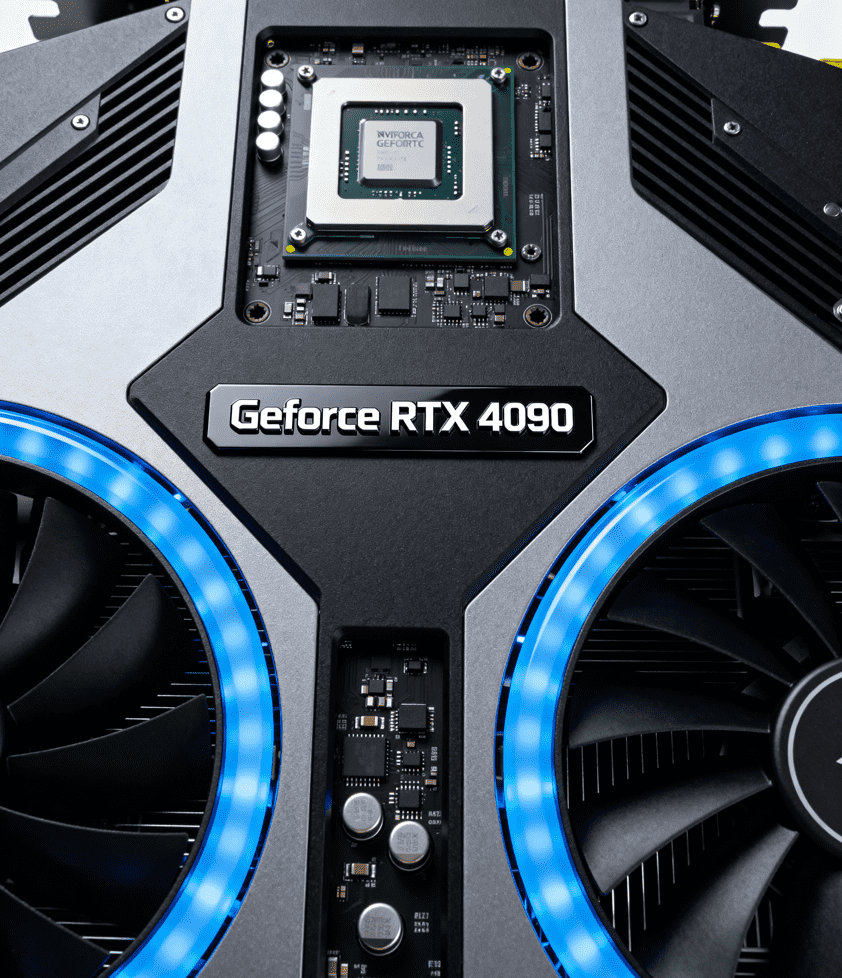
Our platform allows you to deploy agents that are architecture-agnostic. You can start a prototype on a local GTX node and instantly scale to a global RTX 4090 or H100 cluster through the WhaleFlux dashboard.
Conclusion: Strategic Modernization
In 2026, the question isn’t “RTX or GTX?” but rather “How fast can you transition?” Continuing to rely on GTX for AI-centric tasks is a silent tax on your compute budget.
By leveraging the WhaleFlux Integrated AI Platform, businesses can bridge the generational gap, turning raw silicon—whether modern or legacy—into a deterministic, scalable, and cost-efficient Agent Workforce.
Expert FAQ
1. Can I still use GTX 1080 Ti for AI fine-tuning?
You can, but it is no longer economically viable. Without Tensor Cores, a GTX 1080 Ti takes hours to do what an RTX 4090 can do in minutes. The cost of electricity and engineering time far outweighs the hardware savings.
2. What is the most cost-effective RTX card for a small AI team?
The RTX 4070 Ti Super or RTX 4080 Super are currently the “sweet spots” for AI fine-tuning. They offer 16GB of VRAM and high-efficiency Tensor Cores, making them ideal for the model refinement tasks managed on WhaleFlux.
3. Does RTX improve the quality of AI responses?
Not the quality of the “logic,” but it drastically improves the latency and throughput. On the WhaleFlux platform, faster hardware allows for more complex “chain-of-thought” processes within your agents, resulting in more sophisticated outcomes.
4. How does WhaleFlux’s Deep Observability handle GTX hardware?
While GTX lacks the advanced telemetry of newer cards, WhaleFlux still monitors power draw and uptime. However, to unlock Thermal-aware Orchestration and advanced precision scaling, we recommend transitioning to our RTX-enabled nodes.
5. Is the “Ray Tracing” (RT Core) useful for AI?
While RT cores are designed for graphics, they are increasingly being used in 2026 for physics-based AI simulations and certain types of high-speed data searching. For most LLM tasks, however, the Tensor Core is the primary driver of value.